
 Carrier
 Furnace & heating
 Heat pumps
 Ductless mini splits
 Trane
Trane Goodman
Seasonal tune-up and full diagnostic on your Carrier, Trane, or Goodman system - readings shown to you before any repair is proposed
Diagnosis first, numbers second - you approve the repair price before a single part goes in.
Get your free estimateCarrier Ductwork Repair: The San Antonio Owner’s Guide
Carrier ductwork repair in San Antonio typically runs $150 to $650 installed, depending on the extent of the tear, how much of the duct run needs resealing or replacing, and how accessible the damage is. Most repairs are completed same-day, and our trucks carry Carrier-compatible duct materials, mastic sealant, metal tape, and replacement collars so we’re not making you wait on a parts run. Owners usually discover ductwork trouble one of two ways: a room that never quite cools in August, or a dust trail forming around a supply vent. Sometimes it’s both.
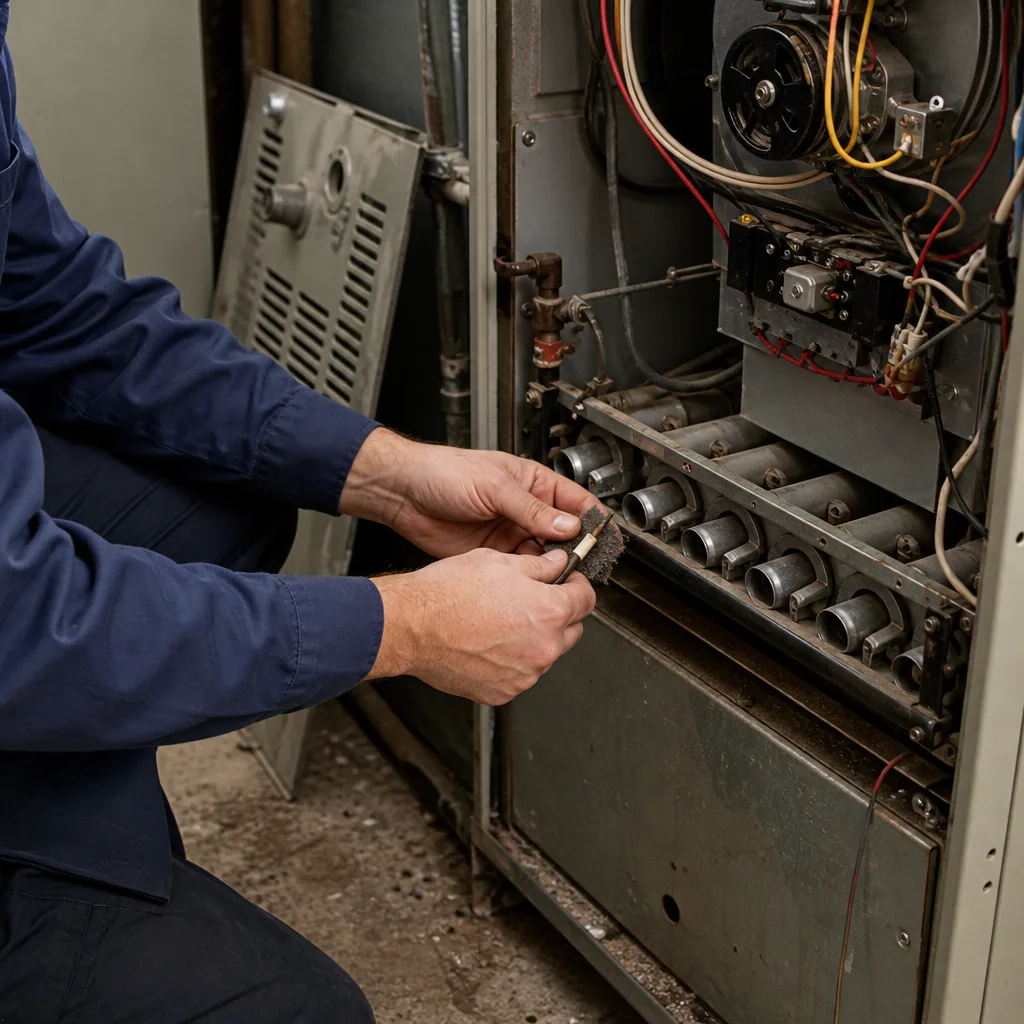
Here’s the thing about ductwork in San Antonio: it fails quietly for a long time before you notice. The heat and humidity here work on duct seals year-round. Flexible ducts bake in the attic where temperatures climb past 130 degrees in July. The outer jacket cracks, the inner liner sags, and the foil tape that was supposed to last lets go. By the time you feel the warm bedroom or see the drywall dust near a vent, you’ve been losing conditioned air for months. That’s normal, and it’s fixable.
We’re an independent HVAC company. We’re not affiliated with Carrier in any corporate sense. But we work on Carrier systems every week, and we know how their duct configurations are sized and sealed because we see them in San Antonio homes daily.
Key Takeaways
- Most Carrier ductwork repairs in San Antonio run $150 to $650 parts and labor included
- We stock Carrier-compatible flex duct, collars, mastic, and metal tape on our trucks
- Same-day repair is typical; the work usually takes 2 to 4 hours depending on attic access
- Every repair carries our written 365-day guarantee
Which Carrier Models This Applies To
Ductwork is less about the Carrier model and more about the duct configuration Carrier’s residential systems use. That said, the repair approach matters differently depending on what you have. Carrier Infinity systems paired with zoning dampers need duct sealing done carefully because static pressure changes under zone conditions. A leak that barely shows on a single-stage system can throw off an Infinity’s air balance and cause the control board to run the blower harder than it should.
If your Carrier system is a Performance or Comfort series single-stage unit, ductwork repair is more straightforward: find the leak, reseal it, check airflow at the register, done. But the same rules apply in all cases: the duct label matters. Flex duct printed with R-4.2 or R-6 or R-8 tells you the insulation rating. Most San Antonio homes built before 2010 have R-4.2 in the attic, which is legal but marginal for our climate. R-6 works. R-8 is ideal for attic runs where June through September heat soaks everything.
One Carrier-specific gotcha: their larger air handlers often move more cubic feet per minute per ton than other brands, which means undersized duct or partially-collapsed flex causes more noticeable problems faster. That 16-inch return you think is fine may be strangling a 3.5-ton Carrier Infinity. We measure static pressure before and after every duct repair. It is the only real way to know the repair worked.
OEM versus aftermarket matters less in ductwork than in electrical components. Carrier does not manufacture flex duct or sheet metal; they specify it. We use the same R-value and diameter spec Carrier’s installation guides call for. What matters is the sealant, the tape, and the fastening. We use mastic on every joint, stainless-steel clamps on flex connections, and UL-listed metal tape where it belongs. Duct tape from a hardware store is not part of our vocabulary, and it should not be part of yours either. It fails in attic heat within a season or two.
Styles & brands we work with
Signs Your Carrier Ductwork Repair Is Failing
- Some rooms run warmer than others. Air is taking the path of least resistance through a separated joint or a collapsed flex run, so the rooms at the end of the trunk line starve first. We see this most in two-story San Antonio homes where the upstairs suffers while the downstairs over-cools.
- Your electric bill climbs in a month where your habits did not change. The system runs longer to reach setpoint because a portion of what it conditions never arrives at the register. A 10% duct leak does not just waste 10%, it compounds because the thermostat keeps calling.
- Dust streaks appear around supply vents or on the ceiling near them. A return-side leak pulls attic air and whatever lives up there into the duct, then blows it into the living space. If the dust shows up on the supply side, you have attic air entering the conditioned stream.
- You hear a whistling or rumbling sound when the blower runs. Air escaping through a small gap whistles. Air surging through a partially-separated duct connection rumbles. Neither sound belongs anywhere near a properly sealed Carrier system.
- You can see condensation on the outside of a duct in the attic, or water stains on the ceiling below. In San Antonio’s humidity, a duct carrying cold air through a warm attic produces condensation when the insulation jacket is compromised. That moisture is the calling card of duct failure, and left alone it rots drywall and grows things you do not want growing.
See the difference
 Before
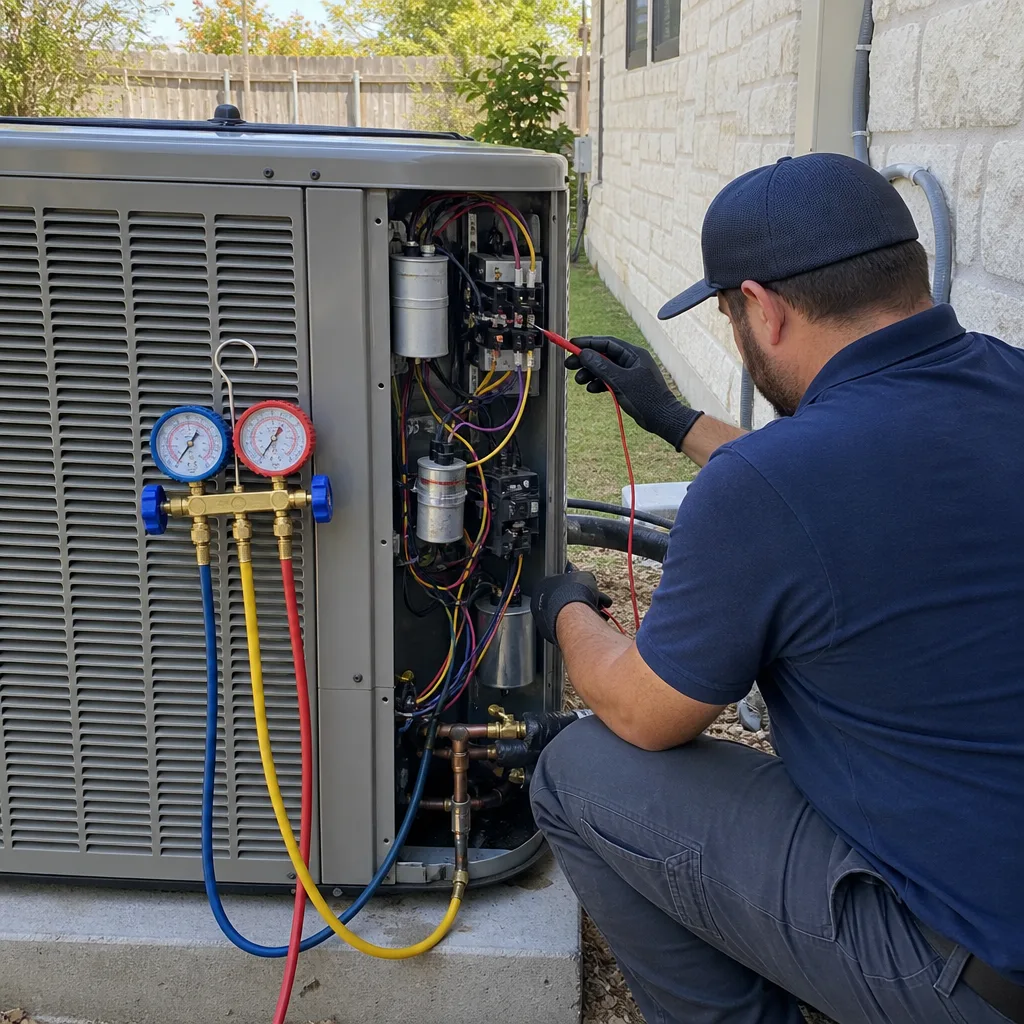 After
After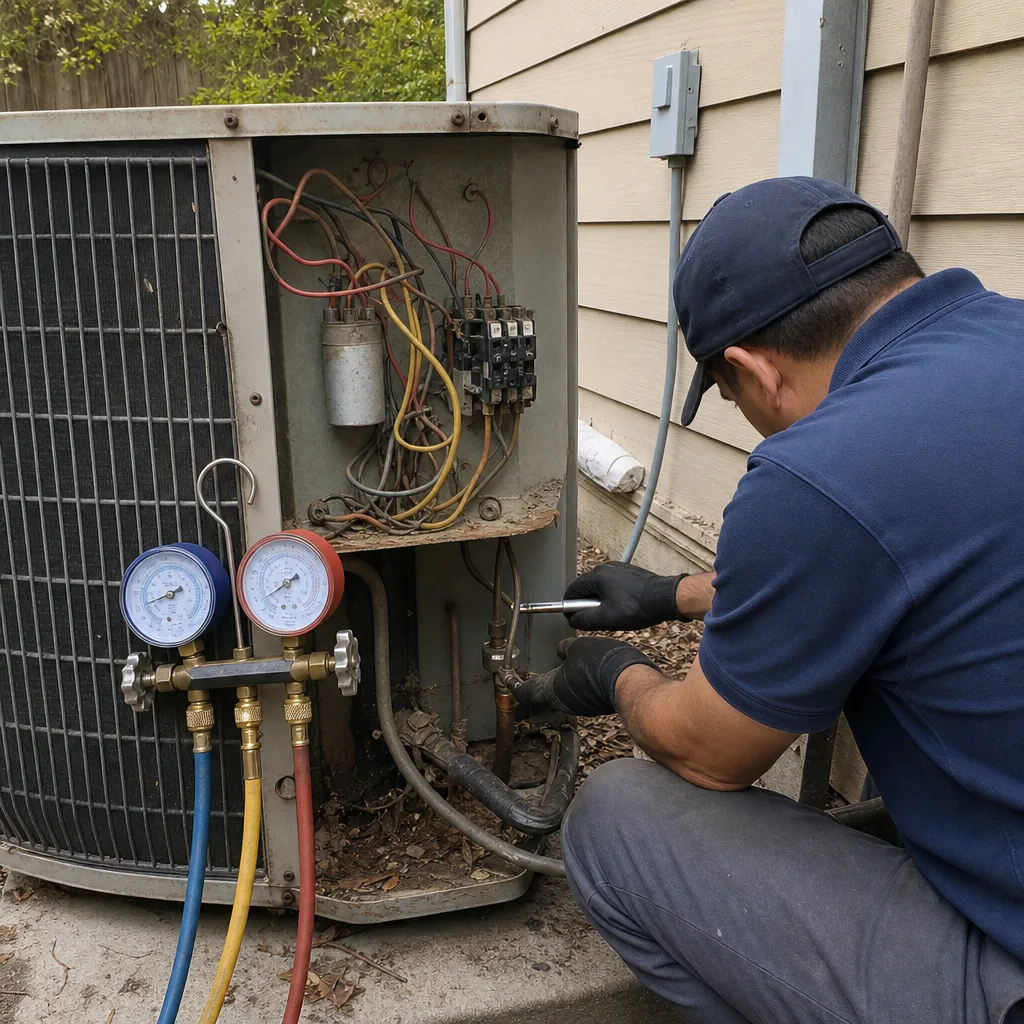 Before
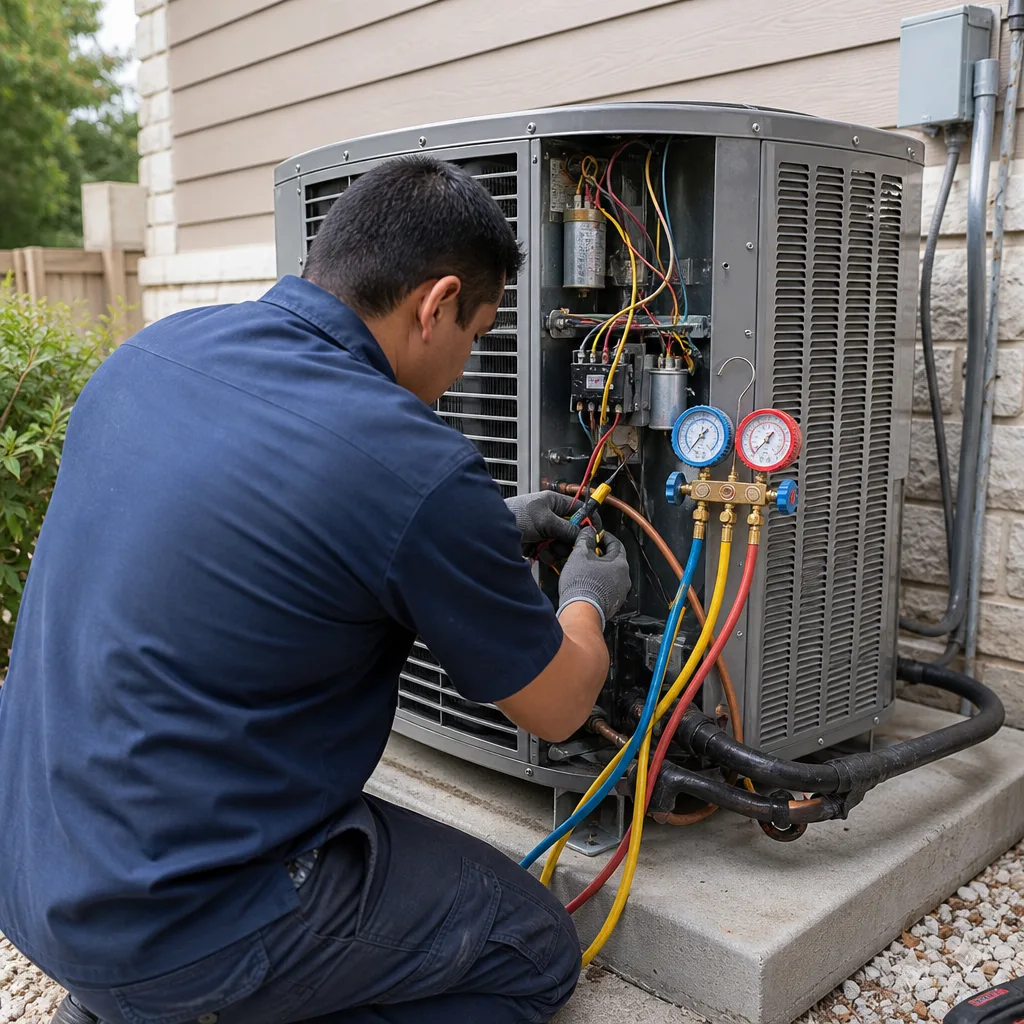 After
After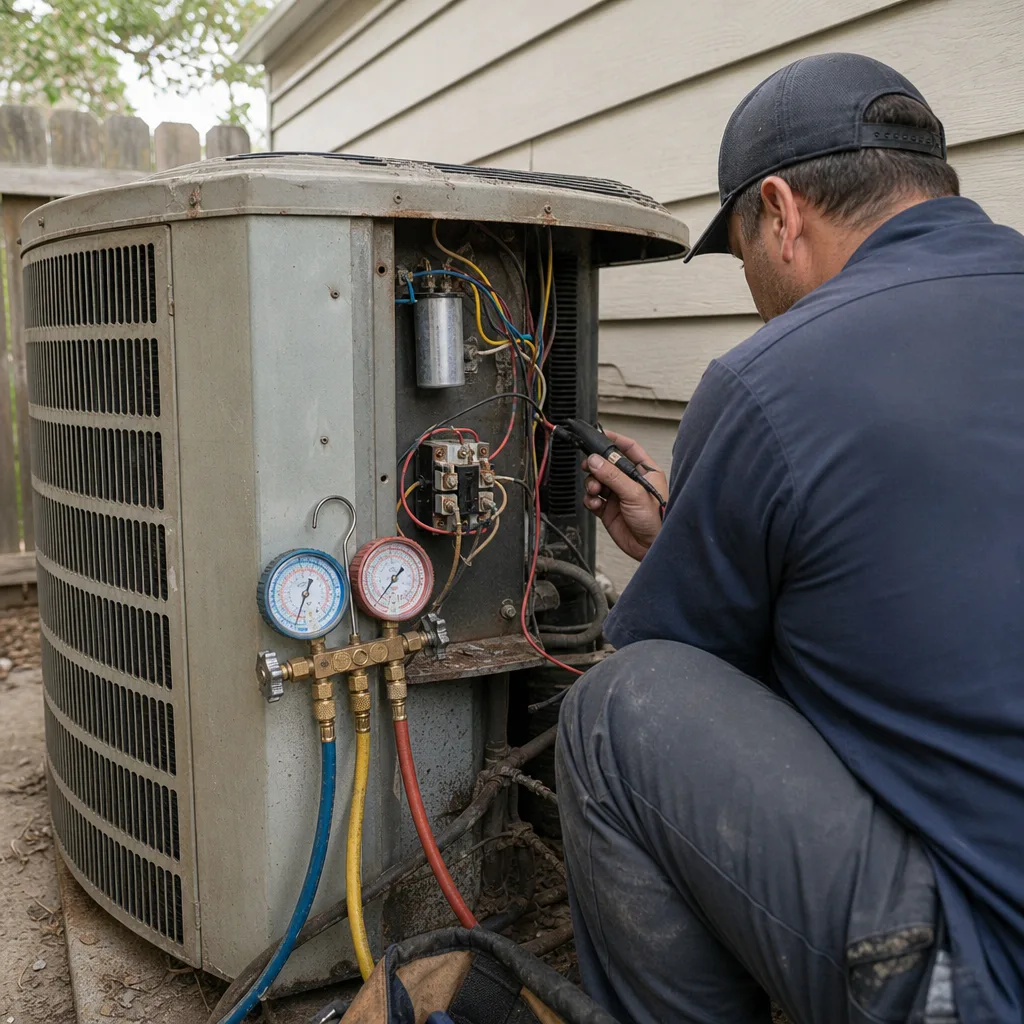 Before
 After
AfterReplacement Cost & What’s Included
Ductwork repair in San Antonio falls into three rough tiers. A simple reseal job, where we patch a separated joint, re-mastic a boot connection, or replace a damaged flex run under 10 feet, runs $150 to $350. A mid-range repair involving several failed connections or a collapsing flex section in a hard-to-reach attic runs $350 to $500. A larger repair, where we replace a main trunk section or rebuild a return plenum connection, runs $500 to $650. Here’s the breakdown:
- Reseal one duct joint or boot: $150 to $250
- Replace one flex duct run up to 10 feet: $250 to $400
- Repair or replace a return air plenum connection: $350 to $550
- Replace multiple flex runs or rebuild a trunk section: $500 to $650
Every one of those numbers includes the parts, the labor, the attic access, and the cleanup. You get a written price before any work starts, a written guarantee that covers the repair for 365 days, and if that repair fails within the year we return at no charge under our 365-Day Done Right Promise. No footnotes, no pro-rated nonsense, no arguing. If it fails, we fix it.
What drives the range is attic access and duct condition. A clean walkway through an open attic is a two-hour job. A cramped, blown-in-insulation-filled attic in Alamo Heights or Stone Oak where we are belly-crawling between trusses takes longer. The duct condition matters too. One failed joint is simple. Seven failed joints found after we start pulling back insulation is a different conversation, and the written quote adjusts before we do anything beyond what was agreed.
DIY or Call Us?
You can safely inspect your own ductwork, and you should. Go up in the attic on a morning before it gets hot, take a flashlight, and look for separated joints, sagging flex runs, crushed sections, and any visible gap where duct meets plenum or boot. Snap photos. What you should not do is attempt repairs in a hot attic with the wrong materials, because you will spend a Saturday doing work that fails in six months. Home-center duct tape is not a repair. It is a temporary illusion. And maneuvering around trusses in a 140-degree attic with a utility knife in your hand is how emergency room visits happen.
If you find the problem, call us at (361) 470-8872 and tell us what you saw. Devin Marlowe will tell you over the phone what the likely repair is and what it should cost based on what you describe. You get a written price before anyone climbs the ladder. You get a photo and a name before the technician arrives. And if it turns out the attic holds more surprises than what you found, you hear about them before we touch anything else.
FAQs
Properly installed flex duct with R-6 or better insulation typically lasts 15 to 20 years in San Antonio’s attic environment. The seals are what fail first, usually within 5 to 10 years, because extreme attic heat dries out mastic and degrades foil tape. Plan on a duct inspection every two to three years, especially after a brutal summer. Call (361) 470-8872 and we will check it during a standard tune-up.
Most ductwork problems can be repaired rather than replaced. A separated joint, a cracked boot connection, a partially-collapsed flex run under 10 feet, those are repairs. Replacement makes sense when multiple flex runs have failed, the insulation jacket has deteriorated over large sections, or the original ducts were undersized for the Carrier system they serve. We will show you what we found and let you decide with a written price on the table. Free estimates at (361) 470-8872.
A typical single-joint reseal or short flex run replacement takes 2 to 3 hours from arrival to cleanup. Larger repairs involving multiple runs or trunk section work can take 4 to 6 hours. We will give you a time window before we start, and we stick to it. Call (361) 470-8872 to schedule.
Yes. Our trucks carry R-6 and R-8 flex duct in the common residential diameters, sheet metal collars, mastic, UL-listed metal tape, and stainless clamps. We also stock compatible replacement parts for Trane and Lennox systems, along with Carrier. That means most ductwork repairs in San Antonio homes are completed same-day without a supply house run delaying your comfort. Call (361) 470-8872.
Written by Devin Marlowe, Owner, Brandt HVAC Co San Antonio at Brandt HVAC Co San Antonio, serving San Antonio and nearby areas.