
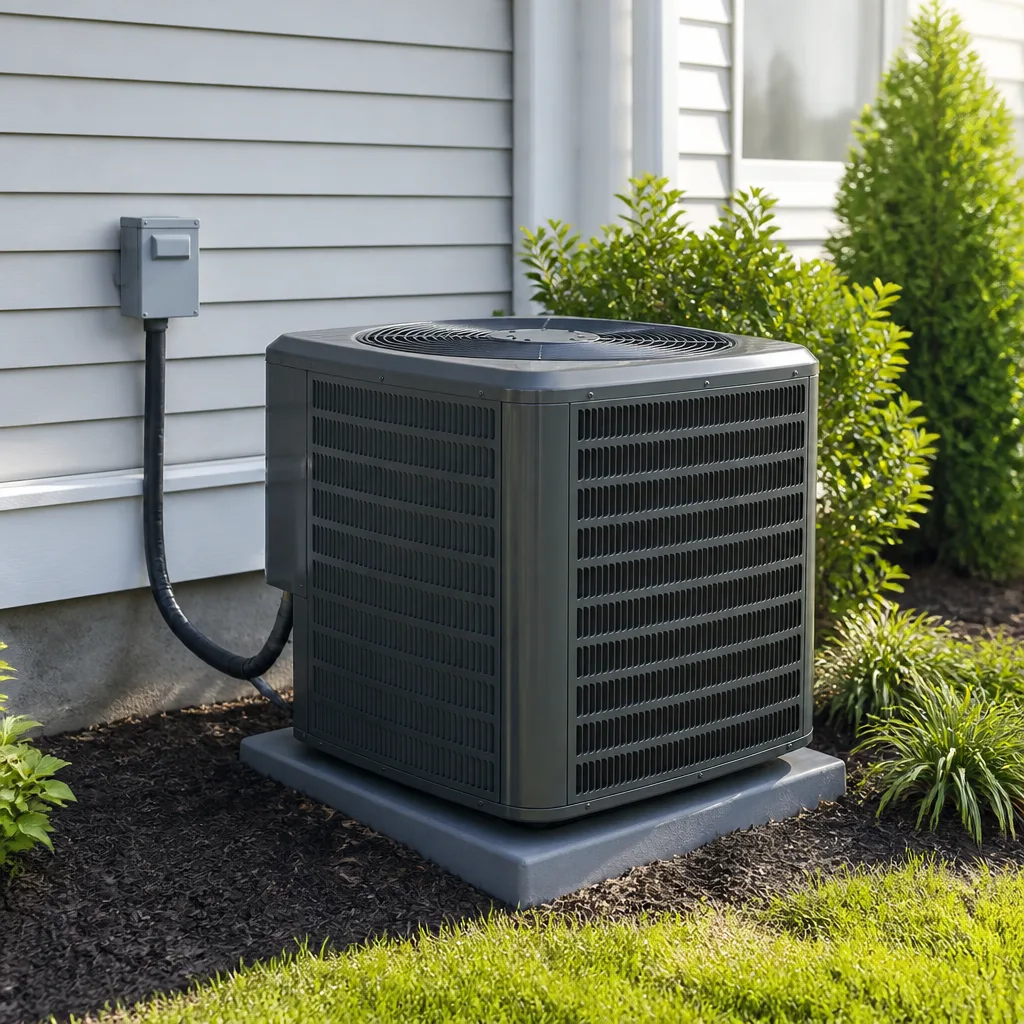
 Goodman
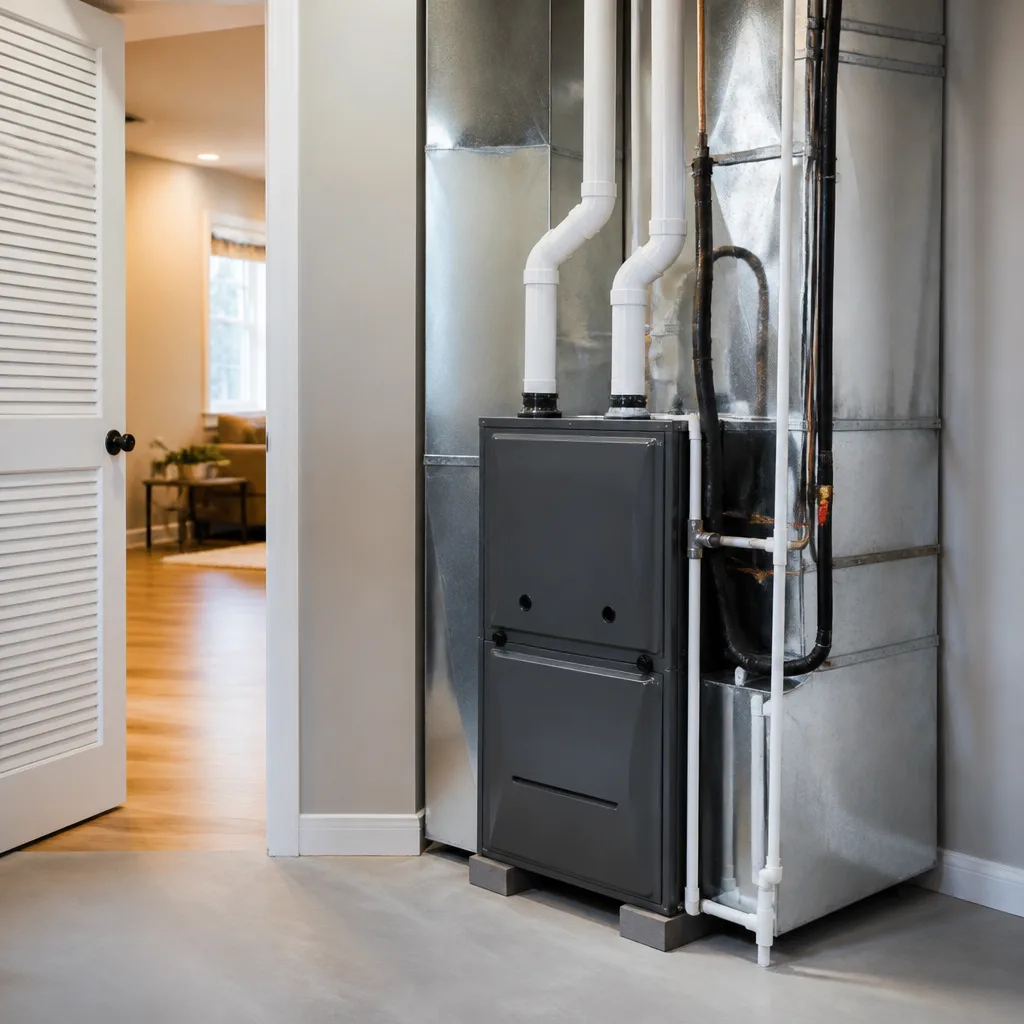 Furnace & heating
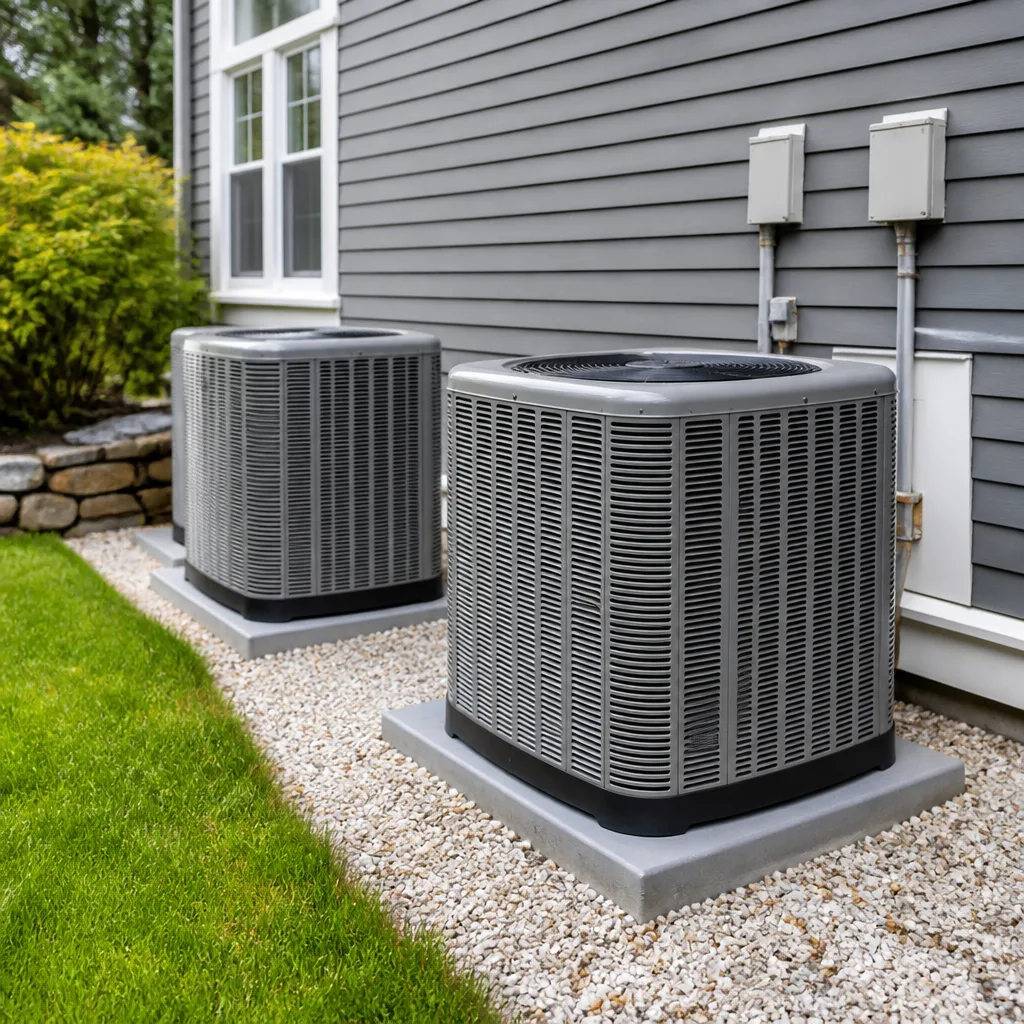 Heat pumps
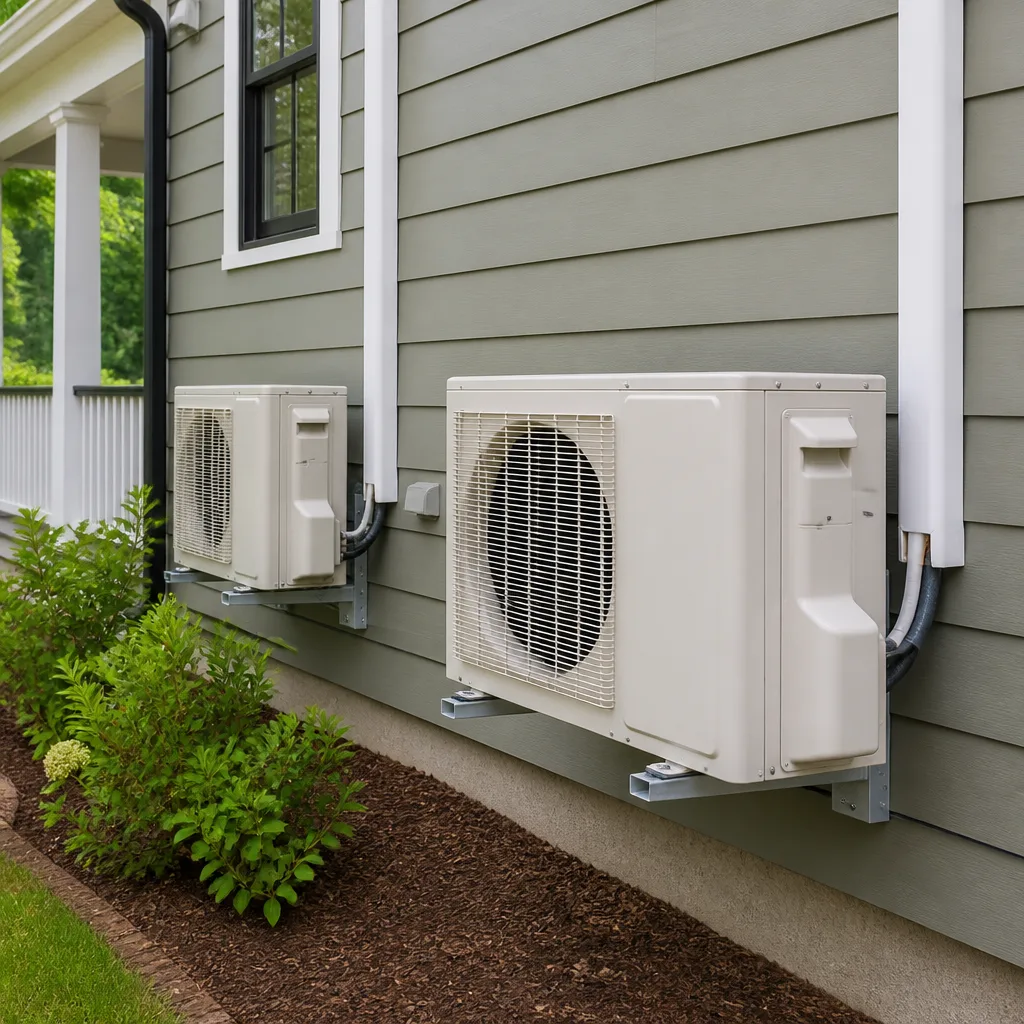 Ductless mini splits
 Carrier
 Trane
TraneSeasonal tune-up and full diagnostic on your Carrier, Trane, or Goodman system - readings shown to you before any repair is proposed
Diagnosis first, numbers second - you approve the repair price before a single part goes in.
Get your free estimateGoodman Capacitor Replacement: The San Antonio Owner’s Guide
We stock Goodman-compatible capacitors on our trucks and can usually replace yours the same day you call. A typical capacitor replacement for a Goodman AC or heat pump in San Antonio runs $180 – $340 installed, parts and labor included, depending on the spec your system needs and which unit it’s in. Most homeowners discover a capacitor failure the same way: the outside unit hums but the fan won’t spin, or the system runs for twenty minutes, shuts off, and the house never quite cools down.
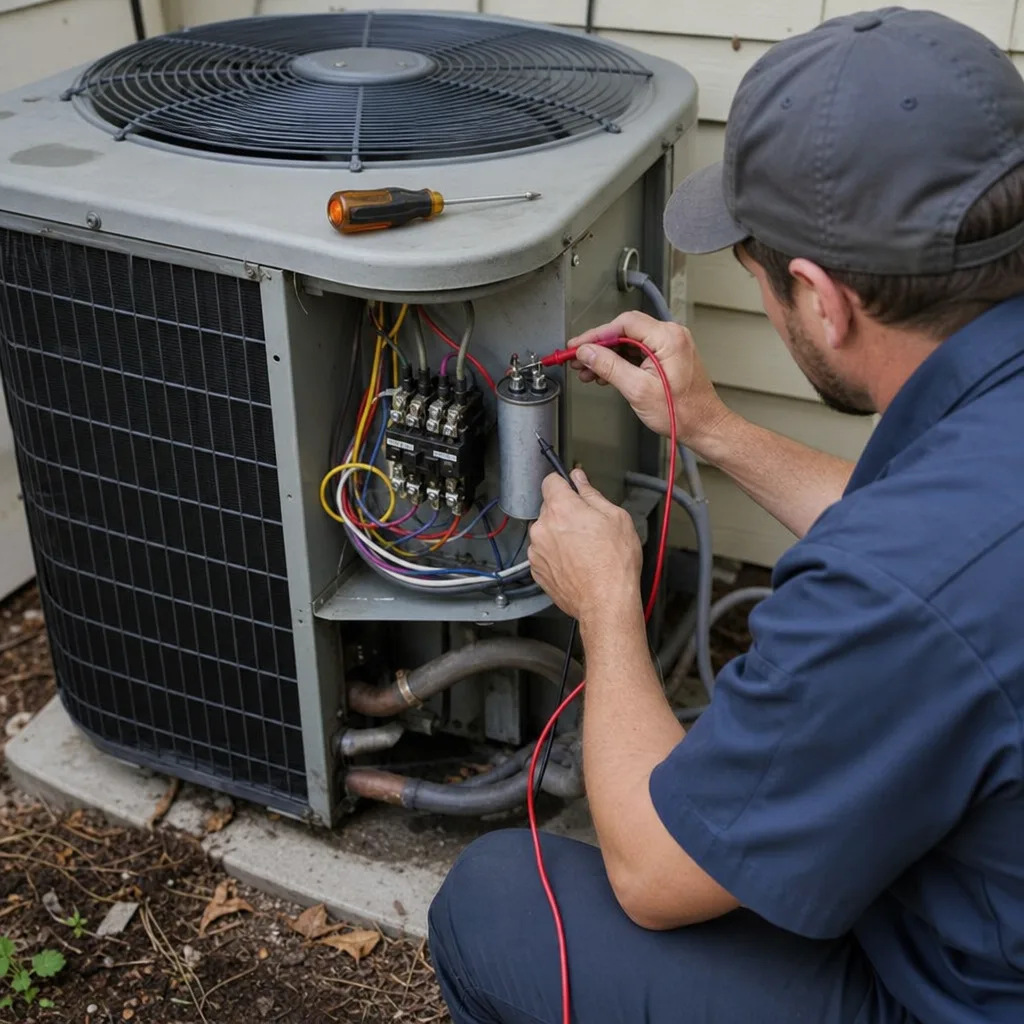
That humming sound is the compressor or fan motor trying to start without the electrical kick a capacitor provides. In South Texas heat, this failure happens faster than it would anywhere else, and the timing is rarely convenient. We treat a failed capacitor as an urgent repair because an AC system that can’t start in a San Antonio August turns a house into an oven by late afternoon.
Which Goodman Models This Applies To
Goodman uses dual-run capacitors on nearly every residential condenser built in the last 25 years, including the GSX, GSZ, SSZ, and VSX series lines. A dual-run capacitor serves two motors at once: one side starts the compressor, the other starts the condenser fan. The most common sizes we pull from failed Goodman units in San Antonio are 35/5, 40/5, 45/5, and 50/5 microfarad ratings, and the one your system needs is printed right on the side of the old capacitor in large white letters.
Here’s the compatibility gotcha most homeowners miss: Goodman occasionally specs a 370-volt capacitor where other brands use 440-volt, and swapping in a lower voltage rating than the system calls for is a fast path to a repeat failure. We match the microfarad rating, the voltage class, and the physical dimensions to your specific Goodman condenser before we even remove the old part. On the OEM-versus-aftermarket question, Goodman-branded capacitors are made by suppliers like Genteq and Titan, and a quality aftermarket equivalent from the same manufacturers performs identically. We carry both and will tell you plainly which one we’re quoting and why. Brandt HVAC Co San Antonio is an independent service provider, not affiliated with Goodman Manufacturing.
Styles & brands we work with
Signs Your Goodman Capacitor Replacement Is Failing
- The condenser unit hums but the fan doesn’t turn. The capacitor has lost too much of its charge to get the fan motor spinning, but the motor is still drawing power. That hum is the sound of a motor stalled against a dead capacitor.
- The fan only starts if you nudge it with a stick. This is a dying capacitor providing just enough of a kick to move the blades if they already have momentum. It’s not a fix, it’s a warning the part will fail completely within days.
- Your AC runs, stops, and restarts every few minutes. When the capacitor can’t hold a steady charge, the compressor cycles on and off erratically. That short cycling drives up your electric bill and puts heat stress on the compressor itself.
- The top of the capacitor looks swollen or leaking. A bulged dome or oily residue around the terminals means the capacitor’s internal dielectric has broken down. This is the most visually obvious sign, but only visible if you remove the unit’s access panel, which we don’t recommend doing while the system has power.
- The system worked fine last summer and now struggles to start. Capacitors degrade gradually in heat, and San Antonio summers age them faster than the manufacturer’s average lifespan estimate. A capacitor that’s four or five years old and has survived multiple Texas heat waves is often running on borrowed time.
Replacement Cost & What’s Included
A Goodman capacitor replacement in San Antonio typically runs $180 – $340 parts and labor. That range reflects two things: the spec of the capacitor your unit calls for and whether we’re replacing one capacitor or a paired set. Most Goodman condensers use a single dual-run capacitor, but some two-stage systems have separate run and start capacitors that fail around the same time.
Every quote comes to you as a written price before any work starts. You’ll know exactly what the part costs, what the labor costs, and what the total is before you say yes. The repair includes the full replacement, a test of both motors under load, and our 365-Day Done Right Promise: if the repair fails within a year, we return and make it right at no charge. No argument, no fine print, no pro-rated hours.
See the difference
 Before
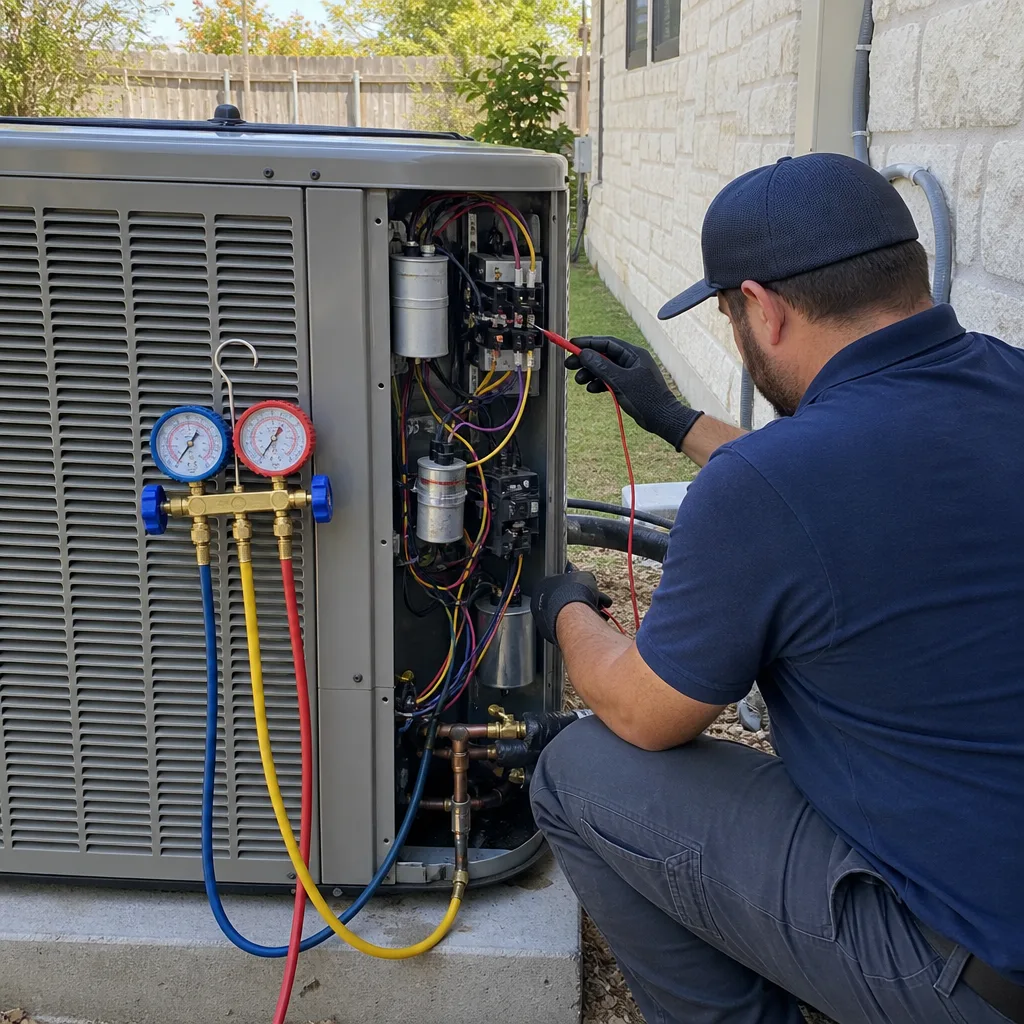 After
After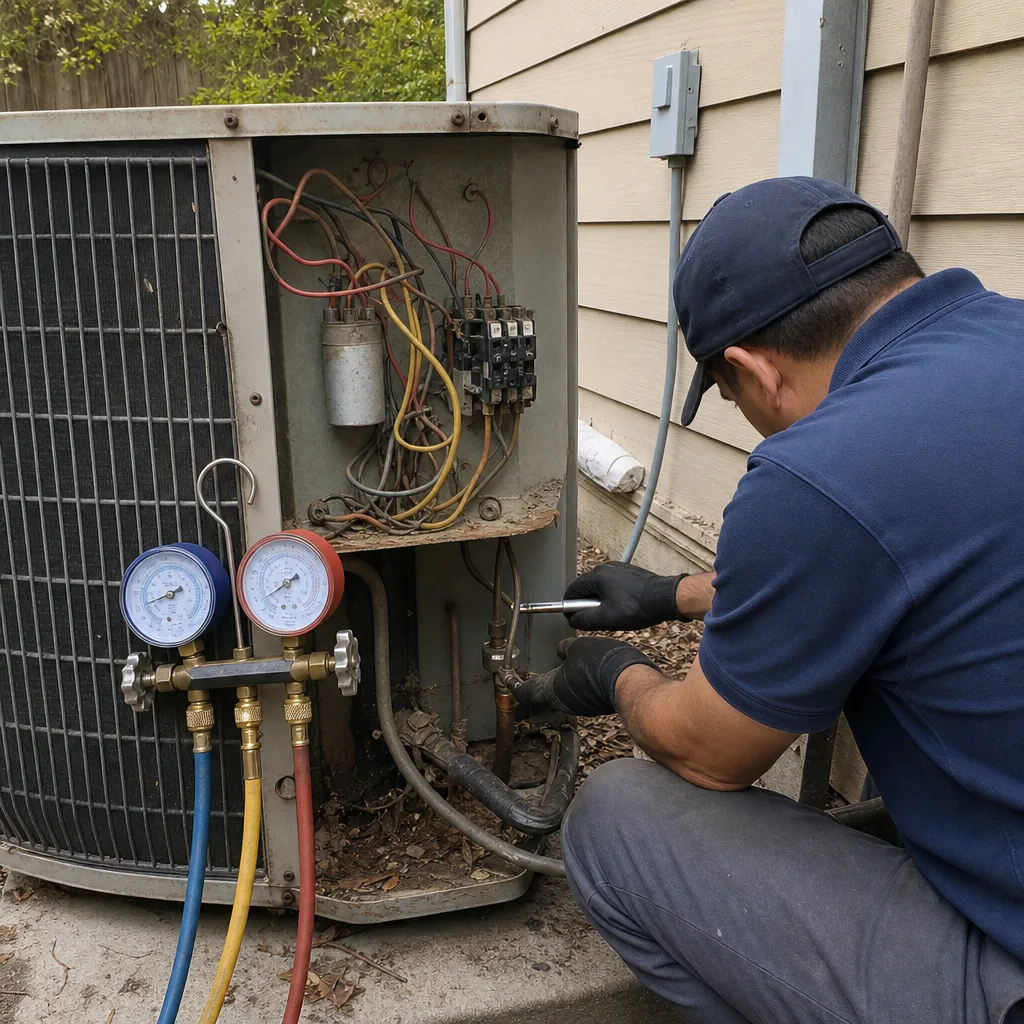 Before
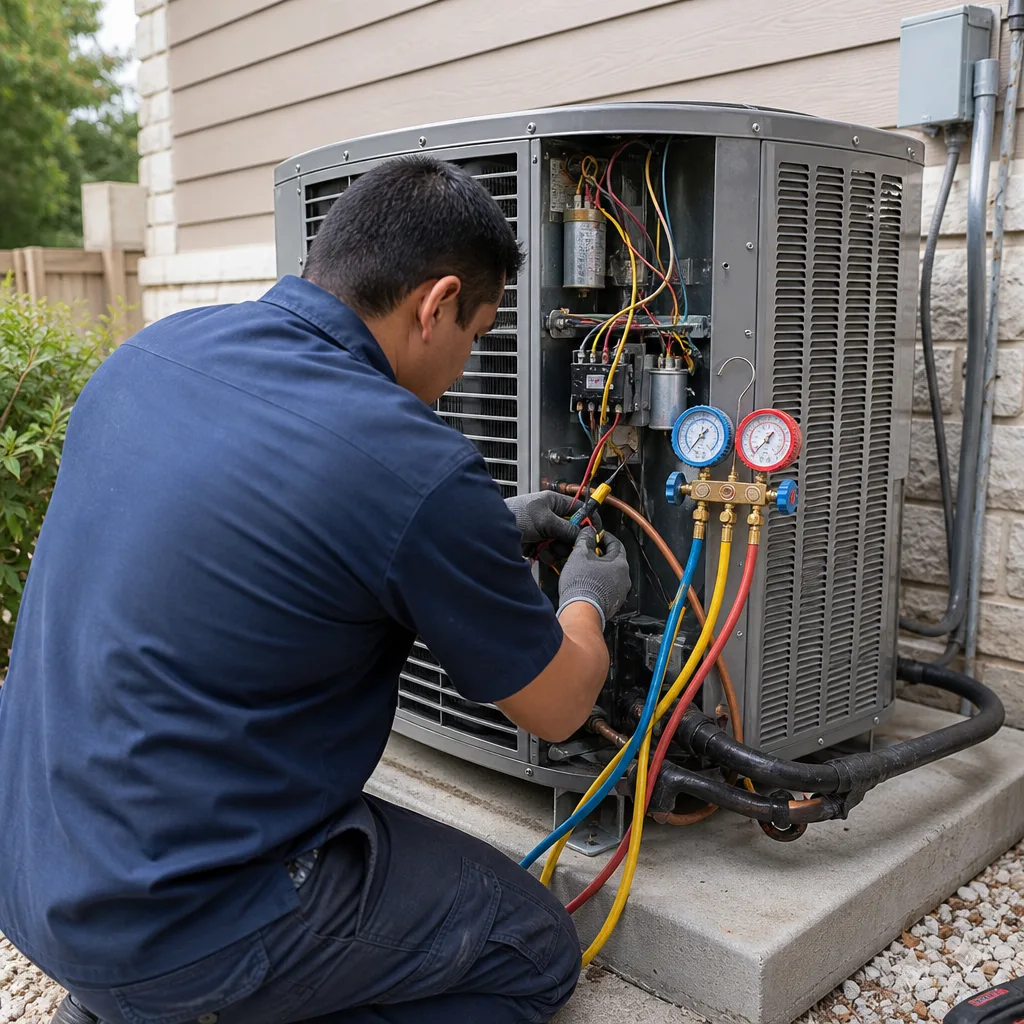 After
After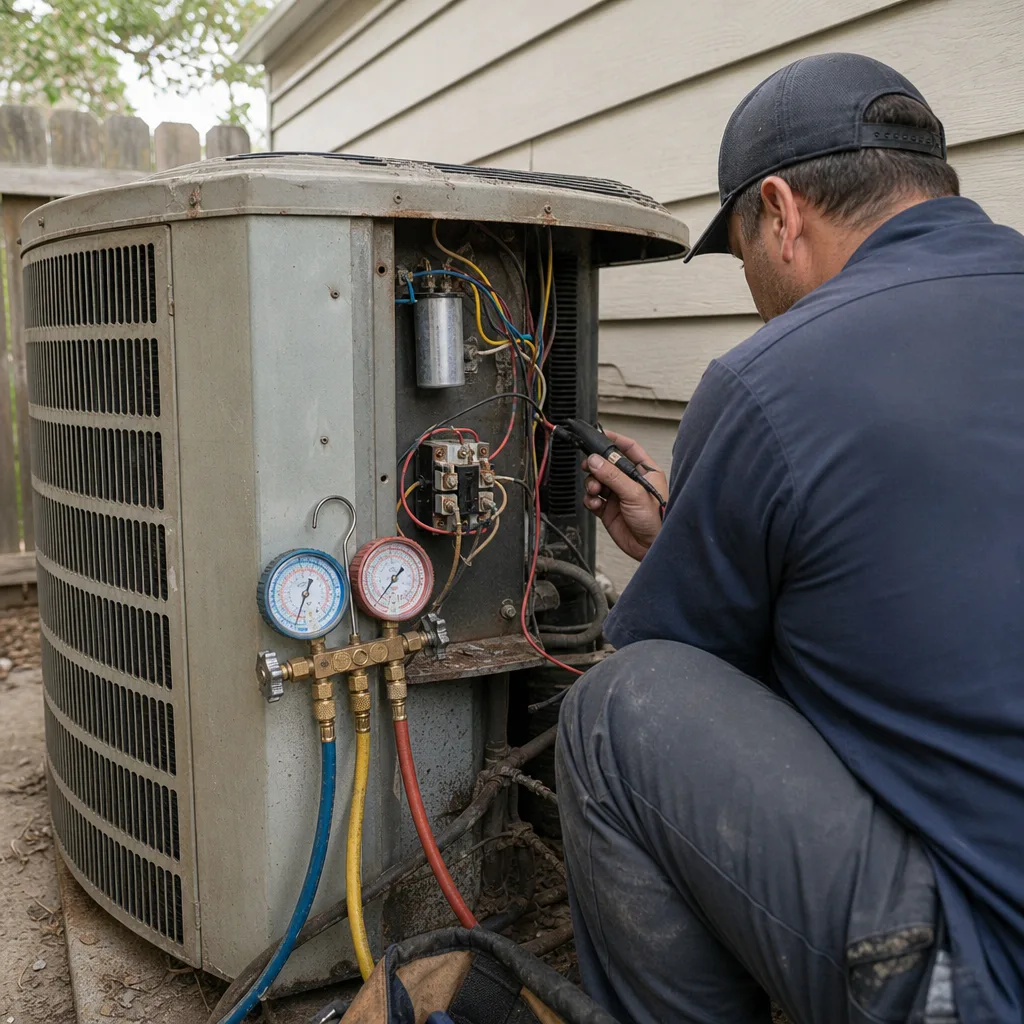 Before
 After
AfterDIY or Call Us?
Here’s the honest answer: a capacitor stores enough electrical charge to injure you even when the power is off. It’s the one part in your condenser that can bite after the breaker is thrown, and it needs to be safely discharged before removal. That’s not a scare tactic, it’s just the reality of the component. We once arrived at a home in the Pearl District where a homeowner had tried a swap themselves and shorted a terminal against the cabinet. The capacitor was ruined, and the repair cost more than if we’d been called first.
What you can safely check: is the breaker on, is the thermostat calling for cool, is the outside unit humming or completely silent. That information helps us diagnose faster when you call. But the capacitor itself is not a DIY part for most homeowners, and we’d rather see you keep your hands out of the electrical cabinet. Call (361) 470-8872 and we’ll have a background-checked, uniformed technician at your door, introduced to you by name and photo before they arrive.
FAQs
A Goodman capacitor typically lasts five to seven years in a moderate climate, but in San Antonio heat we routinely see them fail in three to four years. The combination of sustained 100-degree days and hard starts puts real stress on the internal dielectric, and a capacitor that survived last summer may not make it through this one. If yours is four years old and acting up, replacement is the honest fix. Call (361) 470-8872 for a free estimate and we’ll tell you exactly what your unit needs.
No. A capacitor is a sealed component, and once it fails internally, there’s no repair that restores it. Anyone offering to “fix” a capacitor is wasting your money. Replacement is the only correct repair, and it’s one of the most affordable fixes in HVAC.
A typical Goodman capacitor replacement takes 45 minutes to an hour from arrival to a running system. The work includes shutting down power, discharging the old capacitor, removing it, installing the new part, and running the system through a full start-up cycle to confirm both the compressor and fan are operating correctly.
Yes. Our San Antonio service trucks carry the most common Goodman capacitor sizes including 35/5, 40/5, 45/5, and 50/5 microfarad dual-run units in the correct voltage classes. If your unit needs a less common spec, we can typically have it in hand the same day from local supply houses. Call (361) 470-8872 and we’ll confirm availability before we arrive.
Call Brandt HVAC Co San Antonio for Goodman Capacitor Replacement
When a capacitor goes, it goes without warning, and waiting only makes the house hotter. Call (361) 470-8872 and a live person answers, day or night. We’ll give you a straight answer on price, confirm what capacitor your Goodman needs, and send a technician you already know by name and photo before they reach your door. Tell me what’s wrong, I’ll tell you what it costs, and we’ll get your house back to livable.
Written by Devin Marlowe, Owner, Brandt HVAC Co San Antonio at Brandt HVAC Co San Antonio, serving San Antonio and nearby areas.