
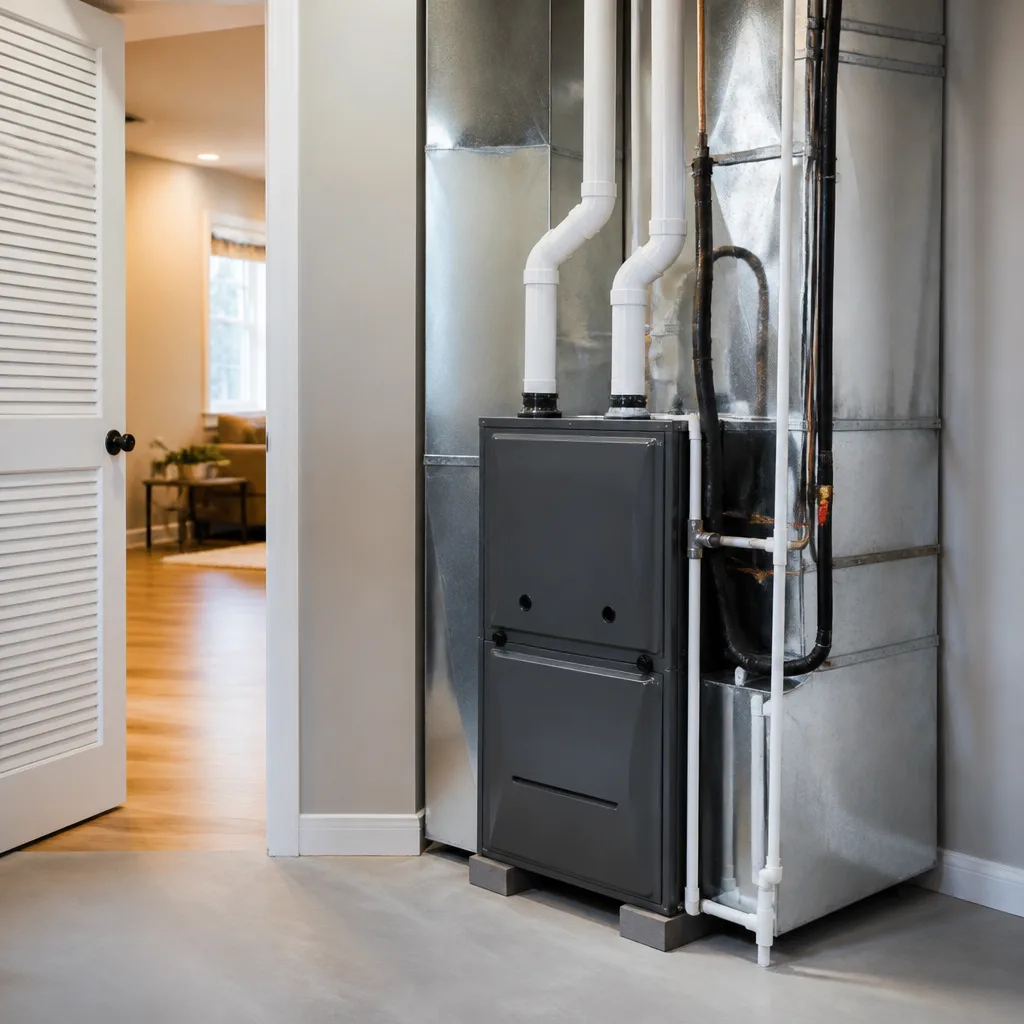
 Furnace & heating
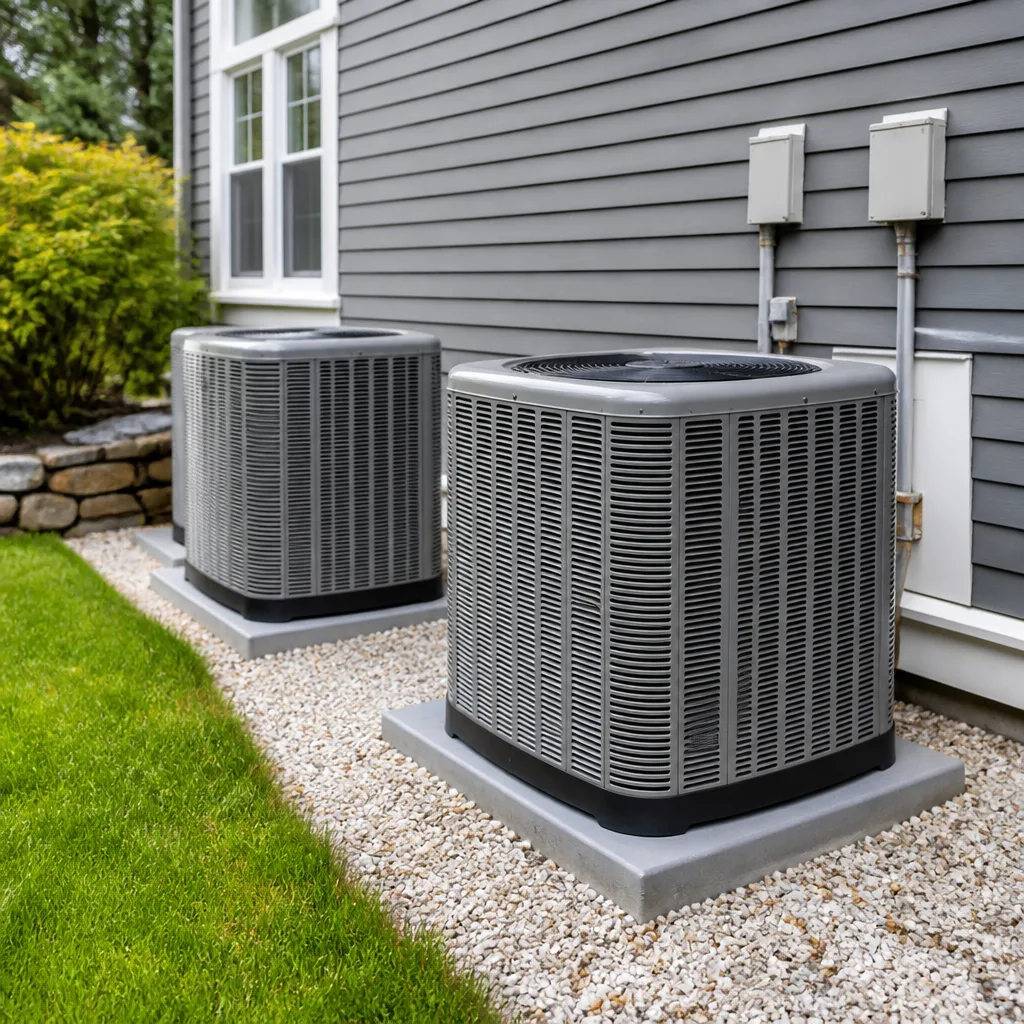 Heat pumps
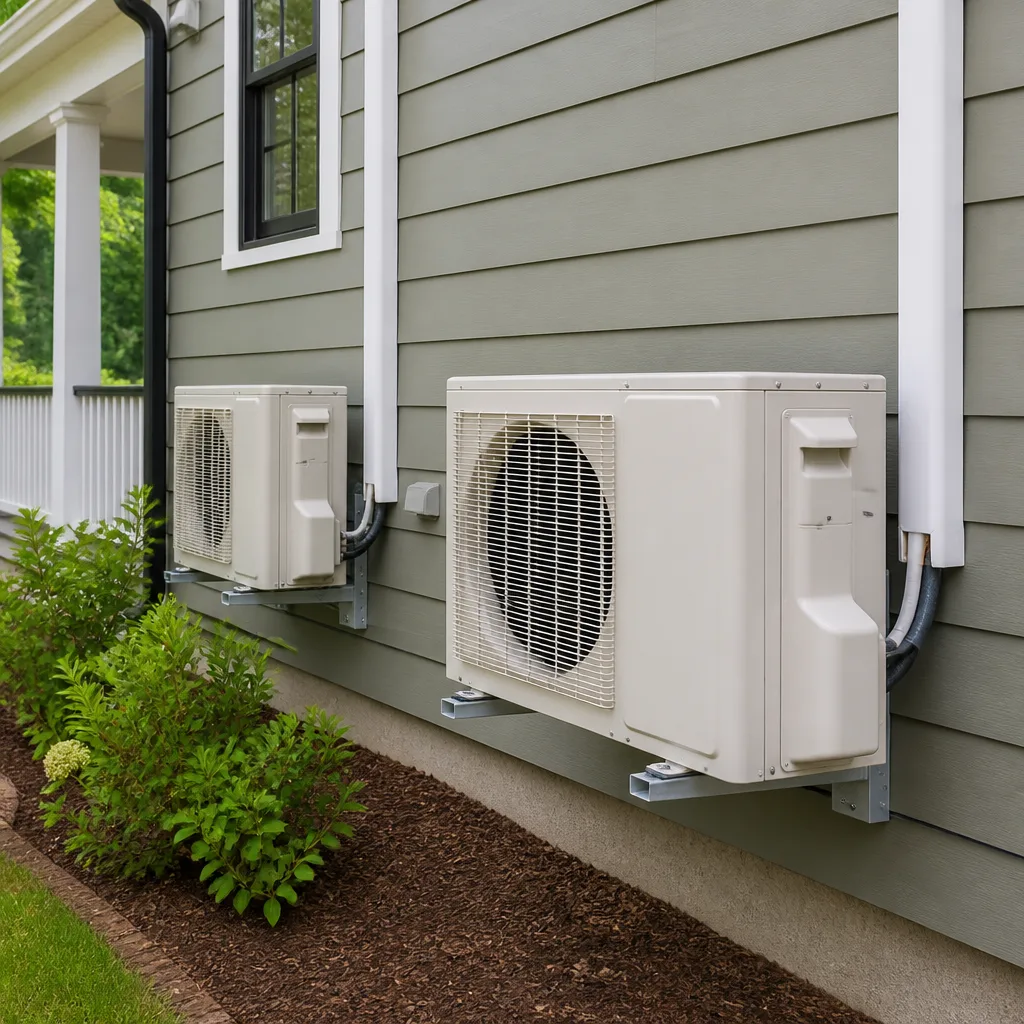 Ductless mini splits
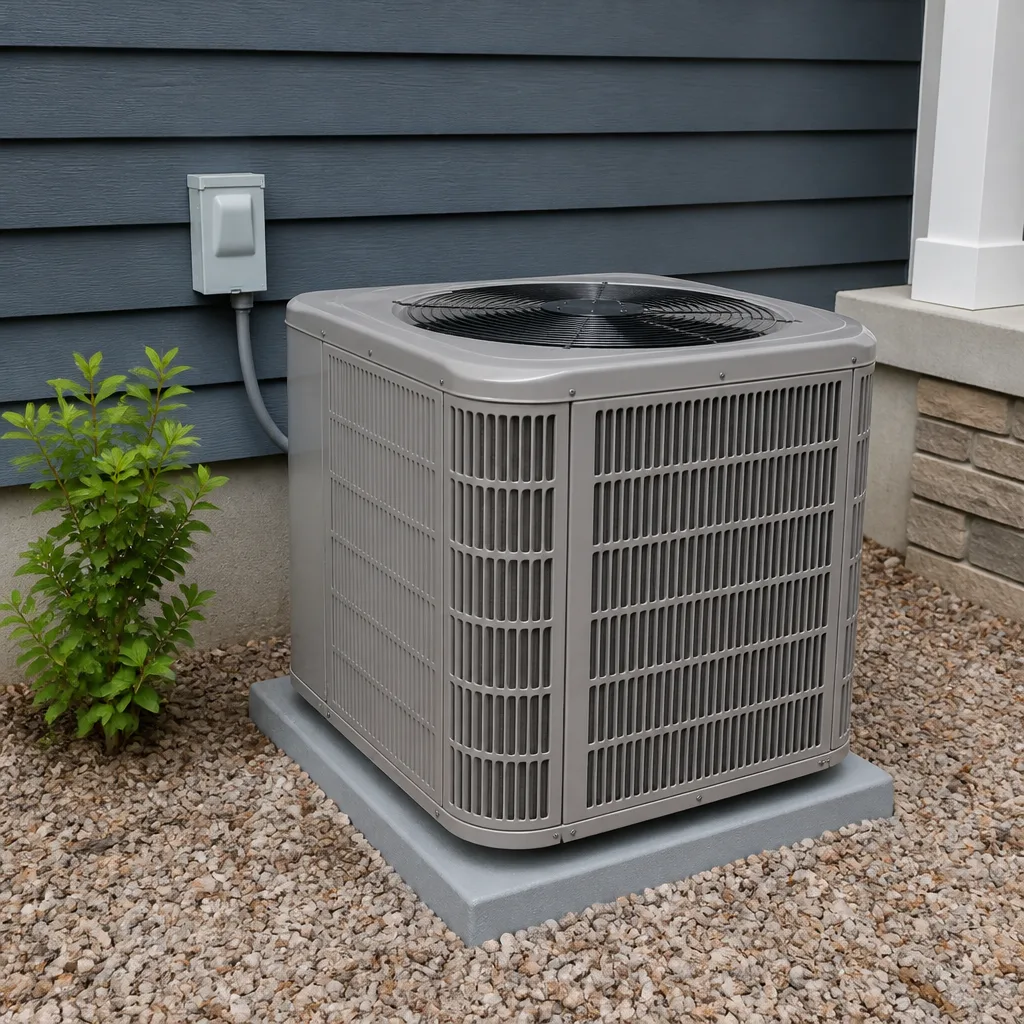 Carrier
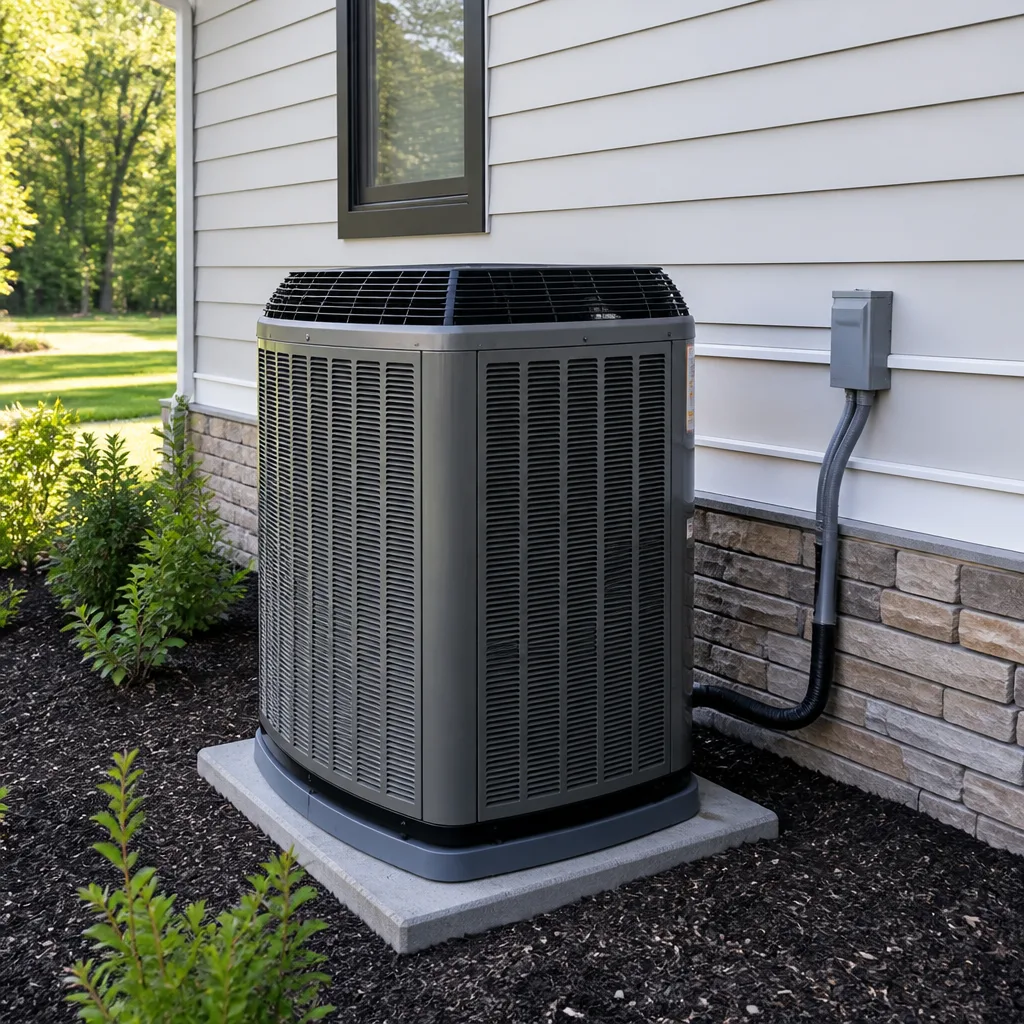 Trane
Trane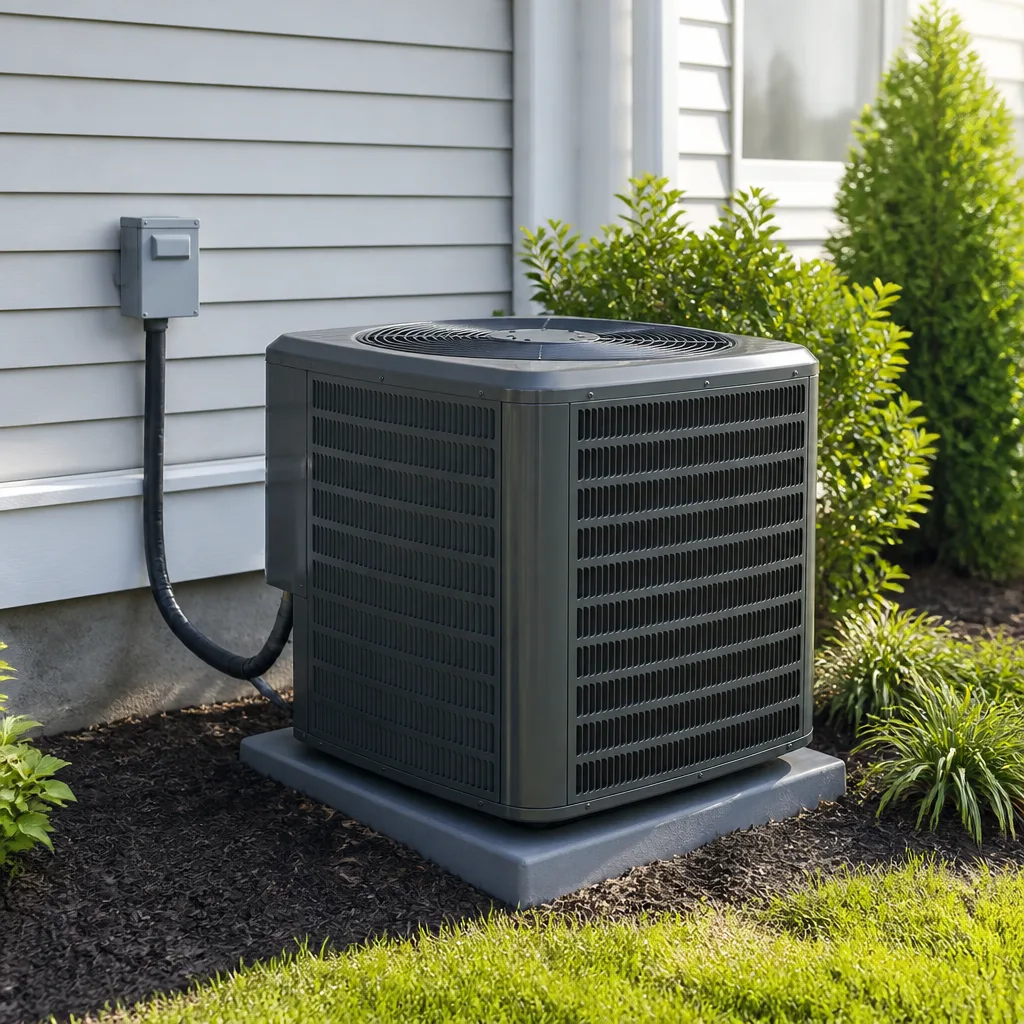 Goodman
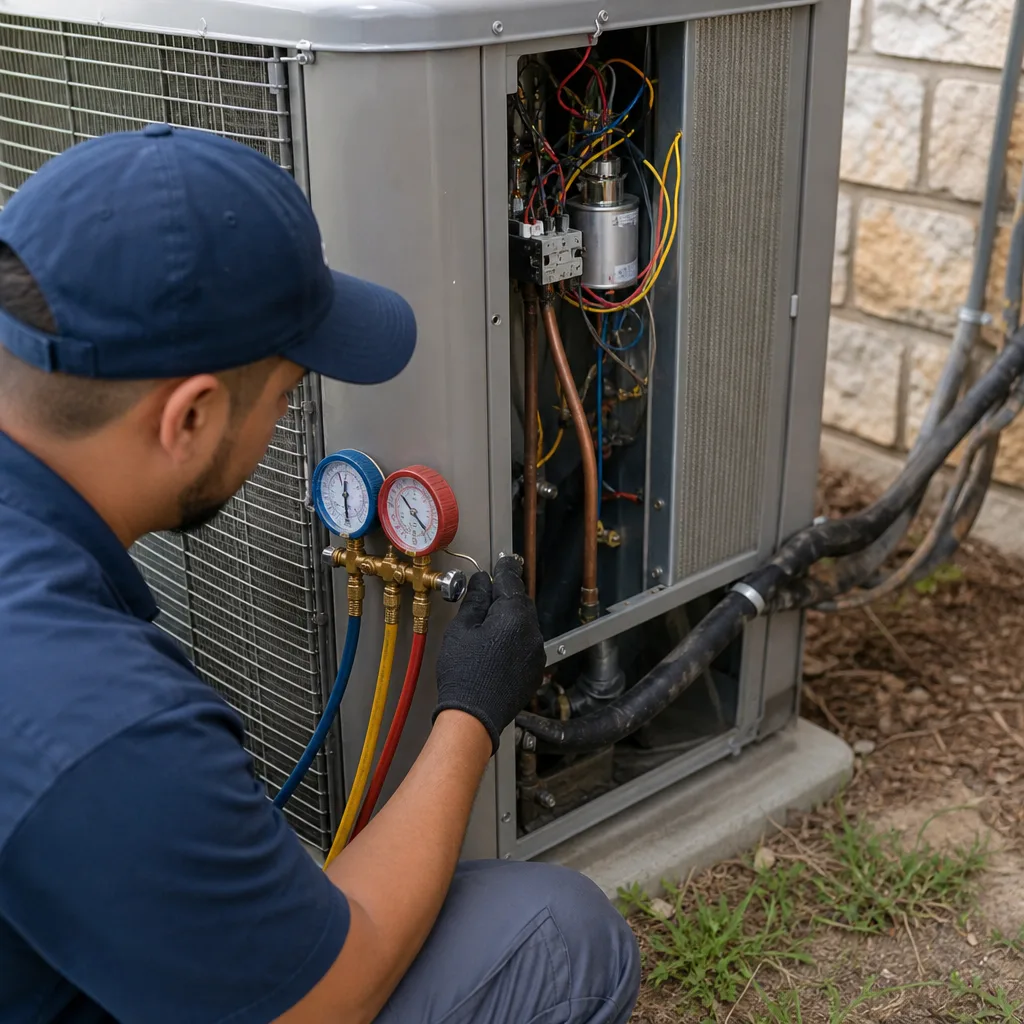
Seasonal tune-up and full diagnostic on your Carrier, Trane, or Goodman system - readings shown to you before any repair is proposed
Diagnosis first, numbers second - you approve the repair price before a single part goes in.
Get your free estimateAmerican Standard Capacitor Replacement: The San Antonio Owner’s Guide
A failed capacitor is the most common reason an American Standard air conditioner sits dead while the Texas sun does its worst. We stock American Standard-compatible capacitors on our trucks and typically complete the swap in under an hour, with most San Antonio replacements running $150 – $300 installed, parts and labor included. You’ll usually know it’s the capacitor before we even arrive: the outside unit hums but the fan won’t spin, or the compressor clicks and gives up. Sometimes the system runs for twenty minutes, quits, then tries again an hour later. That’s a capacitor losing its ability to hold a charge, and it only gets worse.
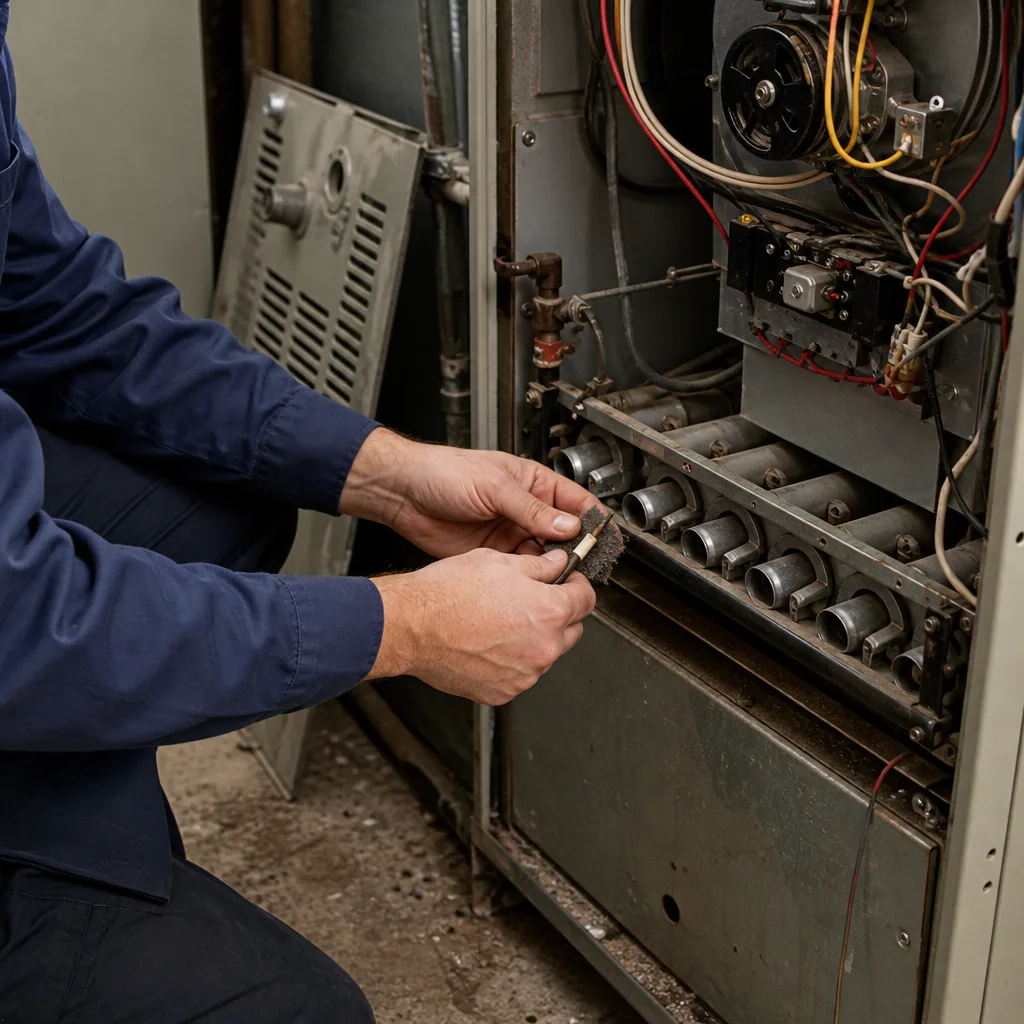
Which American Standard Models This Applies To
American Standard has used round metal-can run capacitors across its Silver, Gold, and Platinum series condensers for years, along with the Allegiance and Heritage lines you’ll still find all over San Antonio. Most residential units take a dual-run capacitor rated at 35/5, 40/5, 45/5, or 50/5 microfarads (µF), with the first number feeding the compressor and the second feeding the fan motor. The rating is printed right on the side of the old capacitor, along with a voltage spec that’s usually 370 or 440 VAC.
Here’s the compatibility gotcha that trips up a lot of homeowners: you can step up in voltage rating (a 440 VAC capacitor works where a 370 was), but the microfarad rating needs to match within about 5% of the original. Too far off and the compressor runs hot, draws more amperage, and shortens its life. American Standard’s OEM capacitors are solid units, but quality aftermarket equivalents from AmRad, Titan HD, and Mars perform just as well and often last longer. We’re independent, by the way, not affiliated with American Standard, but we match the spec, not the sticker, and we’ll show you the old part and the new part side by side before anything gets wired in.
Styles & brands we work with
Signs Your American Standard Capacitor Replacement Is Failing
- The outside unit hums but the fan won’t move. This is the classic dead-capacitor symptom. The compressor is getting power but lacks the starting jolt, so it hums against a locked rotor until the thermal overload kicks in.
- The fan turns slowly or only with a push. A weak capacitor can’t get the fan motor to full speed. If you can spin the blades with a stick and it catches, the motor itself is probably fine but the capacitor is done.
- The system short-cycles or trips the breaker. A capacitor that’s failing intermittently can cause the compressor to pull excessive current on startup, which trips breakers and overheats windings.
- The top of the capacitor is bulged or leaking oil. San Antonio heat ages capacitors chemically. When the internal dielectric breaks down, the can swells or weeps, and you can see it with the condenser cover off.
- The AC runs but air feels warm. If the compressor can’t sustain a charge through the full cycle, it may drop out while the fan keeps blowing. Your vents push air, but it’s not the cold stuff.
See the difference
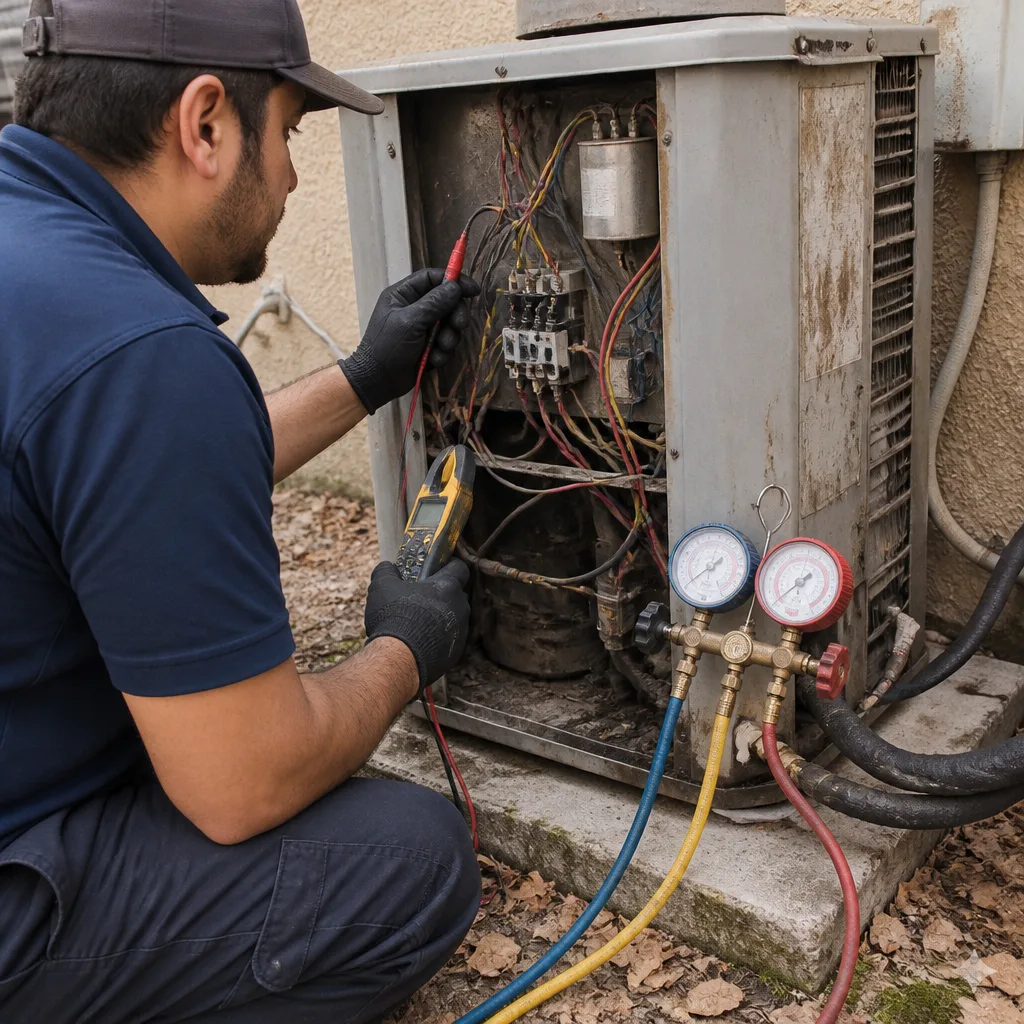 Before
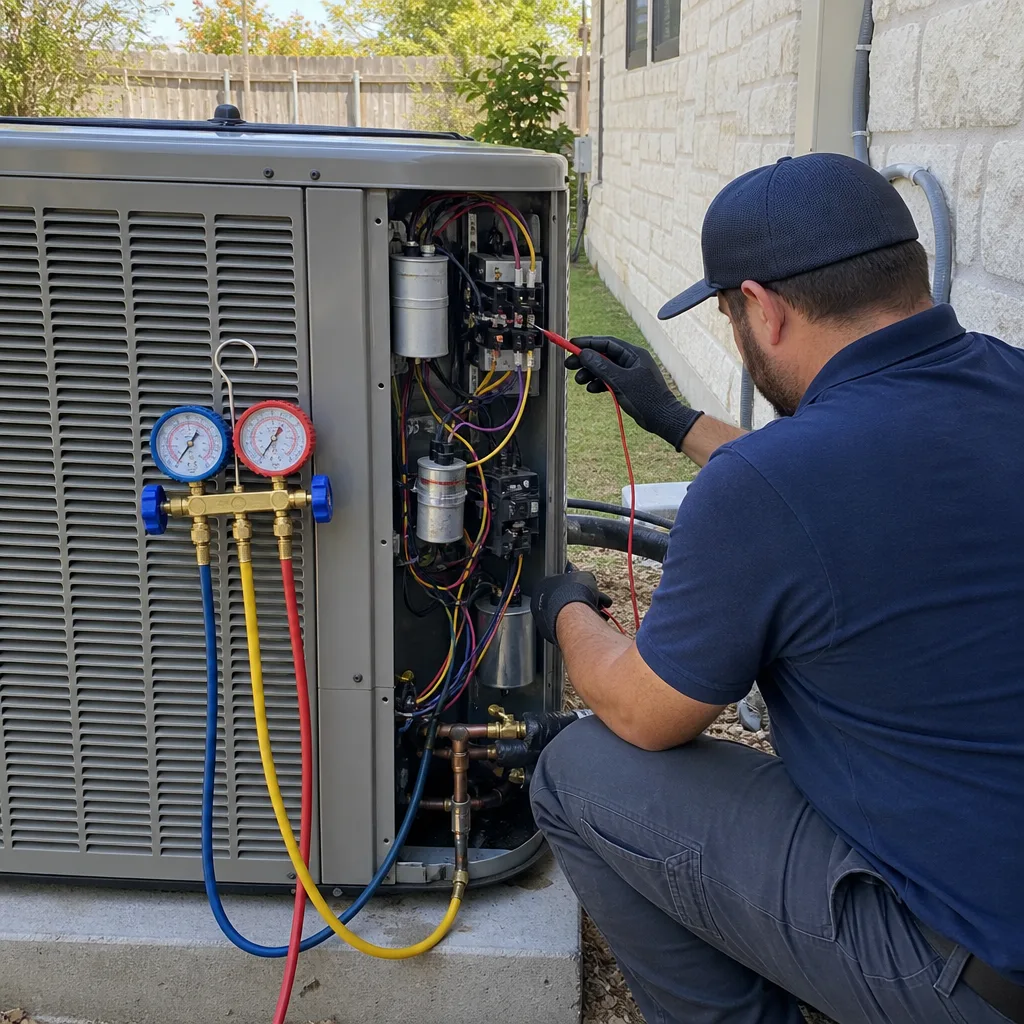 After
After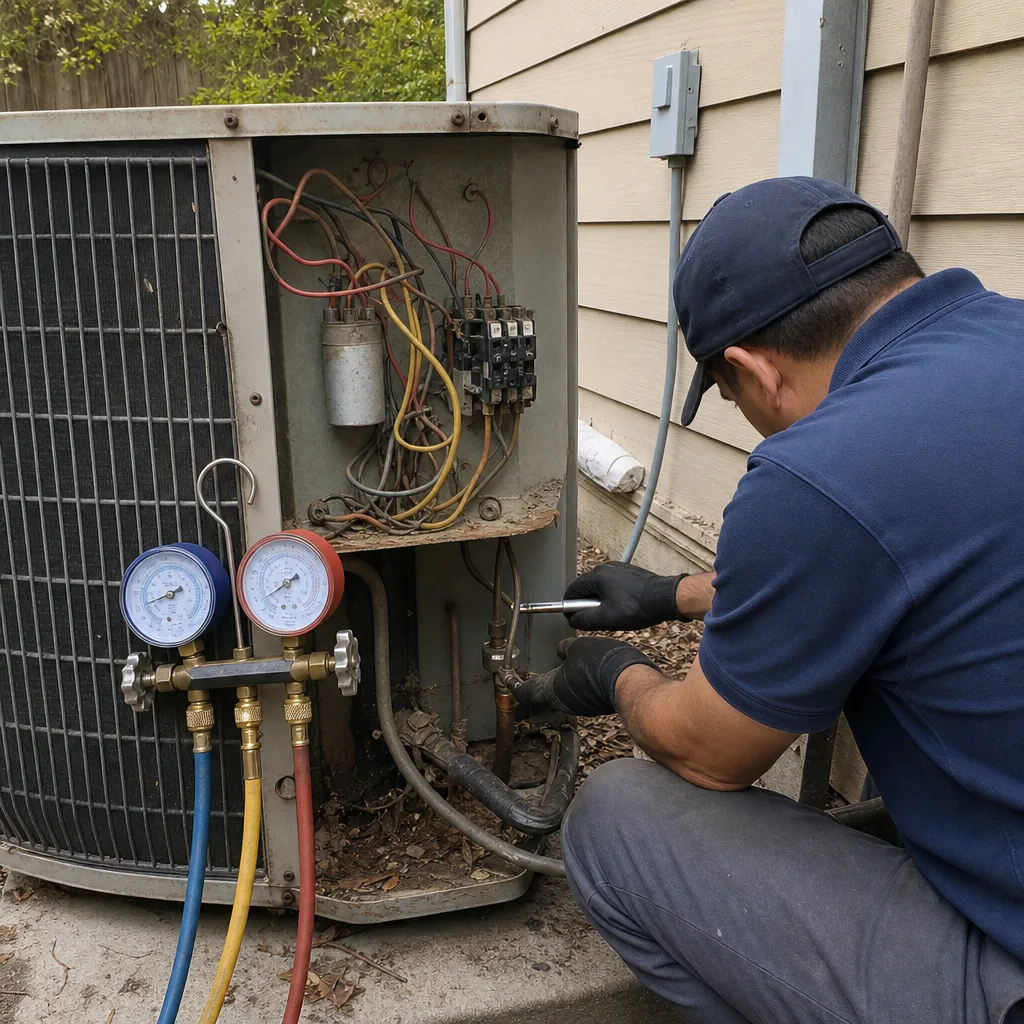 Before
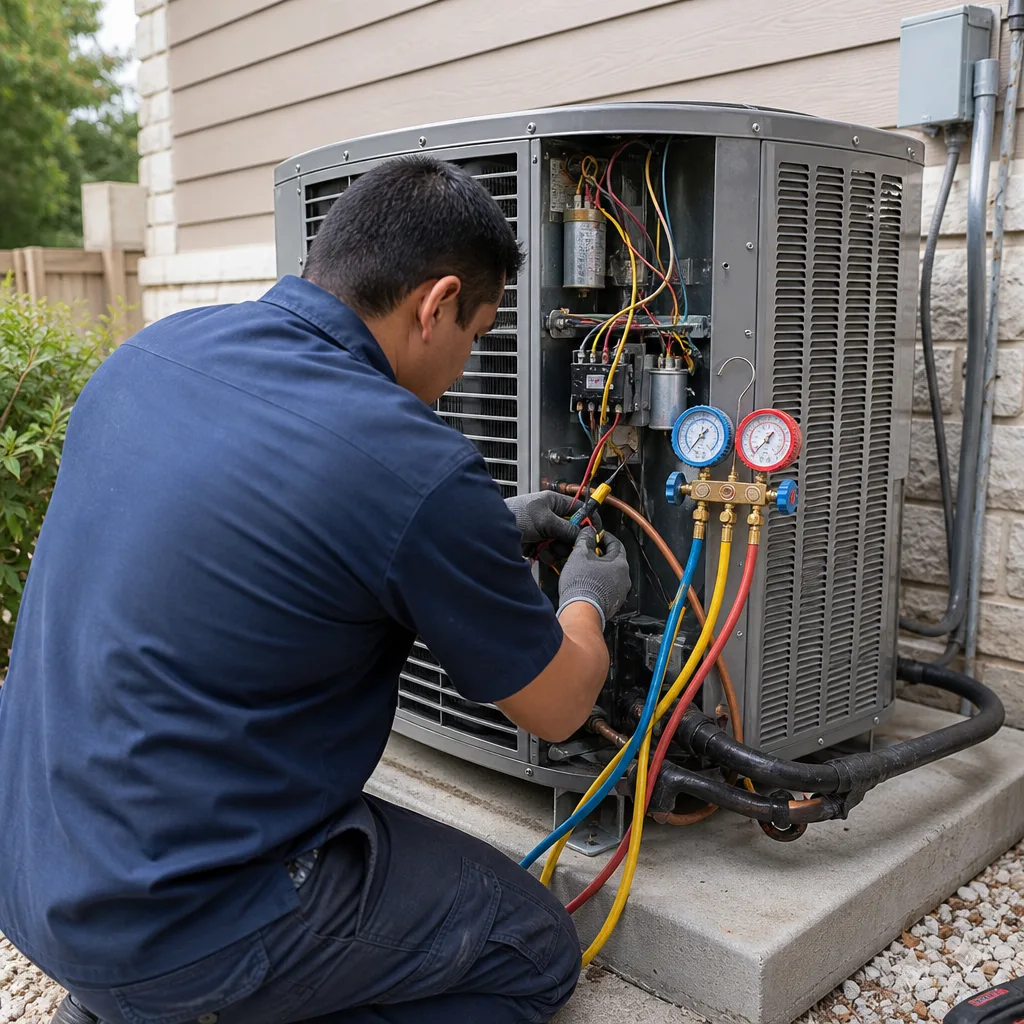 After
After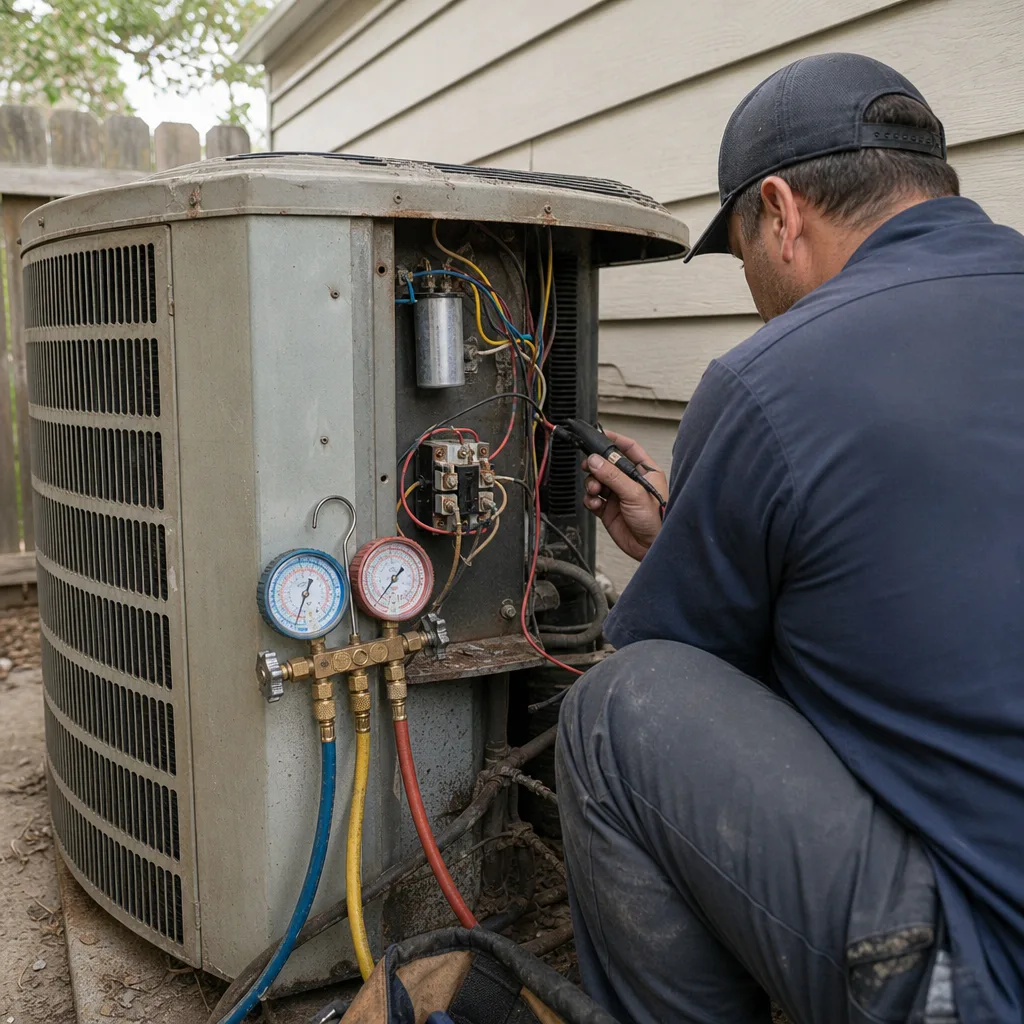 Before
 After
AfterReplacement Cost & What’s Included
For an American Standard capacitor replacement in San Antonio, expect to pay between $150 and $300 installed. That’s the parts-plus-labor total, not a parts-only price with labor added at the door. At the lower end you’re looking at a single-capacitor swap on an easy-access condenser; the upper end covers a dual-run capacitor, possibly a hard-start kit if the compressor is older, and a system check to make sure nothing else contributed to the failure.
Brandt’s policy is a written price before we touch anything. You’ll see the number, agree to it, and we do the work. The repair carries a 365-day guarantee: if the capacitor we install fails within a year, we come back and replace it at no charge. No arguing, no trip fee, no fine print.
DIY or Call Us?
A capacitor stores enough voltage to stop your heart, even with the system powered down. It’s not like swapping a light switch. We’ve had homeowners show us YouTube videos of discharging capacitors with a screwdriver, and what looks easy on camera is a genuine hazard in person. That stored charge lingers after shutdown, and the wrong move against the wrong terminal is not a mistake you get to make twice.
What you can safely do is look at the capacitor through the condenser’s side vent. If the top is bulged, leaking, or the can looks swollen, that confirms the diagnosis. You can also check your thermostat setting and breaker, which are the non-electrical basics. But the actual swap, the wiring, and the discharge belong to someone with the right meter and the right training. Devin Marlowe, our owner, will quote the job straight before any work begins. Call (361) 470-8872 and we’ll have a technician headed your way.
FAQs
Plan on 5 to 10 years, but San Antonio’s sustained triple-digit heat routinely shortens that to 4 to 7. The hotter the condenser cabinet gets, the faster the dielectric fluid inside the capacitor breaks down. If your unit is past year six and acting odd, the capacitor is the first suspect.
No. A capacitor is a sealed, non-serviceable component. Once it swells, leaks, or loses microfarad capacity, the only fix is removal and replacement. Anything else is a band-aid that fails again.
Most swaps run 45 minutes to an hour from arrival to a running system. That includes discharging the old capacitor, confirming the replacement matches the microfarad and voltage rating, and testing startup under load.
Yes. Our trucks in San Antonio carry the common American Standard dual-run ratings, 35/5 through 50/5, in both 370 and 440 VAC, plus hard-start kits for older compressors. Same-day service is normal for this repair, and we also stock equivalent parts for Carrier, Trane, and Lennox systems.
If your American Standard unit is humming without starting or the fan’s given up, call (361) 470-8872 for a free estimate. We’ll give you a straight price before any work starts, and you’ll know exactly who’s coming to your door, by name, before they arrive.
Written by Devin Marlowe, Owner, Brandt HVAC Co San Antonio at Brandt HVAC Co San Antonio, serving San Antonio and nearby areas.