
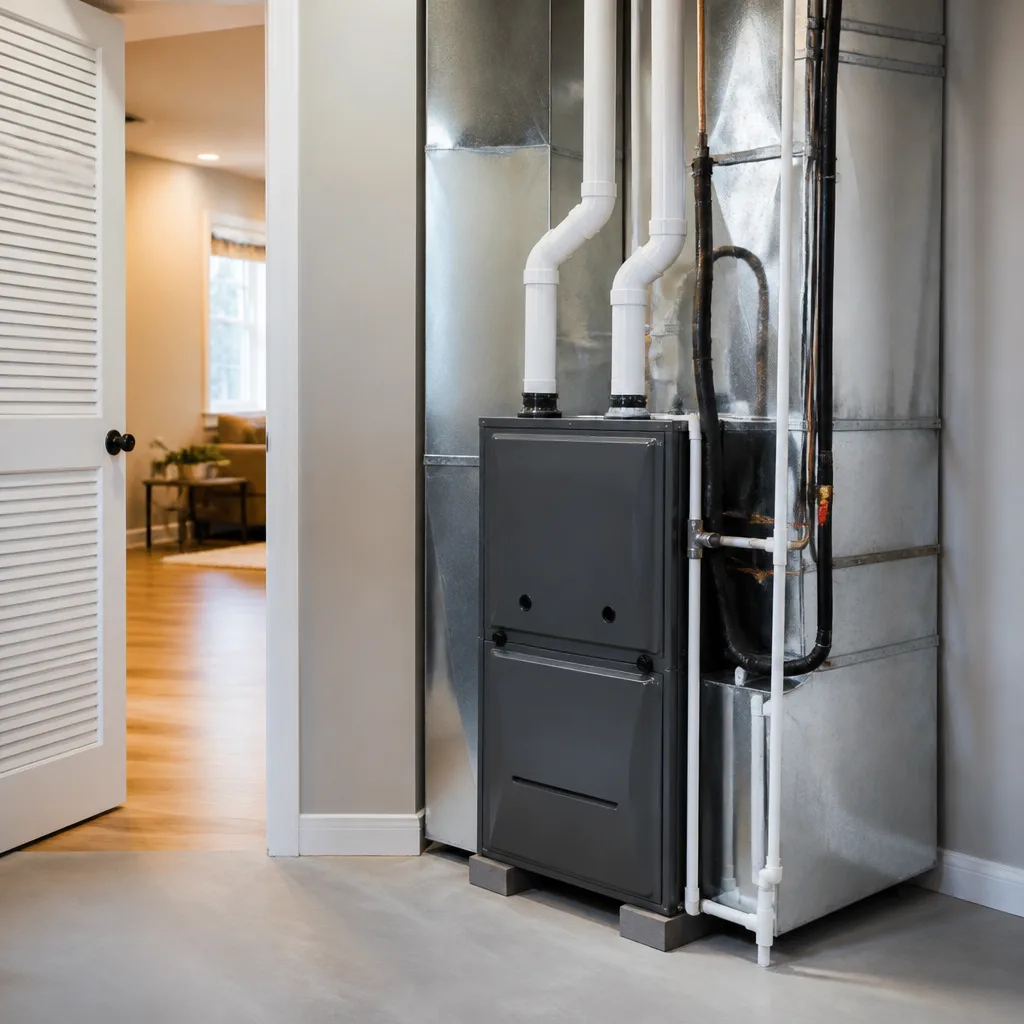
 Furnace & heating
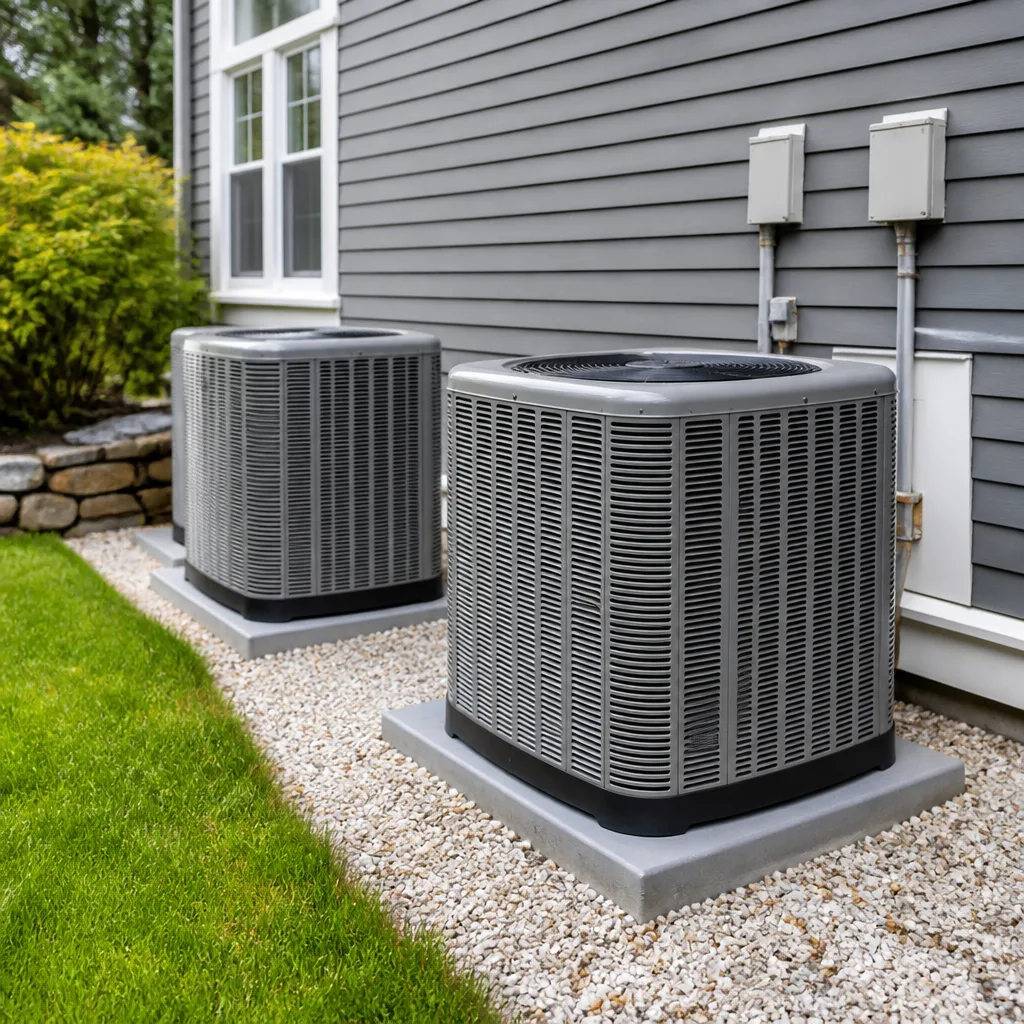 Heat pumps
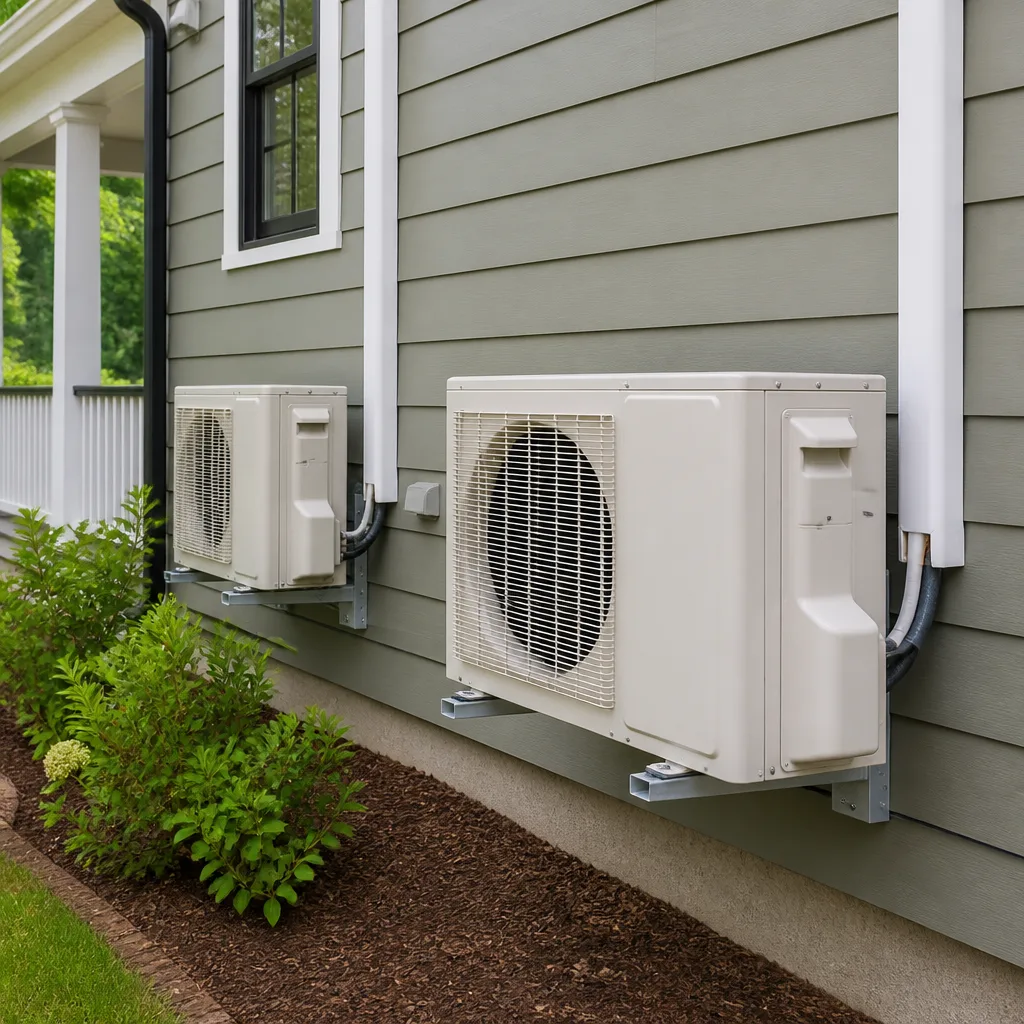 Ductless mini splits
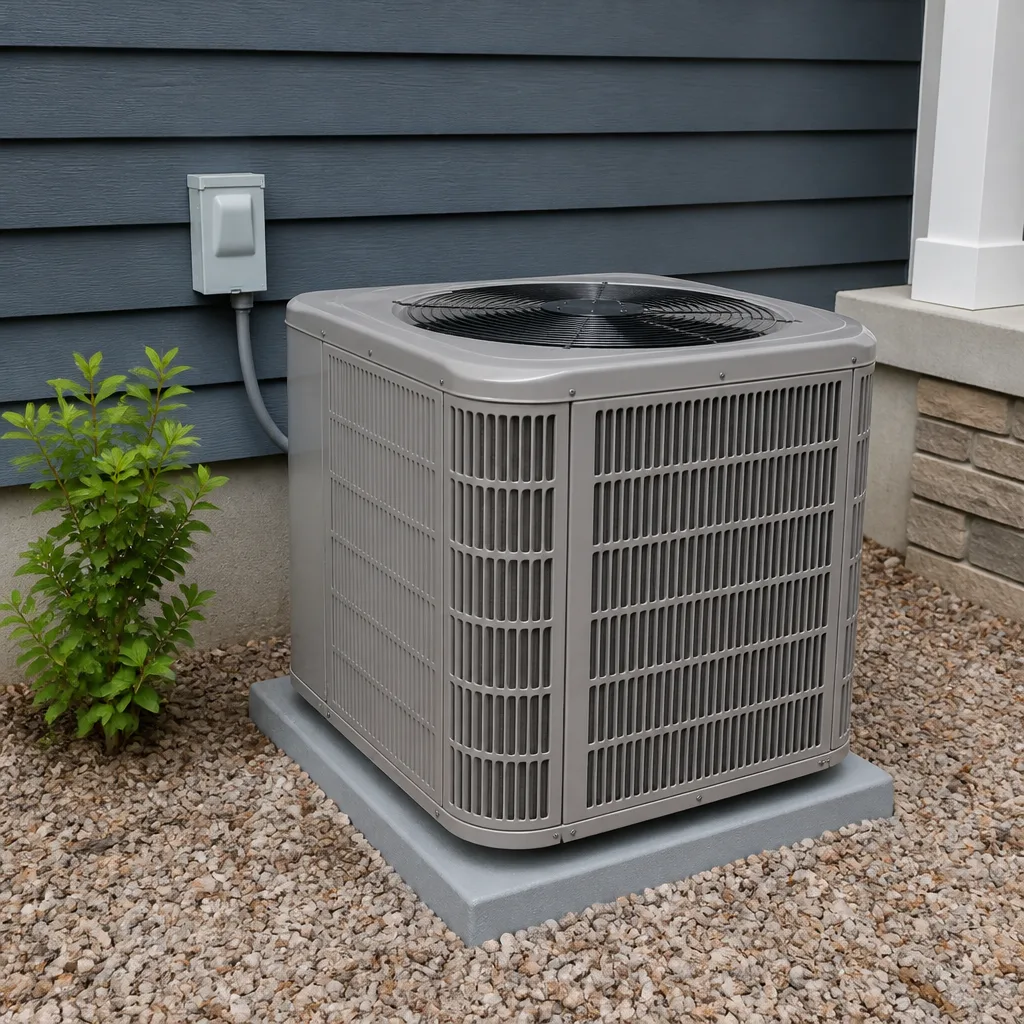 Carrier
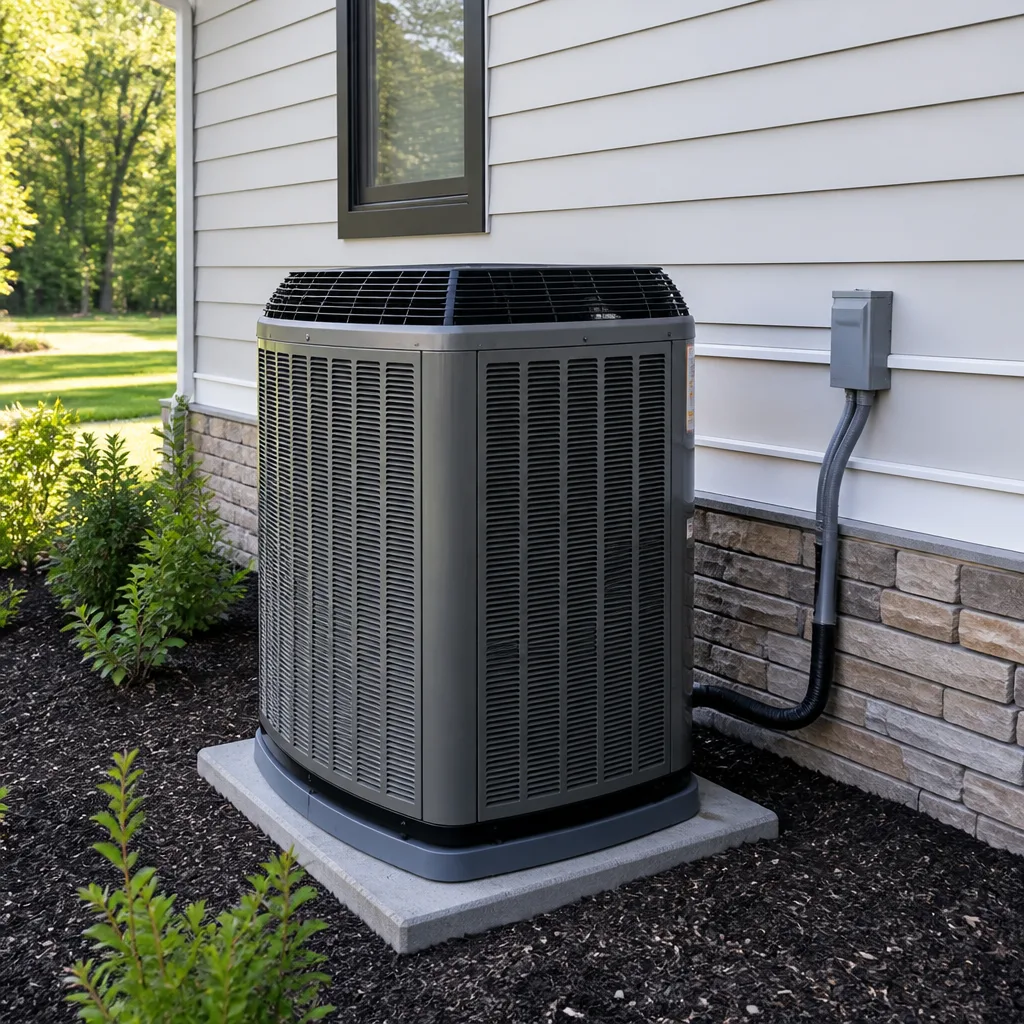 Trane
Trane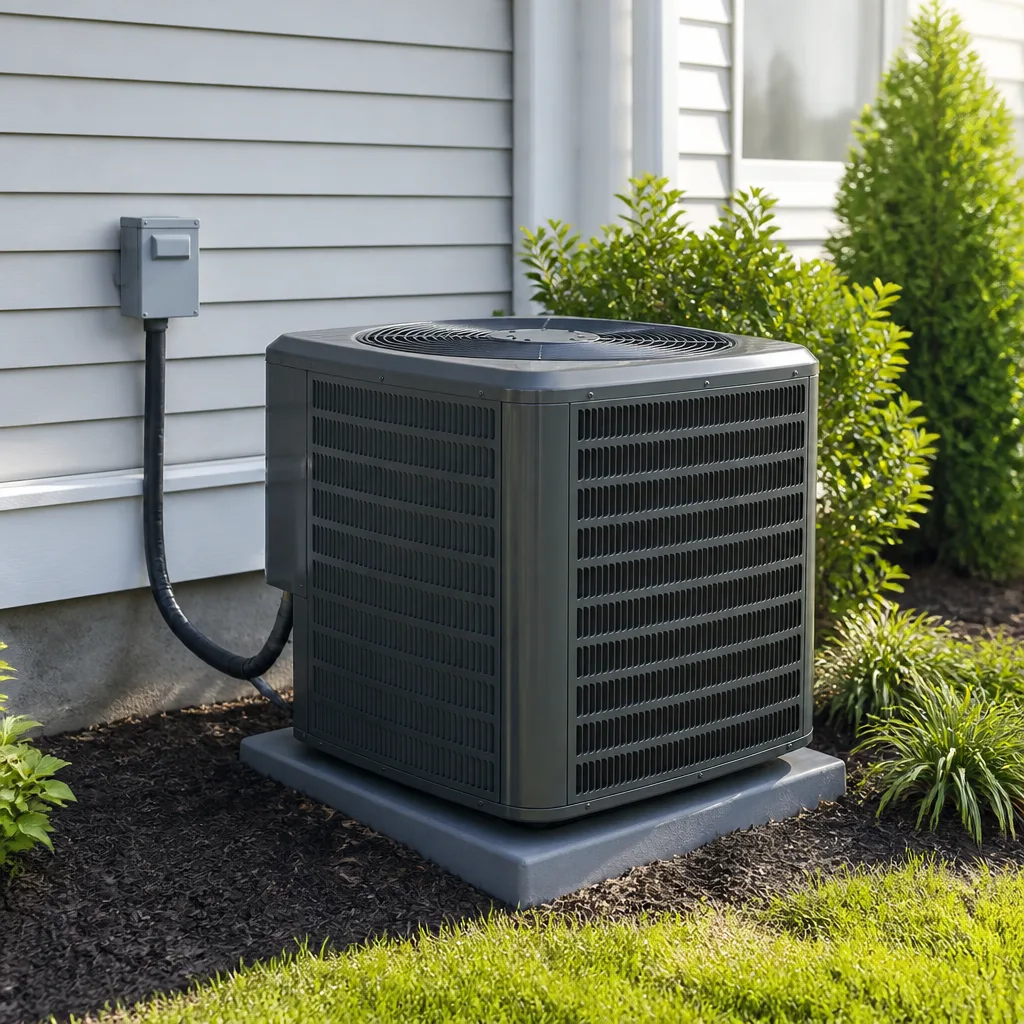 Goodman
Seasonal tune-up and full diagnostic on your Carrier, Trane, or Goodman system - readings shown to you before any repair is proposed
Diagnosis first, numbers second - you approve the repair price before a single part goes in.
Get your free estimateLennox Capacitor Replacement: The San Antonio Owner’s Guide
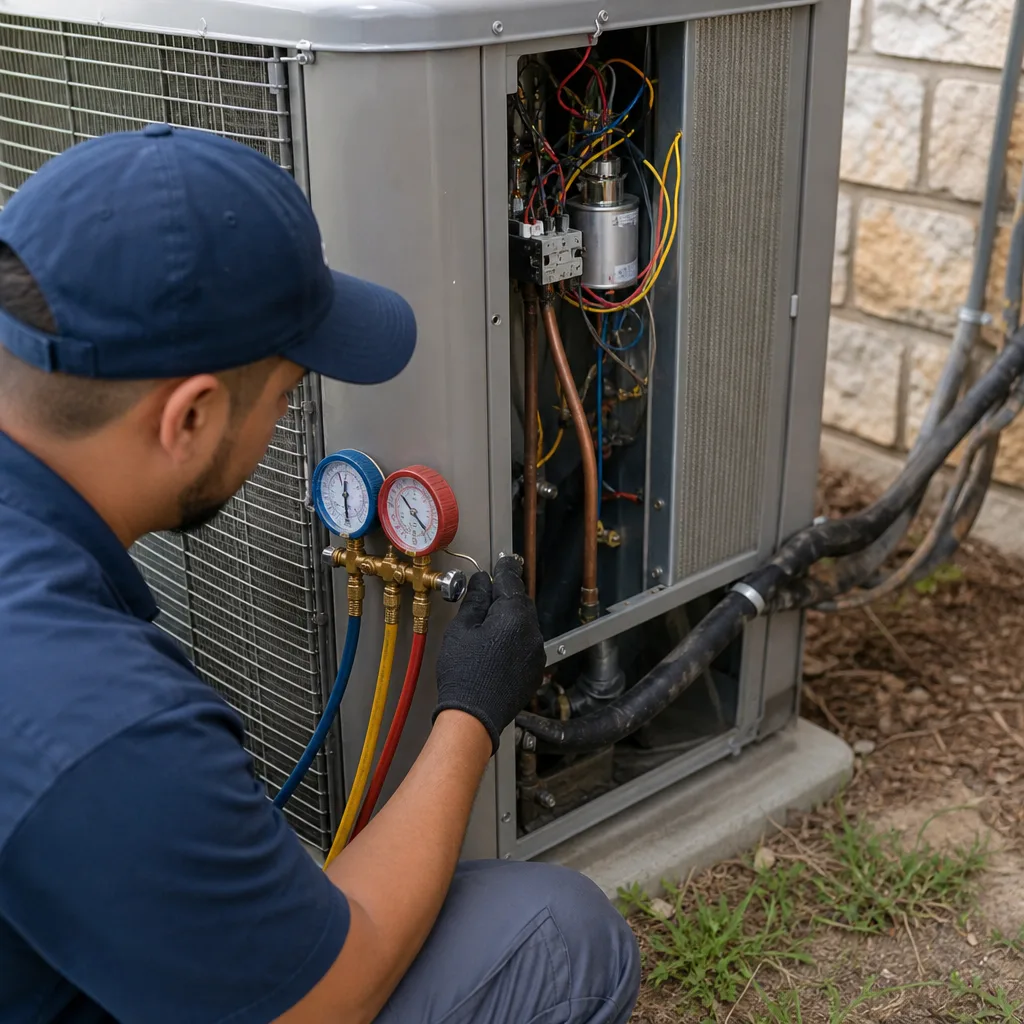
We stock Lennox-compatible capacitors on our trucks and complete most replacements the same day we diagnose the failure. A typical Lennox capacitor replacement in San Antonio runs $150 to $350 installed, including the part, labor, and a written one-year guarantee on the repair. That price assumes a standard 35/5 or 45/5 dual-run capacitor, which covers the majority of Lennox residential condensing units. The way most San Antonio homeowners discover the problem is simple: the outdoor unit hums but the fan won’t spin, or the compressor clicks and gives up a few seconds later. Sometimes the air is warm but the system sounds like it’s trying. A capacitor is a small cylinder, about the size of a D battery on steroids, that stores the electrical jolt your compressor and fan motor need to start. When it weakens or dies, the motors either struggle, overheat, or refuse to turn at all. In a Texas July, this is not a problem that waits politely.
Key takeaways:
- Most Lennox capacitor replacements in San Antonio run $150 to $350 installed
- We carry OEM-spec and high-grade aftermarket capacitors for Lennox units on the truck
- Same-day replacement is standard when we diagnose a failed capacitor
- The repair carries a written 365-day guarantee through our Done Right Promise
- Call (361) 470-8872 and you’ll get a live person, not a phone tree
Which Lennox Models This Applies To
If your Lennox condenser was built in the last 20 years, odds are it uses a dual-run capacitor, which means one small cylinder handles starting duty for both the compressor and the condenser fan motor. This includes the Merit series (13ACX, 14ACX), Elite series (XC13, XC14, XC16), and the higher-end Signature series (XC21, XC25). A handful of older Lennox units and some mini-split configurations use separate run capacitors, one for each motor. The only way to know for certain is to read the label on the failed part. Every capacitor carries a microfarad rating, printed as something like 45/5 µF or 40/5 µF, plus a voltage rating, typically 370 or 440 VAC. The replacement has to match the microfarad rating exactly, or within the manufacturer’s stated tolerance, which for most Lennox units is plus or minus 5 percent. Here’s the compatibility gotcha: a 440 VAC capacitor can substitute for a 370 VAC part, but never the other way around. The 370 is not built for the higher stress. As for OEM versus aftermarket, the honest version is this: Lennox does not manufacture capacitors. They buy them from the same tier-one electrical suppliers that make quality aftermarket equivalents sold under brands like AmRad, Titan HD, and Genteq. We stock AmRad and Titan HD because in our experience across thousands of San Antonio service calls, they fail less often under high outdoor ambient heat than the budget imports. A quality aftermarket capacitor from a known manufacturer will match or outlast the one Lennox put in at the factory. We’re an independent service provider, not affiliated with Lennox, so our recommendation is based on what survives a Texas summer, not what a brand label says.
Styles & brands we work with
Signs Your Lennox Capacitor Replacement Is Failing
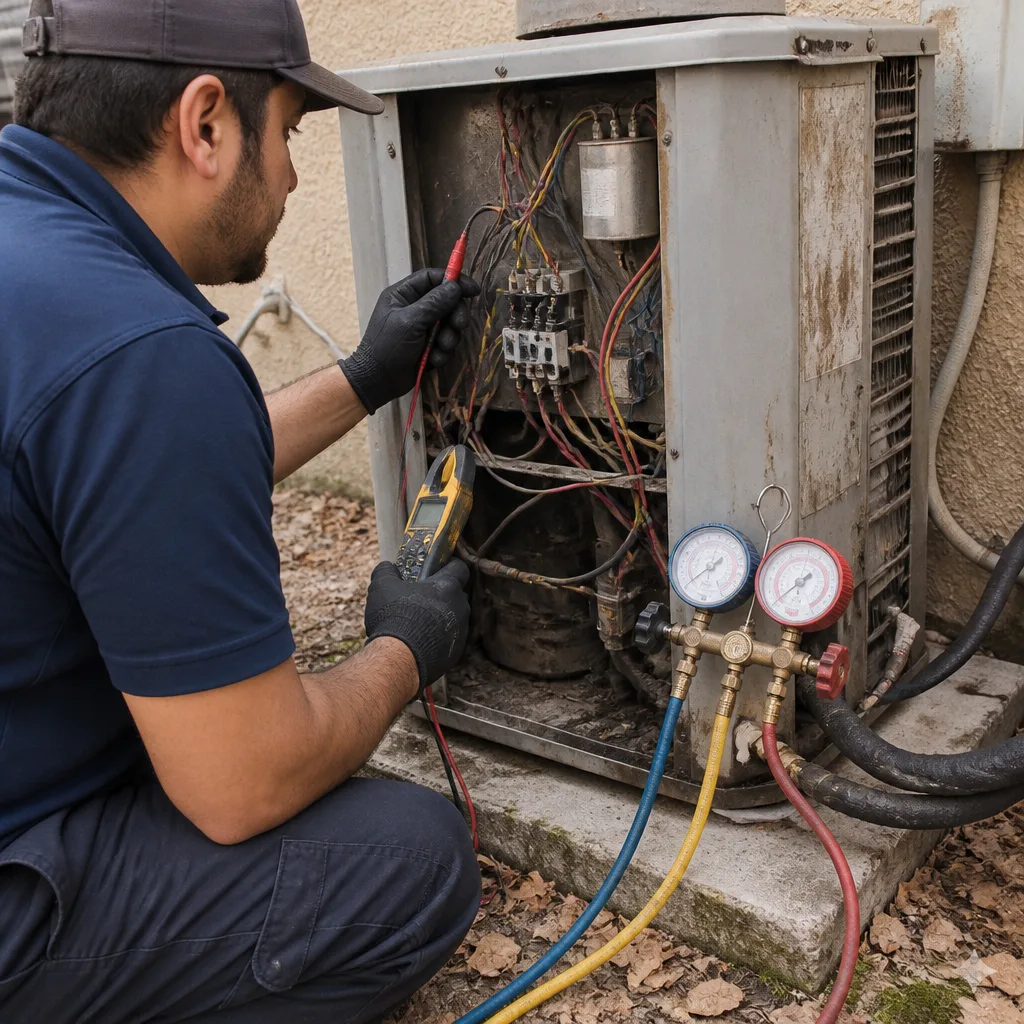
- The outdoor unit hums but the fan doesn’t spin. That hum is the compressor or fan motor trying to start but lacking the electrical push to get moving. A dead capacitor is the most common cause. If you hear this, shut the system off at the thermostat to avoid burning out the motor.
- The compressor turns on, then clicks off a few seconds later. That’s the thermal overload cutting power because the compressor can’t overcome its starting torque. This cycle can repeat every few minutes. Each failed start generates heat, and repeated heat cycles are what shorten a compressor’s life.
- The top of the capacitor is domed, split, or leaking a brownish fluid. A swollen capacitor is a dead capacitor. The fluid is dielectric oil, and once the case bulges, the internal plates have shorted. This is visible without touching anything, and if you see it, the diagnosis is done.
- Your home’s cooling is intermittent. Some capacitors fail gradually, losing microfarad capacity over weeks. The system may start and run in the cooler morning, then fail to restart in the mid-afternoon heat when San Antonio hits the high 90s. The weak capacitor can’t push the compressor through the higher-pressure conditions of a hot day.
- The fan spins, but only slowly or only after a manual push. This points to the fan-side portion of a dual capacitor failing while the compressor side still works. The fan motor overheats running at low speed, and if it runs long enough, it takes the motor out too.
See the difference
 Before
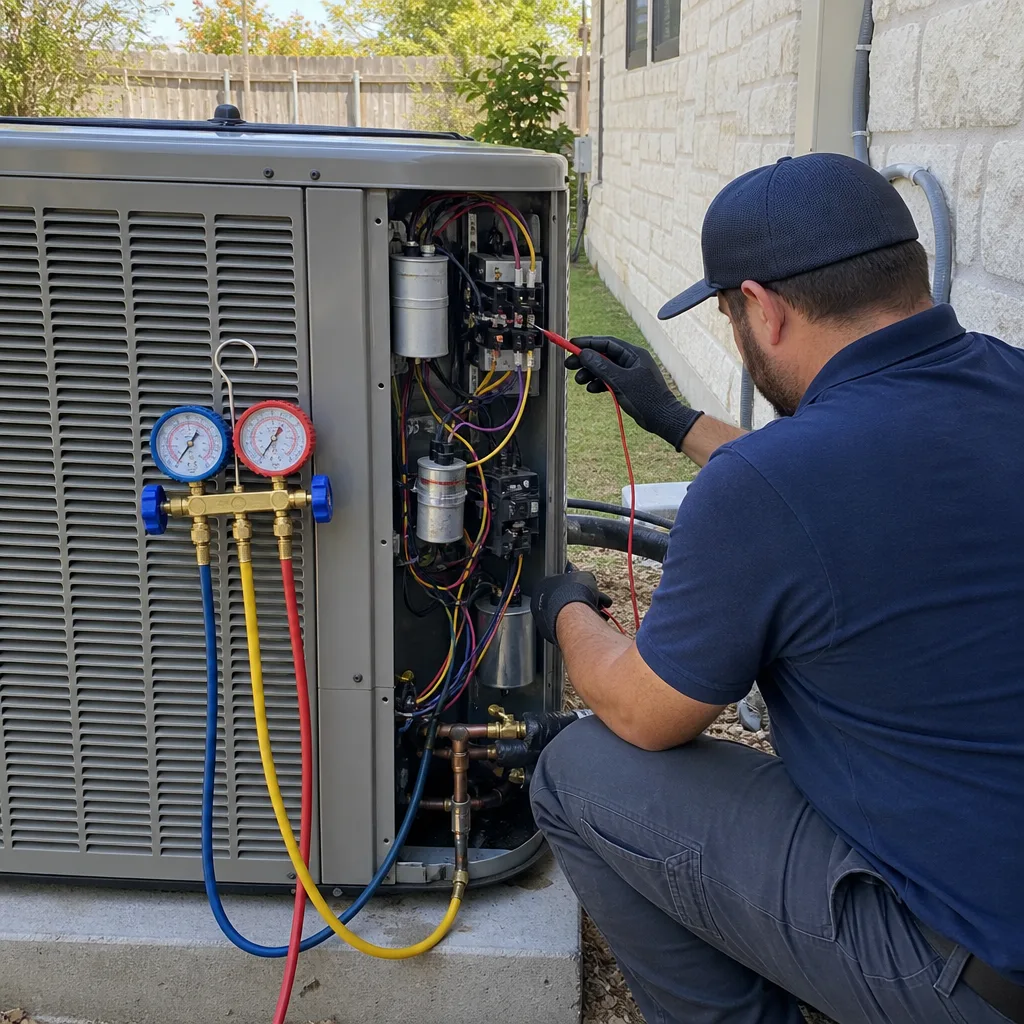 After
After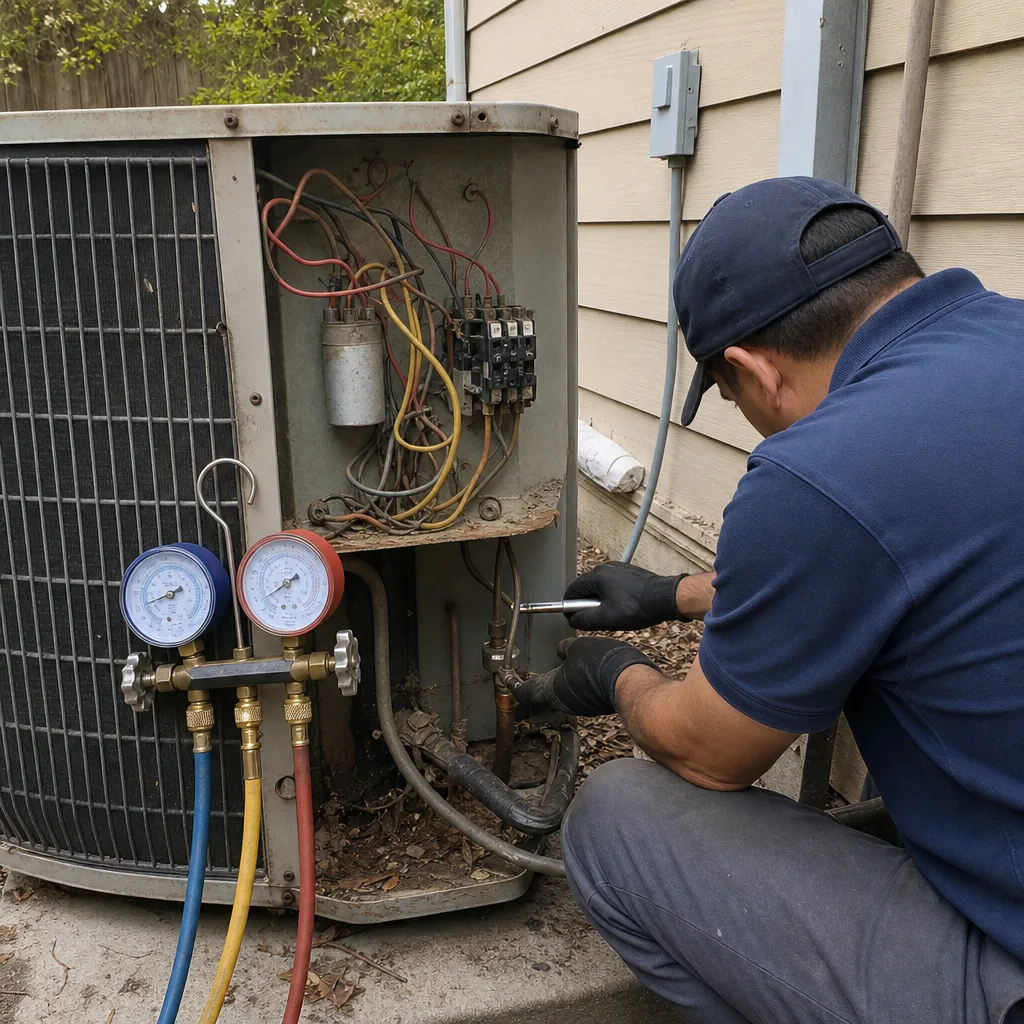 Before
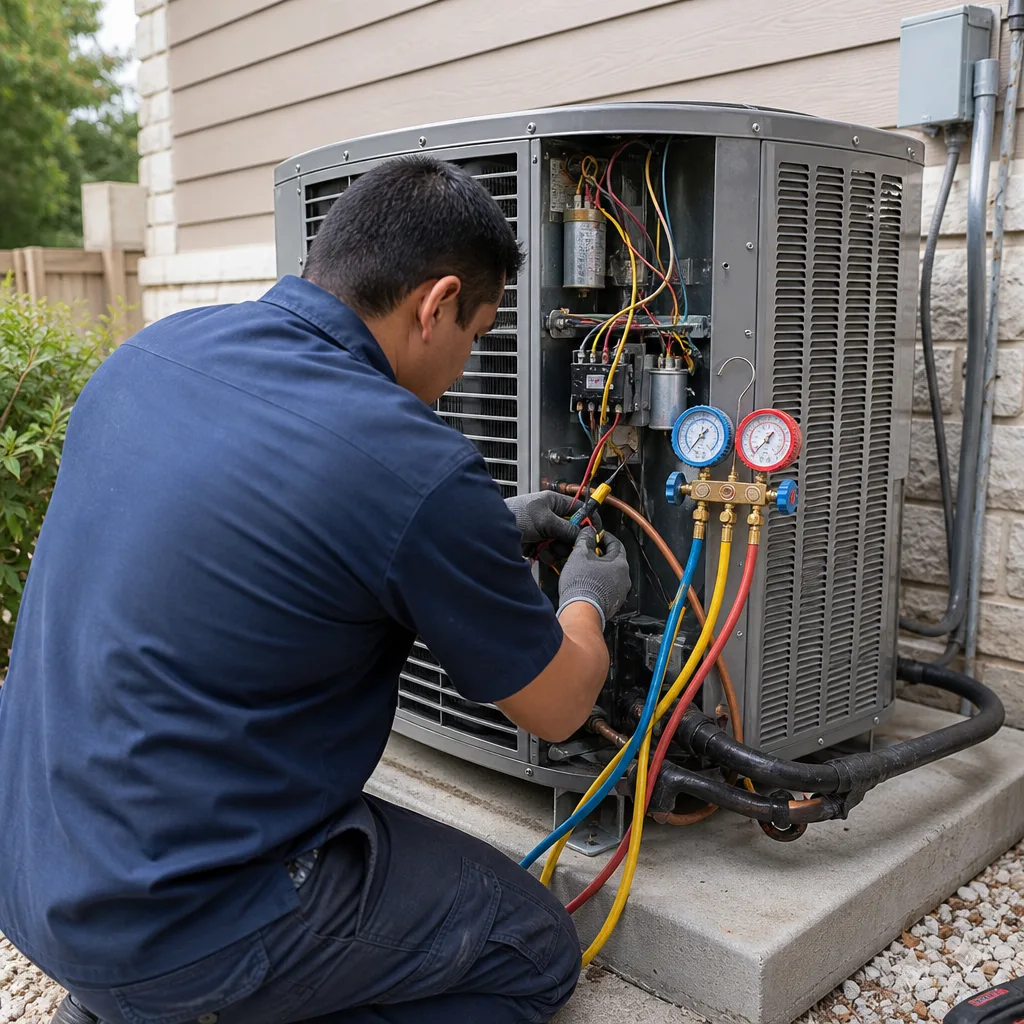 After
After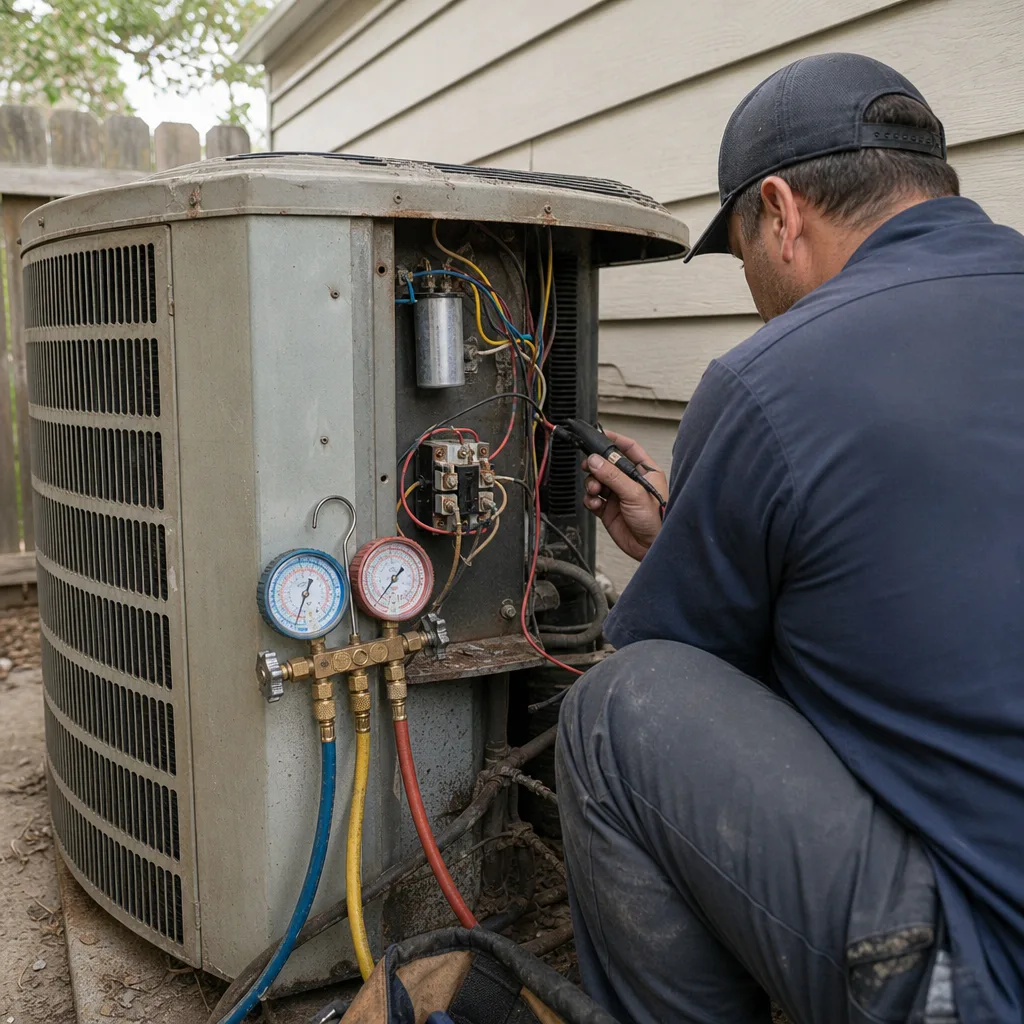 Before
 After
AfterReplacement Cost & What’s Included
A Lennox capacitor replacement in San Antonio typically lands between $150 and $350 when we install it. The part itself is modest, but the price reflects more than a cylinder from a box. Our written quote includes the diagnostic time to confirm the capacitor is the fault and not a symptom of a deeper issue, the correct capacitor matched to your Lennox unit’s exact microfarad and voltage specification, removal of the old part, installation, and a full system start-up to verify the compressor and fan are drawing proper amperage afterward. What drives the range is the capacitor type. A standard dual-run 45/5 µF lands on the lower end. A high-end variable-speed Lennox Signature unit might require a different configuration that pushes toward the upper end. If the capacitor has already taken out the fan motor or contactor in its death throes, that’s additional work, quoted separately and in writing before anything is done. Every repair we complete carries a written guarantee, and if this capacitor repair fails within 365 days, we come back and fix it at no charge. That’s the Done Right Promise, and it’s in writing, not in fine print.
Can You Fix a Lennox Capacitor Yourself?
Here’s the straight answer: a capacitor stores enough electrical charge to stop a heart, even with the power off at the disconnect. This is not a part we recommend homeowners touch, and we say that as people who make our living fixing these things. What you can safely do is look. If you see a domed or split capacitor through the condenser’s side grille, that’s your answer. You can also check that your thermostat is set correctly and that the breaker hasn’t tripped. Beyond that, leave the diagnostic and the swap to someone who handles capacitors every week. The risk is not hypothetical. Capacitors retain charge after power-down, and testing or discharging one without the right meter and procedure can cause a serious shock. If your Lennox outdoor unit is humming, clicking, or not starting in San Antonio, call us at (361) 470-8872. A live person answers, we come out, we tell you what’s wrong, we quote a fixed price in writing, and we fix it. No pressure, no upsell chains, just the repair done correctly.
Frequently Asked Questions
A capacitor in a San Antonio Lennox system typically lasts 5 to 10 years, though the heat is the deciding factor. Capacitors degrade faster when the outdoor ambient temperature stays high for months, as it does here. Units that run hard through consecutive Texas summers tend to lose capacitors sooner than systems in cooler climates. If your capacitor is more than eight years old and you’re seeing intermittent start problems, replacement is likely the answer.
No. A capacitor is a sealed, factory-filled electrical component. Once it degrades or shorts internally, it cannot be repaired or recharged. The only correct fix is replacement with a properly matched part. Anyone offering to “service” a capacitor is selling you time, not a repair.
The swap itself takes 30 to 60 minutes for most residential Lennox systems. The full visit runs longer because we also test the compressor and fan motor draw after installation, check the contactor, and make sure the system is starting correctly under load. Most customers in San Antonio are back to a cooled house within two hours of our arrival.
Yes. We carry a range of dual-run and single-run capacitors covering the most common Lennox residential systems, including 35/5, 40/5, 45/5, and 50/5 microfarad ratings in both 370 and 440 VAC. For a less common configuration or a variable-speed Signature unit, we can typically have the exact part in hand the same day through our local supply network. We also stock compatible replacement parts for Carrier and Trane systems.
If your Lennox system is down or struggling to start, call (361) 470-8872. We’ll answer live, schedule a visit, and give you a written price before any work begins. As Devin Marlowe puts it: tell me what’s wrong, I’ll tell you what it costs, and we’ll get your house back to livable.
Written by Devin Marlowe, Owner, Brandt HVAC Co San Antonio at Brandt HVAC Co San Antonio, serving San Antonio and nearby areas.