
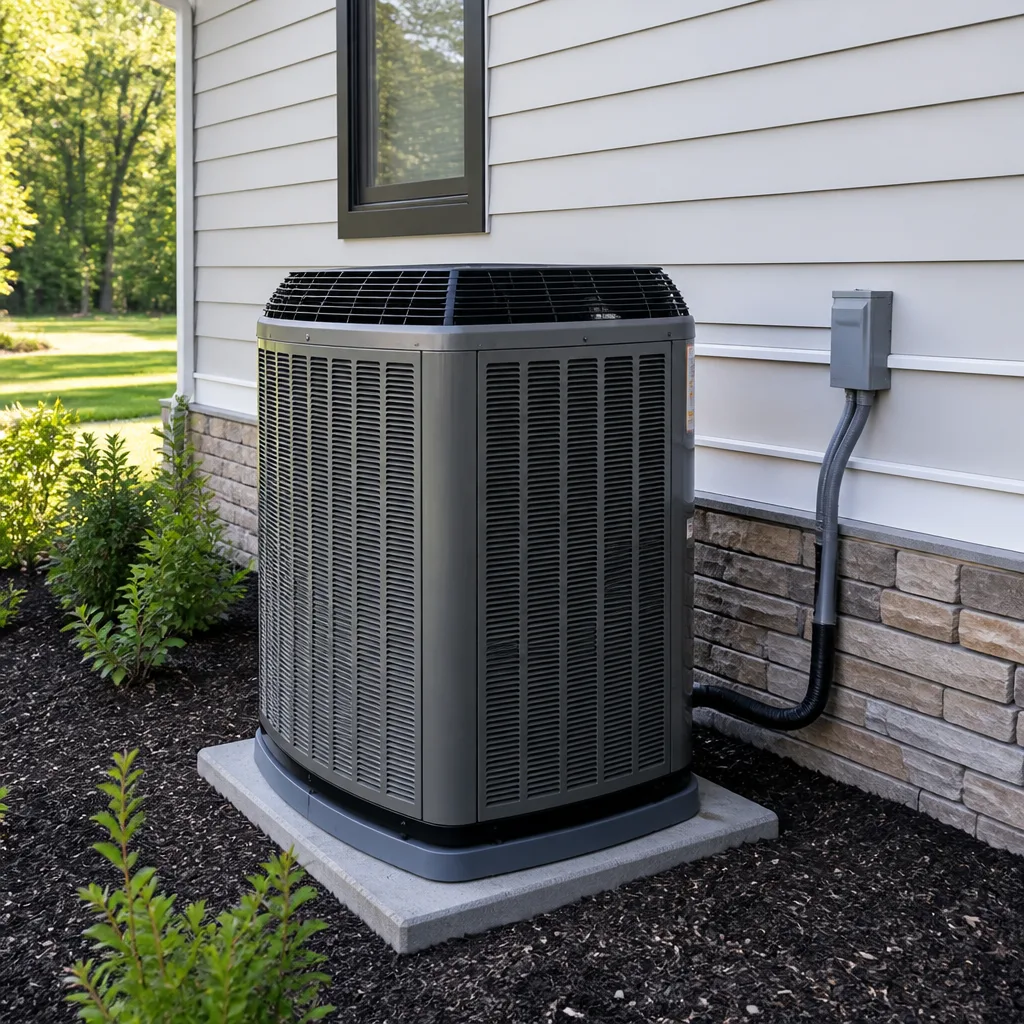
 Trane
Trane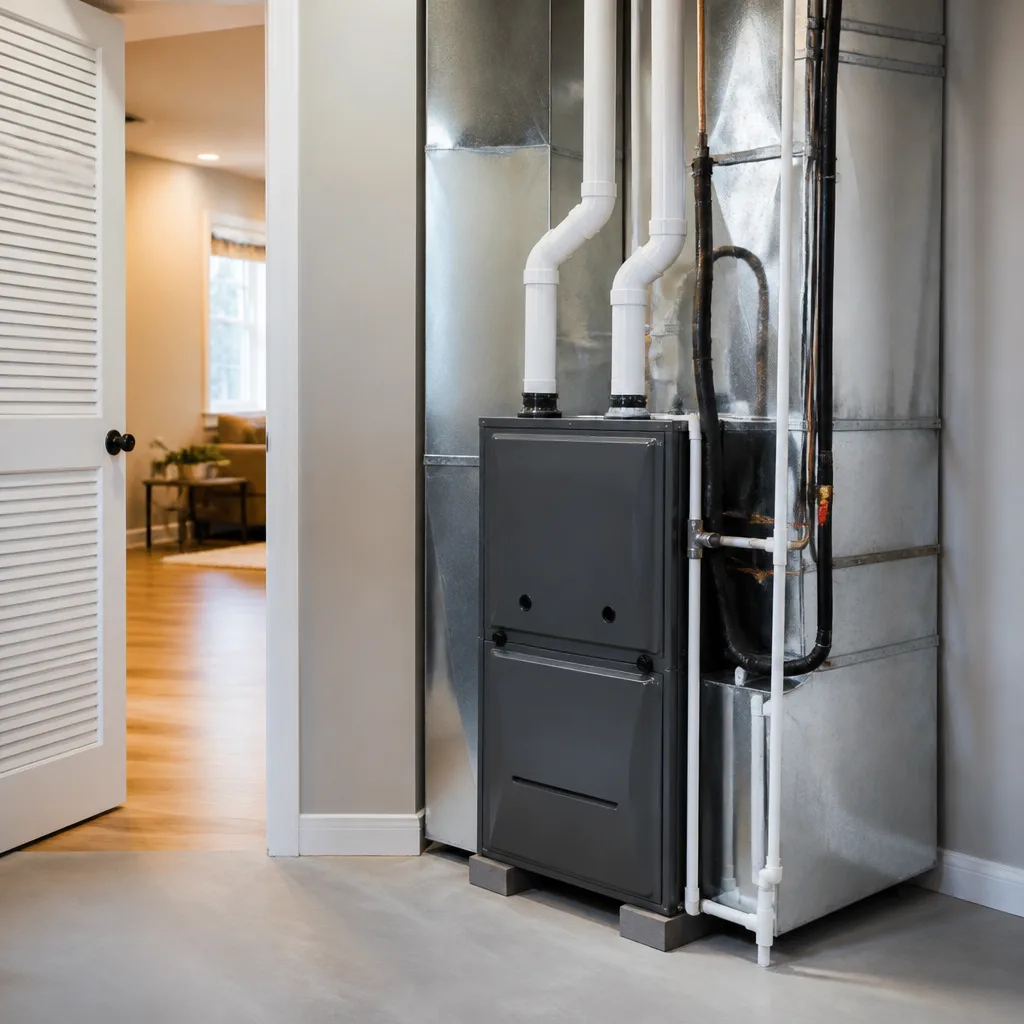 Furnace & heating
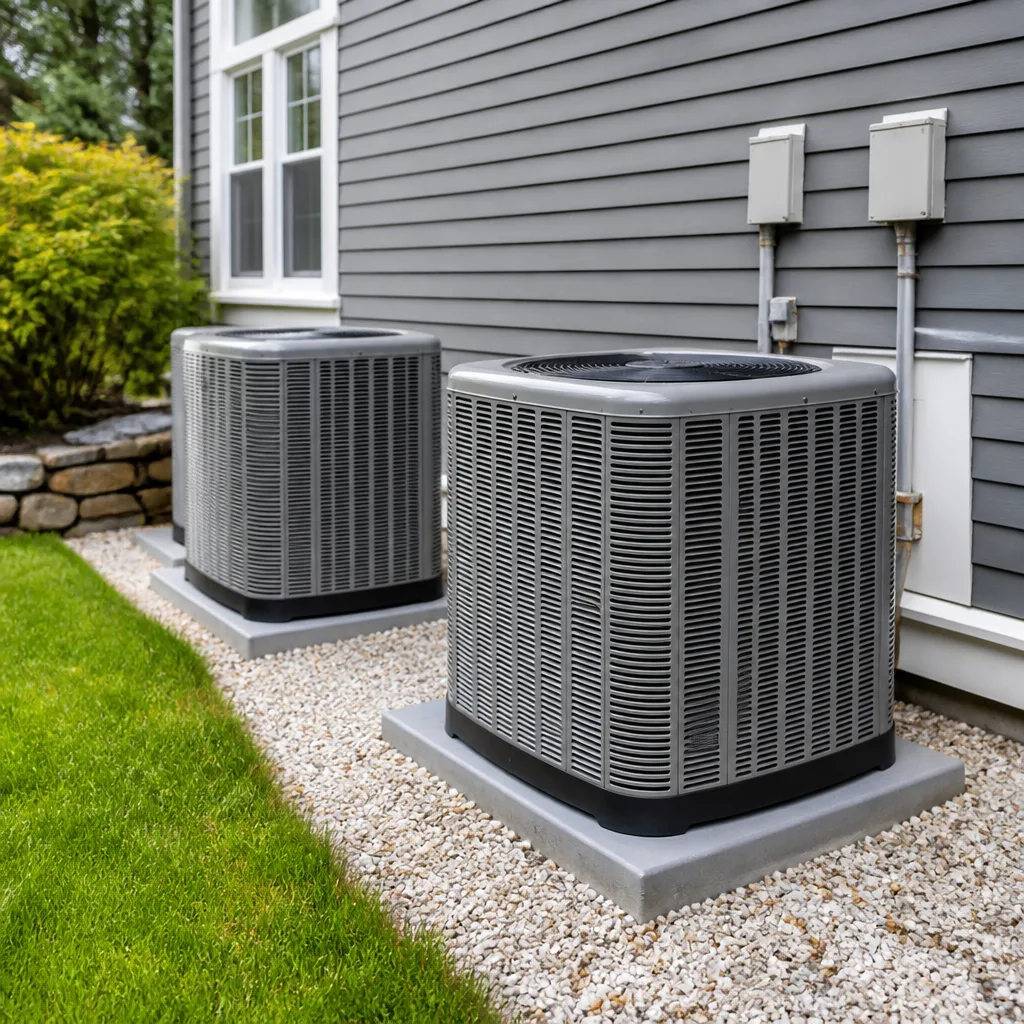 Heat pumps
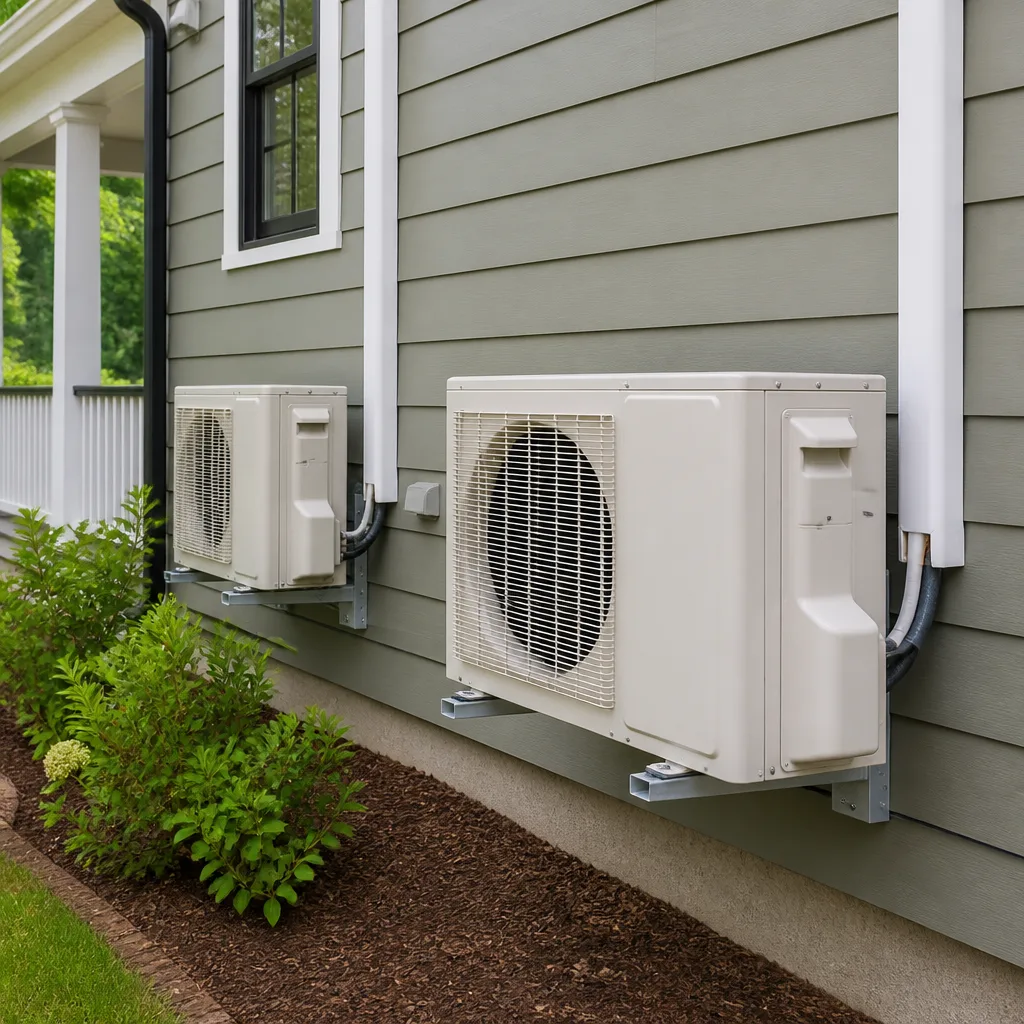 Ductless mini splits
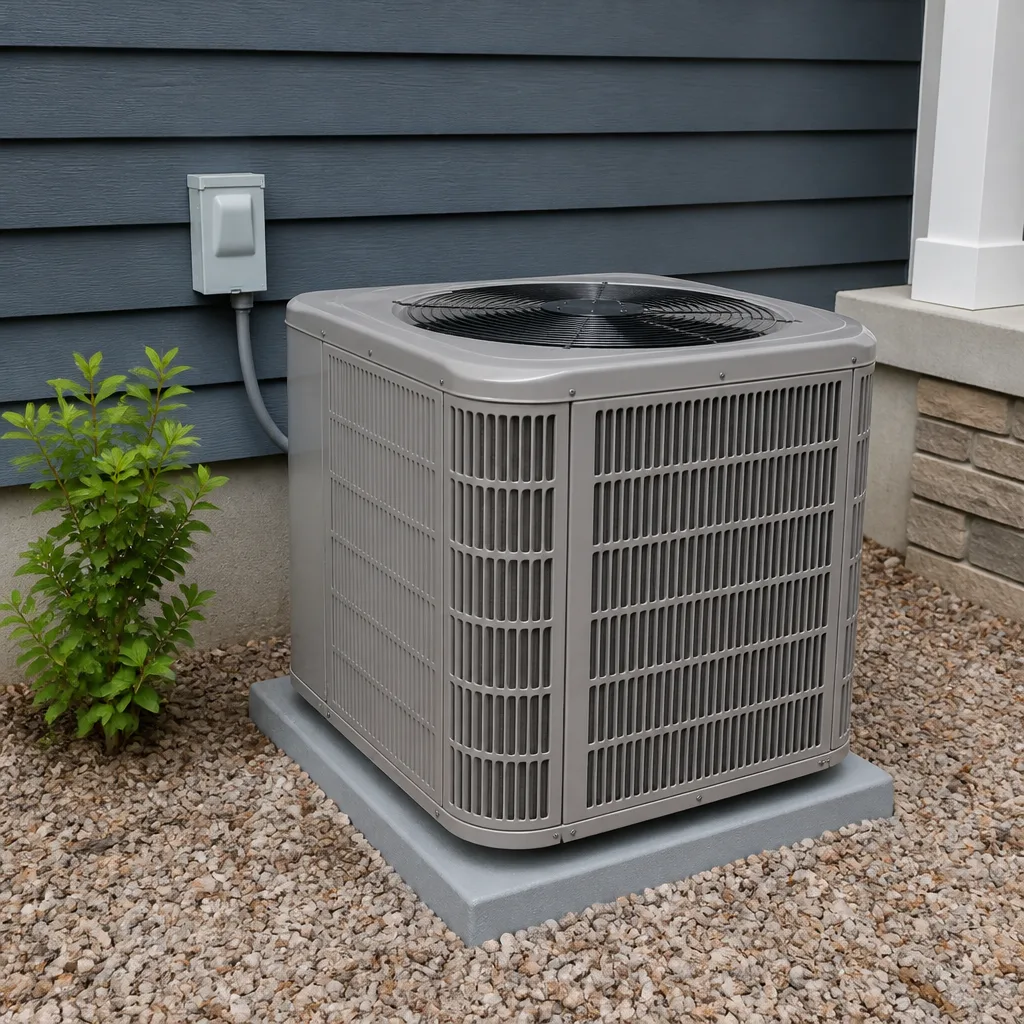 Carrier
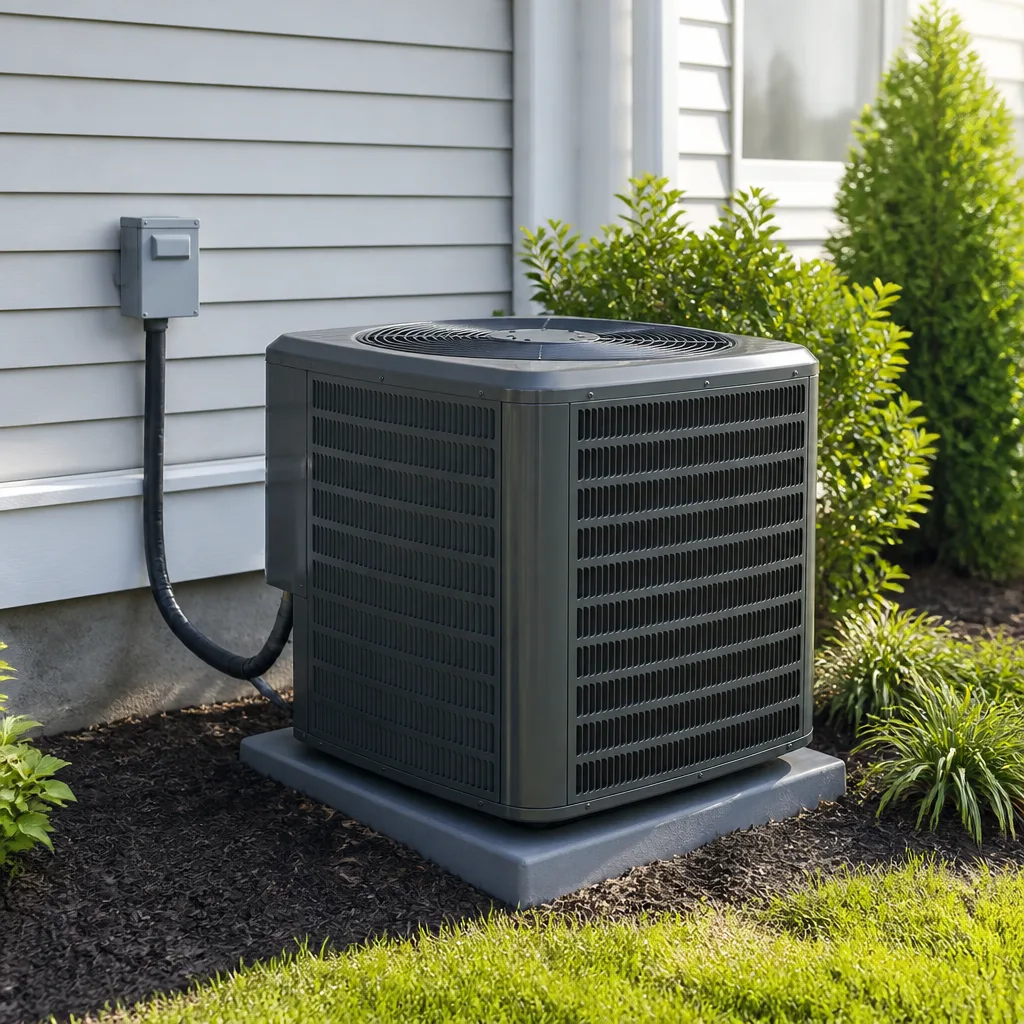 Goodman
Seasonal tune-up and full diagnostic on your Carrier, Trane, or Goodman system - readings shown to you before any repair is proposed
Diagnosis first, numbers second - you approve the repair price before a single part goes in.
Get your free estimateTrane Capacitor Replacement: The San Antonio Owner’s Guide
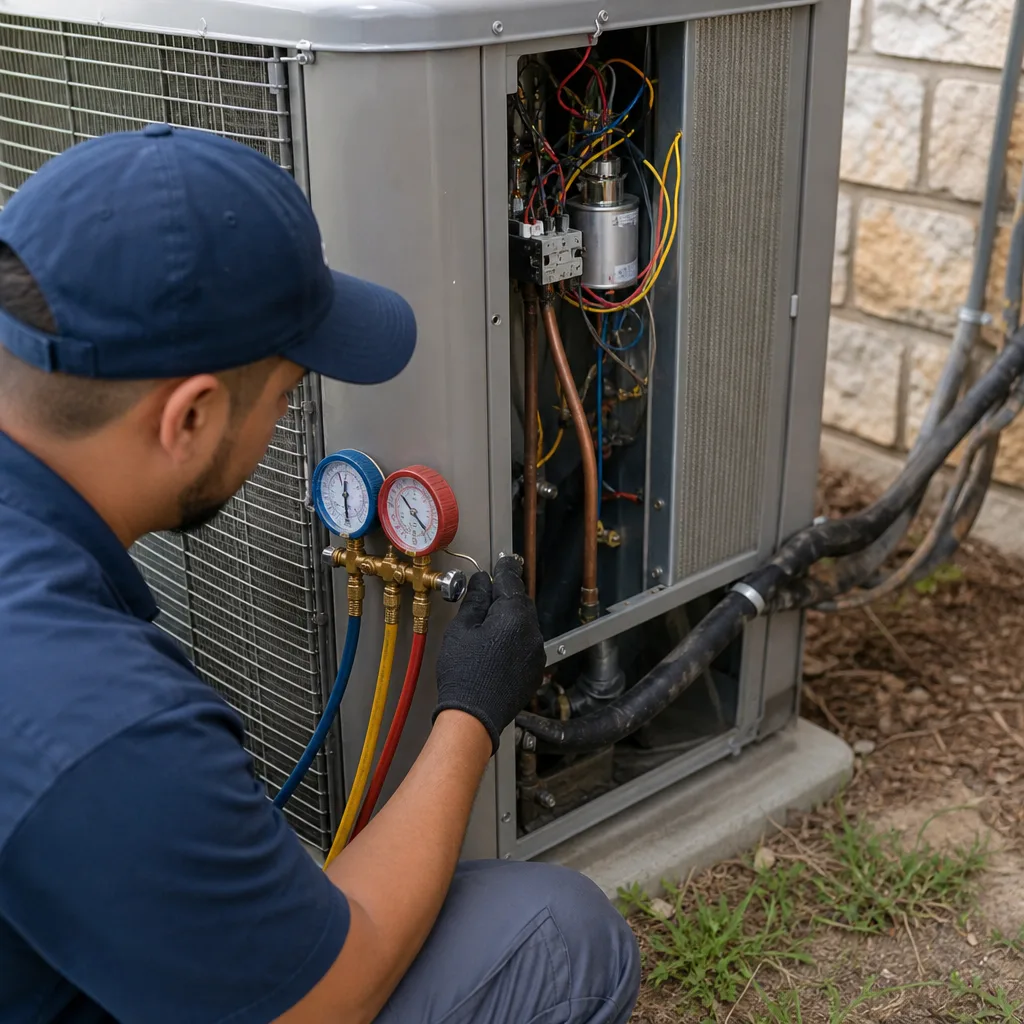
If your Trane condenser is humming but the fan won’t spin, or the compressor clicks and shuts off, the capacitor has likely failed. We stock Trane-compatible capacitors on our trucks and can usually have your system running again the same day. A capacitor replacement on a Trane unit in San Antonio typically runs $150 – $300 installed, parts and labor included.
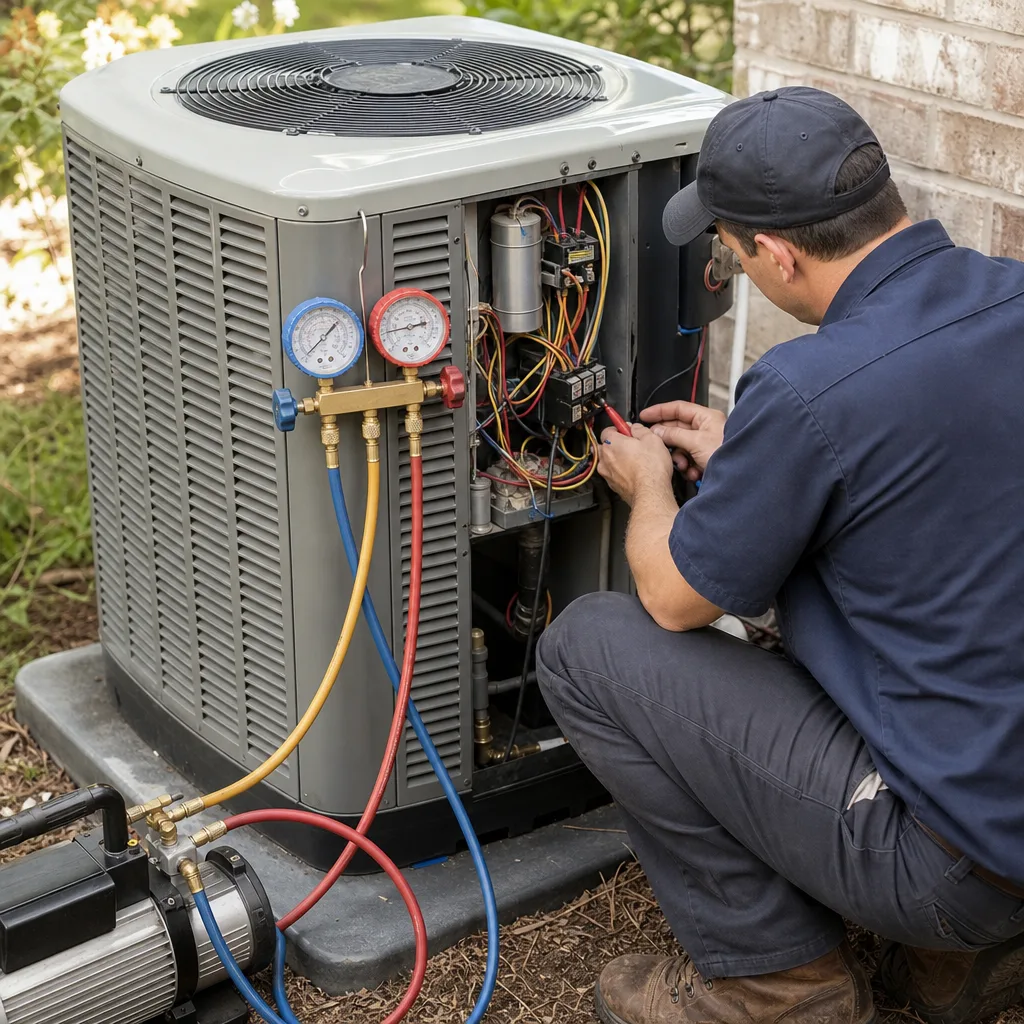
Most San Antonio homeowners discover this part failed on the hottest afternoon of the year, when the outdoor unit sits dead while the thermostat still calls for cooling. The capacitor is the small cylindrical component that gives the compressor and fan motor the starting jolt they need. When it fails, the system either won’t start at all or tries and gives up. It’s one of the most common Trane repairs we make between May and September, and it’s also one of the fastest to fix once diagnosed.
Which Trane Models This Applies To
Trane uses capacitors across nearly every residential condenser and heat pump line we see in San Antonio, including the XR series, XL series, and the newer XV variable-speed units. The XR13, XR14, XL16i, and XL18i are the models we replace capacitors on most often in this market. Heat pump condensers and straight AC condensers both use them, though the specs differ.
Not every Trane uses the same capacitor. Single-stage units typically use one dual-run capacitor, often a 35/5, 40/5, or 45/5 microfarad rating. Variable-speed and two-stage units may use separate capacitors for the compressor and fan, or rely on an inverter board that changes the equation entirely. The rating is printed on the side of the old capacitor, and a technician can confirm it with a meter. Here’s the gotcha many people miss: a replacement capacitor must match the microfarad rating within a tight tolerance, but the physical size can differ between brands. A generic aftermarket capacitor that fits the bracket may not have the right voltage rating for Trane’s higher-start-torque compressors. We prefer OEM-spec capacitors, and we’ll tell you if a quality aftermarket equivalent is a safe option for your specific model. Trane capacitors are built to a tighter spec than many universal replacements, which is why we match the part, not just the slot.
Styles & brands we work with
Signs Your Trane Capacitor Replacement Is Failing
- The outdoor unit hums but doesn’t start. The capacitor can’t deliver the starting jolt, so the compressor or fan motor stalls and draws high current. This is the most common symptom we hear about in San Antonio, and it usually means the capacitor has already failed rather than failing.
- The fan spins slowly or won’t spin on its own. You can sometimes get the fan going with a stick, but it should never need help. A weak capacitor reduces the fan motor’s torque, and in a Texas summer, a slow fan means the condenser can’t reject heat properly.
- The compressor short-cycles or clicks off. The compressor tries to start, the capacitor can’t hold the charge, and the thermal overload shuts it down. The system may restart a few minutes later, which masks the problem and makes it worse over time.
- Visible bulging or leaking from the capacitor body. The top of the capacitor should be flat. If it’s domed or you see oily residue, it has vented internally and is done. This is easy to spot if you know what you’re looking at, but don’t open the access panel unless you know how to discharge the stored charge.
- The system runs but the energy bill is climbing. A degraded capacitor forces the compressor and fan to work harder, drawing more current to do the same job. In San Antonio, where AC runs hundreds of hours each summer, that inefficiency adds up fast.
See the difference
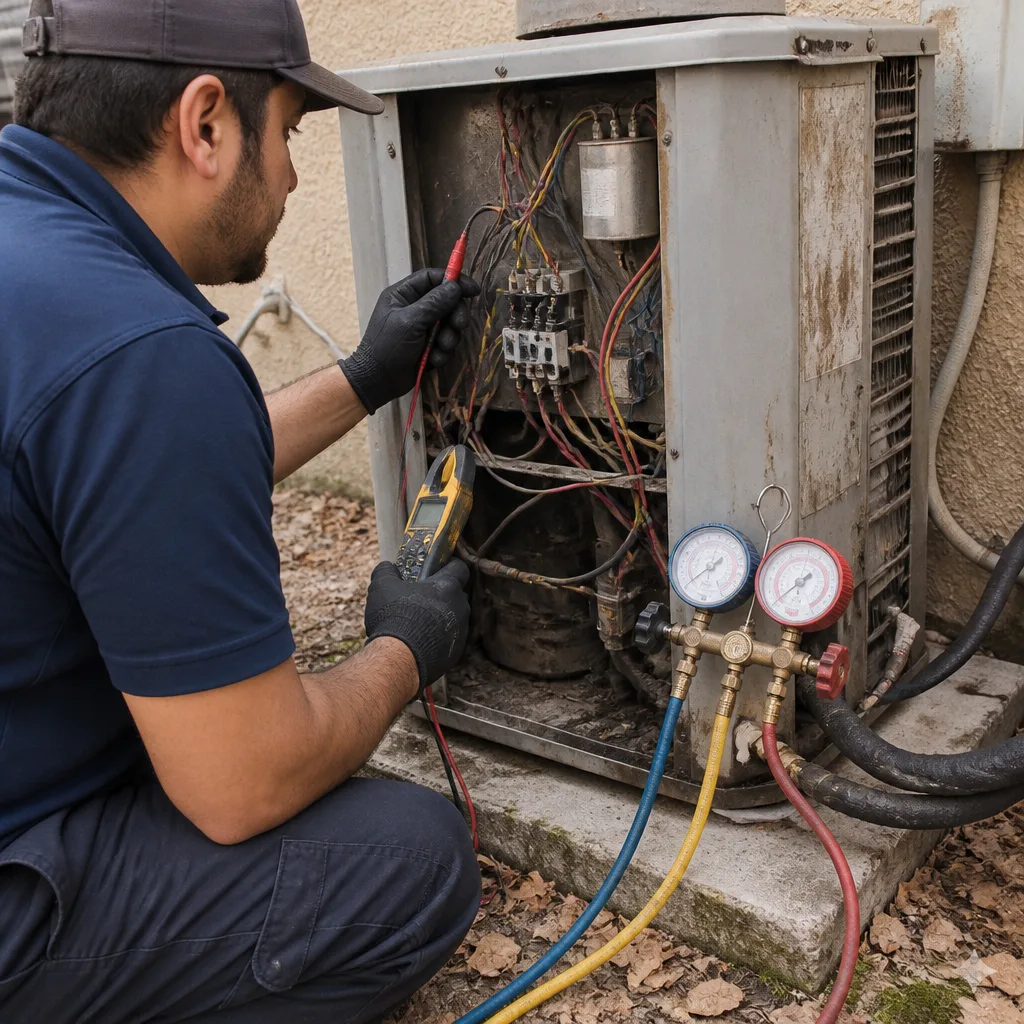 Before
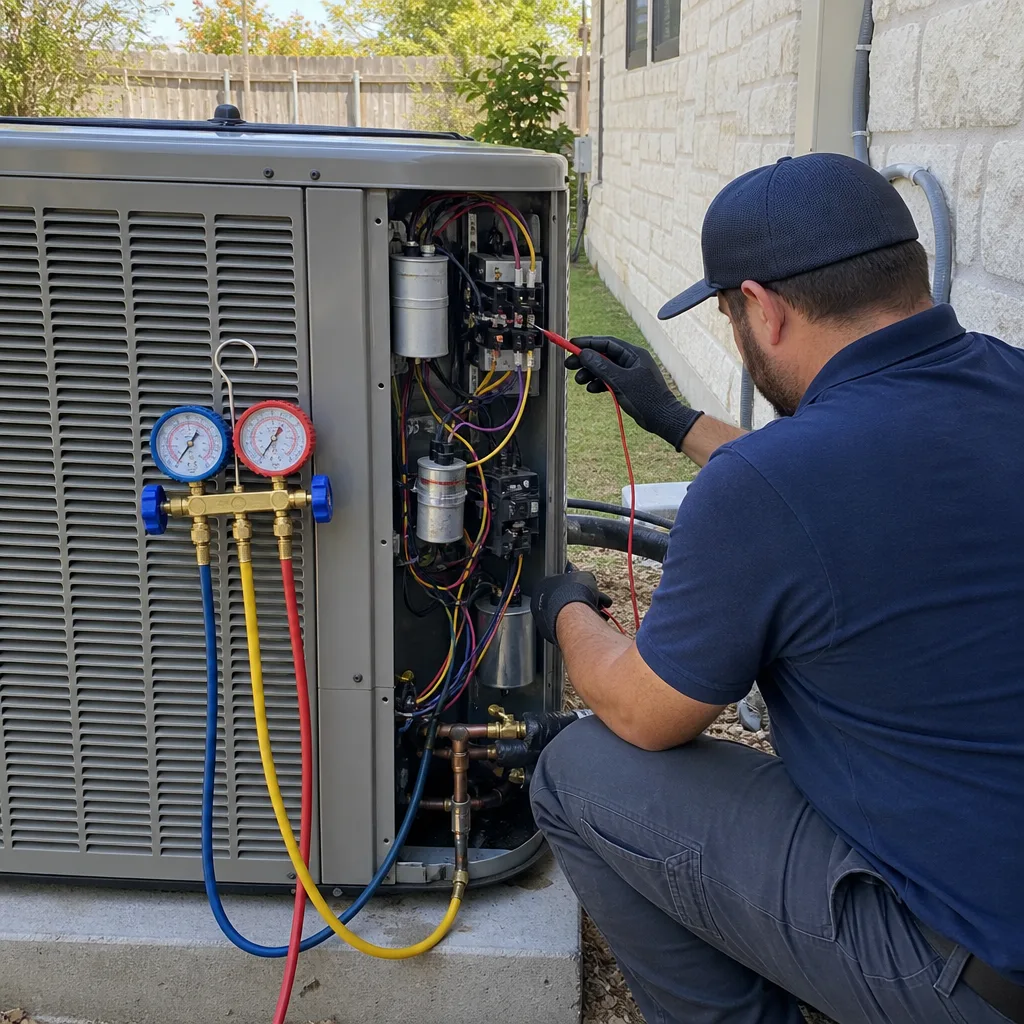 After
After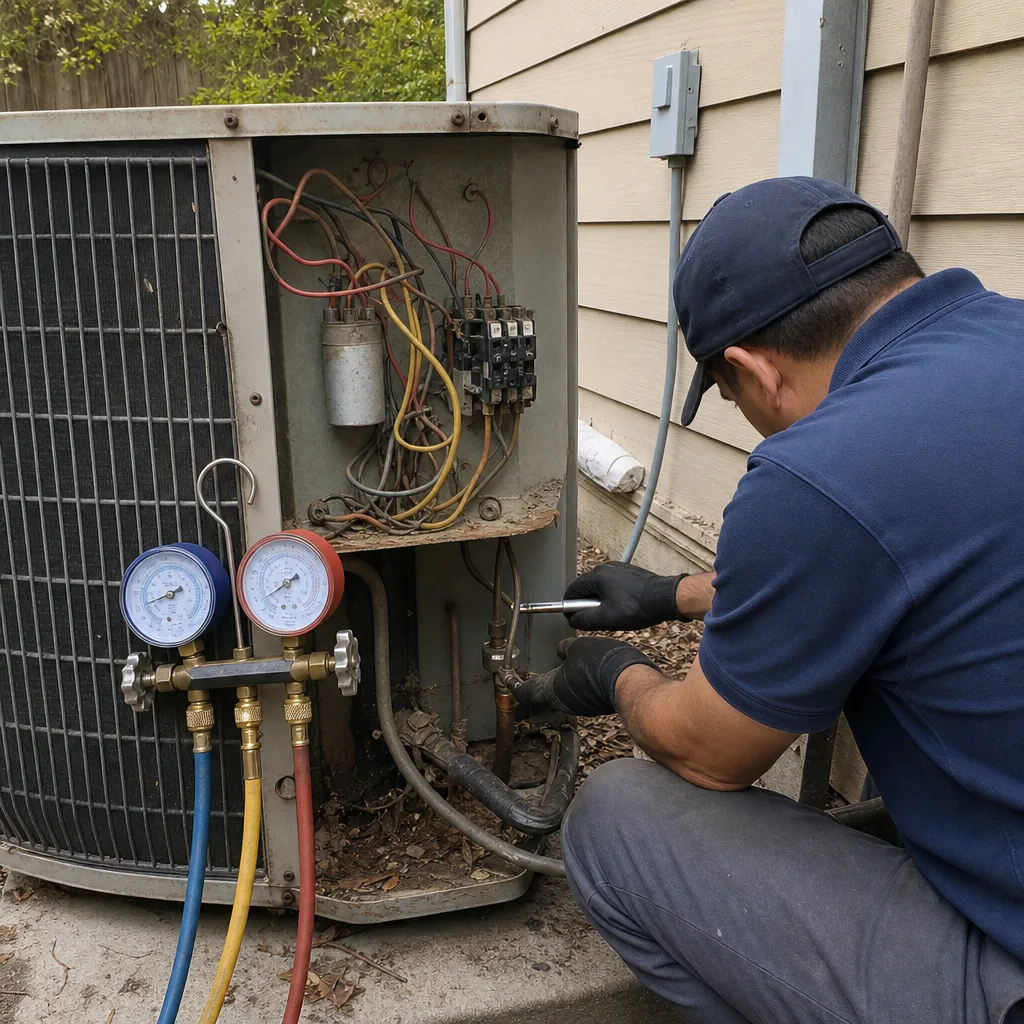 Before
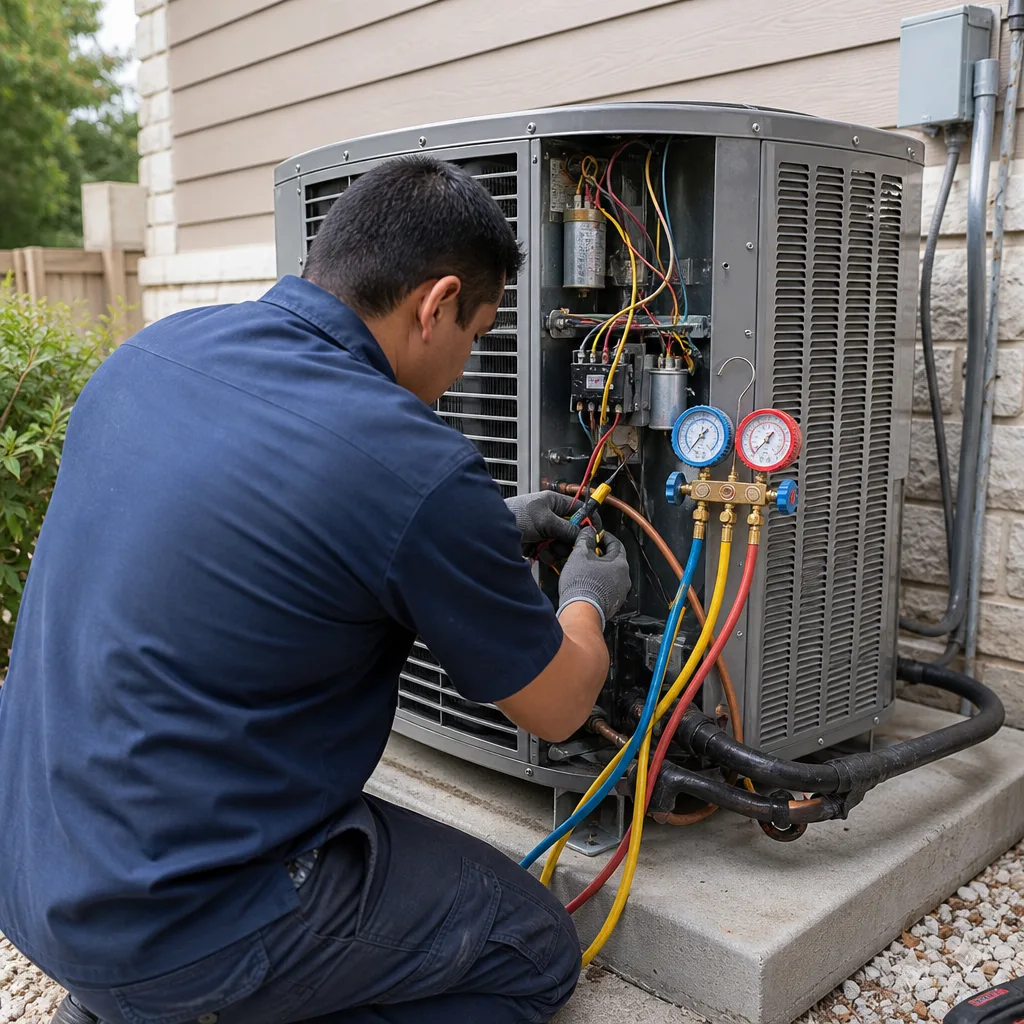 After
After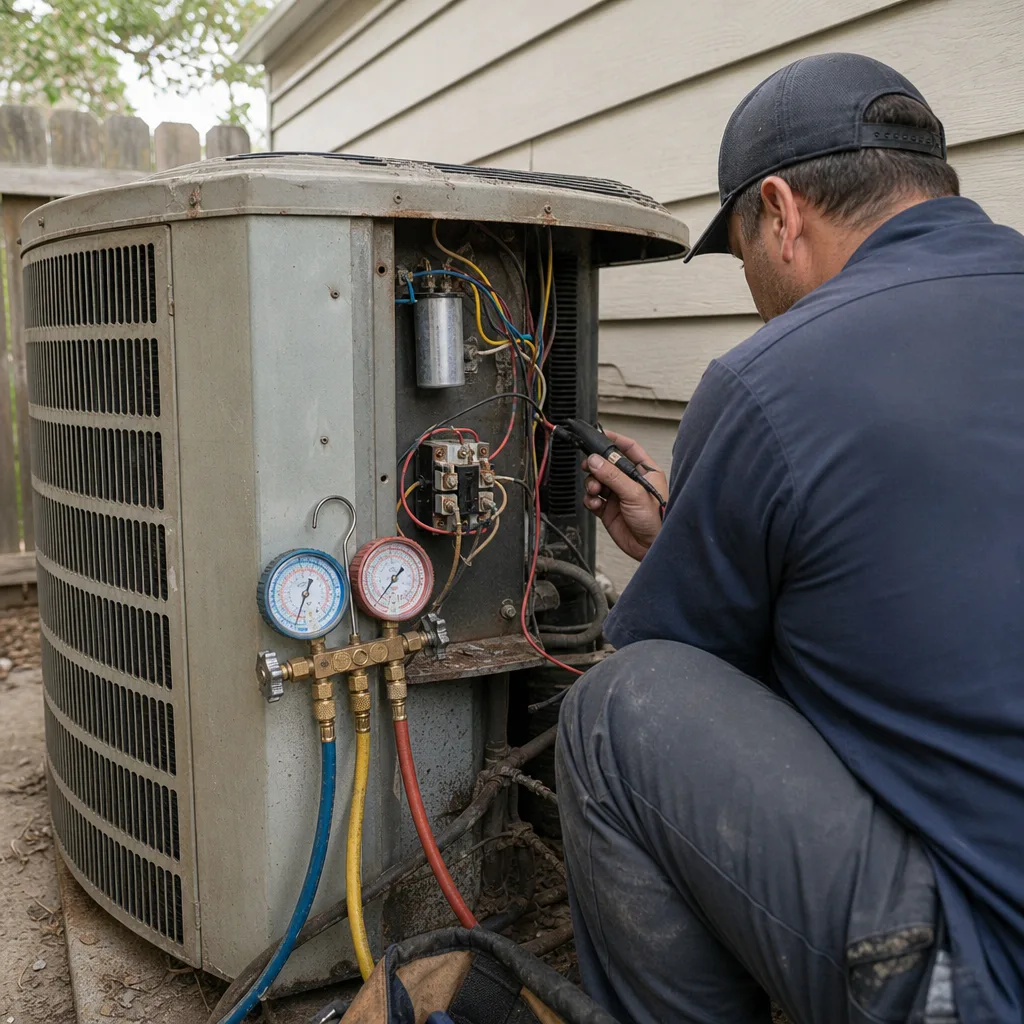 Before
 After
AfterReplacement Cost & What’s Included
Capacitor replacement on a Trane unit in San Antonio runs $150 – $300 for most single-capacitor jobs. Dual-capacitor systems, heat pumps with a separate fan capacitor, or units that need the capacitor and a relay fall toward the top of that range. If the failed capacitor has damaged the contactor or wiring, the total may reach the low end of our broader AC repair range, which is $150 – $650 in this market.
Every quote includes the part, the labor, and a written price before we touch anything. You’ll see the exact number and approve it first. The repair carries a 365-day guarantee. If that capacitor fails within a year, we return and replace it at no charge, no argument. We also inspect the contactor and wiring while we’re in there, because a failed capacitor and a pitted contactor often happen together, and it’s cheaper to catch both at once.
DIY or Call Us?
Here’s the straight answer: a capacitor stores enough electrical charge to injure you even with the power off at the disconnect. It holds voltage for days after the unit is shut down. If you don’t know how to safely discharge a capacitor with an insulated screwdriver and verify it with a meter, don’t open the panel. A capacitor shock is not a sting like a wall outlet. It can cause a serious burn or worse. This is one repair where the savings from doing it yourself simply don’t outweigh the risk.
What you can safely do is look at the unit from outside, confirm the fan isn’t spinning, and check that the thermostat is calling for cooling and the breaker hasn’t tripped. Then call us at (361) 470-8872. We’ll send a technician out, diagnose it on the spot, and show you the old part if you want to see it. You’ll get a written price before any work starts, and we’ll have your system cooling again the same day in most cases.
FAQs
In San Antonio’s climate, most Trane capacitors last 5 to 10 years. The heat accelerates aging because high ambient temperatures break down the internal dielectric material faster. A unit on the west side of a house with no shade might eat a capacitor every 4 or 5 years, while a shaded unit can go a decade. If your Trane is over 10 years old and on the original capacitor, budget for a replacement soon. Call us at (361) 470-8872 for an exact quote.
No. Capacitors are sealed components and can’t be rebuilt. Once the internal dielectric degrades or the can vents, the only fix is a new capacitor matched to your Trane’s rated microfarad and voltage. Attempting to repair one is not just futile; it’s dangerous.
Most capacitor replacements take 30 to 45 minutes, including testing the old part, installing the new one, and verifying the compressor and fan start properly under load. We’ll also check the contactor while we’re there, which adds a few minutes and can prevent a second service call. Call (361) 470-8872 and we’ll give you a clear arrival window.
Yes. Our service vans carry the most common Trane capacitor ratings for San Antonio, including the 35/5, 40/5, and 45/5 dual-run capacitors used in XR and XL series condensers. If your unit needs an uncommon rating or a variable-speed-specific component, we can usually source it same-day from local suppliers. Call (361) 470-8872 and we’ll tell you what we carry for your model before we even roll a truck.
Written by Devin Marlowe, Owner, Brandt HVAC Co San Antonio at Brandt HVAC Co San Antonio, serving San Antonio and nearby areas.