
Last updated October 16, 2026
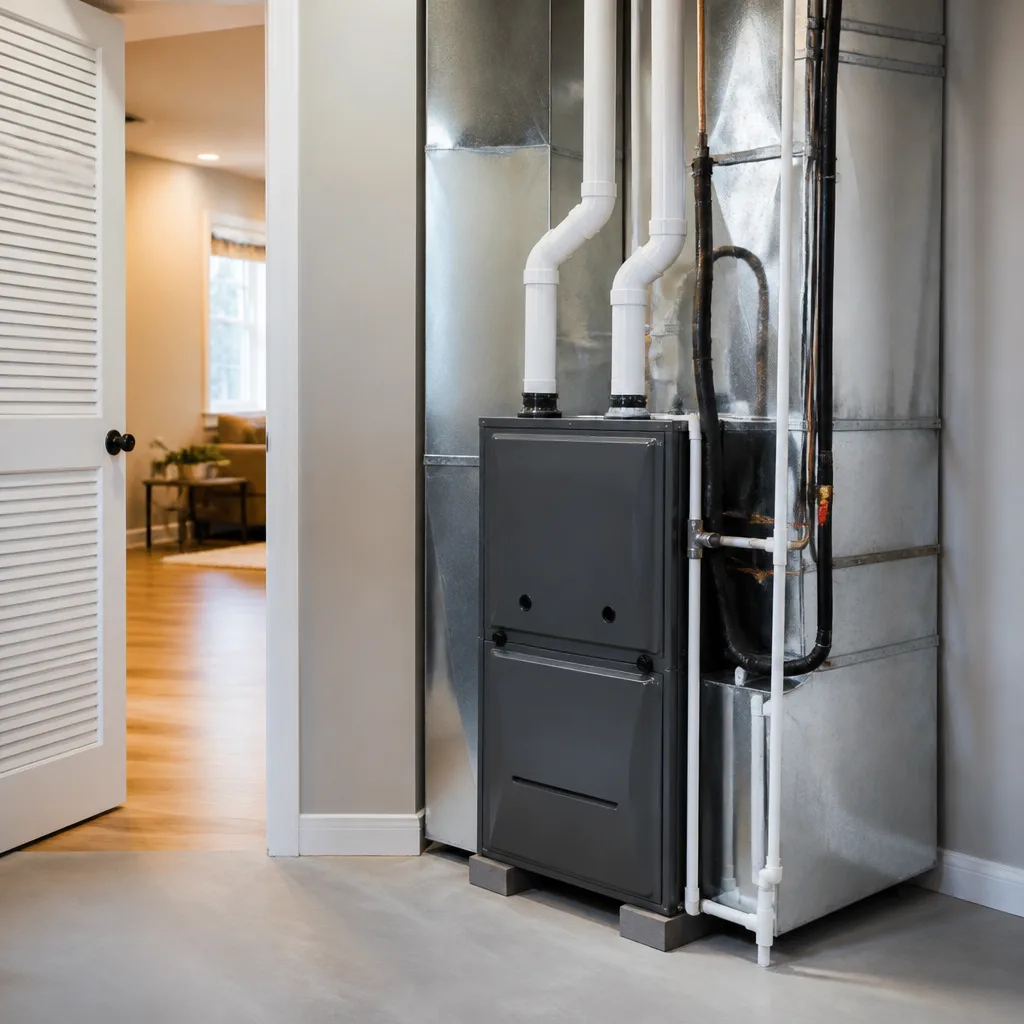 Furnace & heating
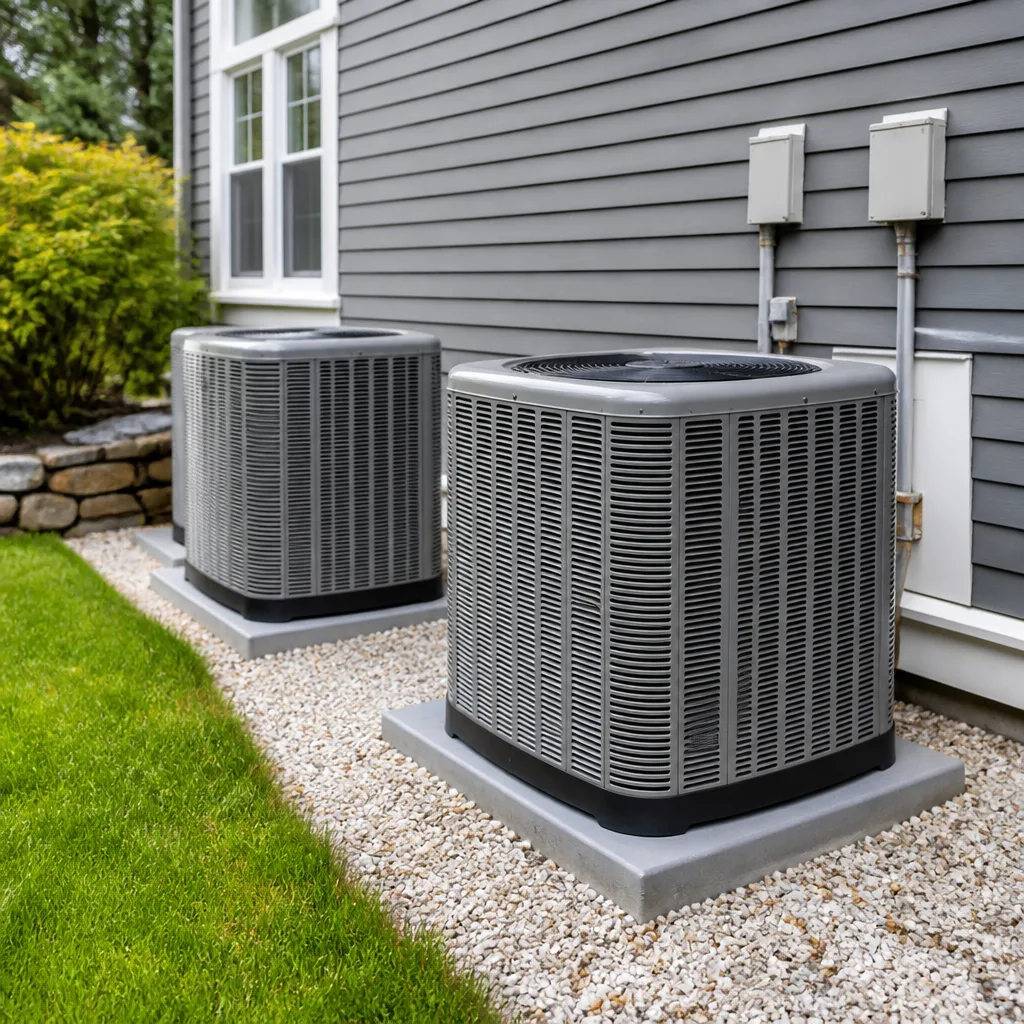 Heat pumps
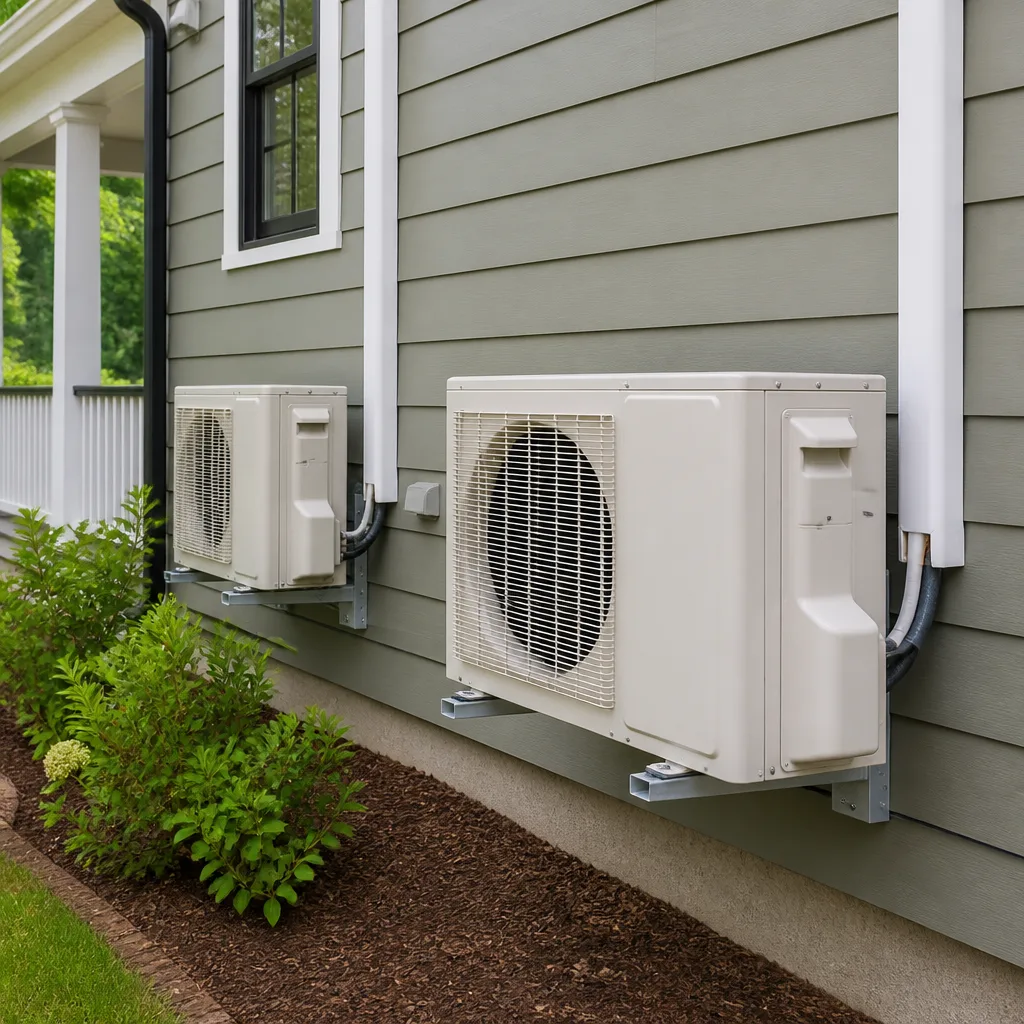 Ductless mini splits
 Carrier
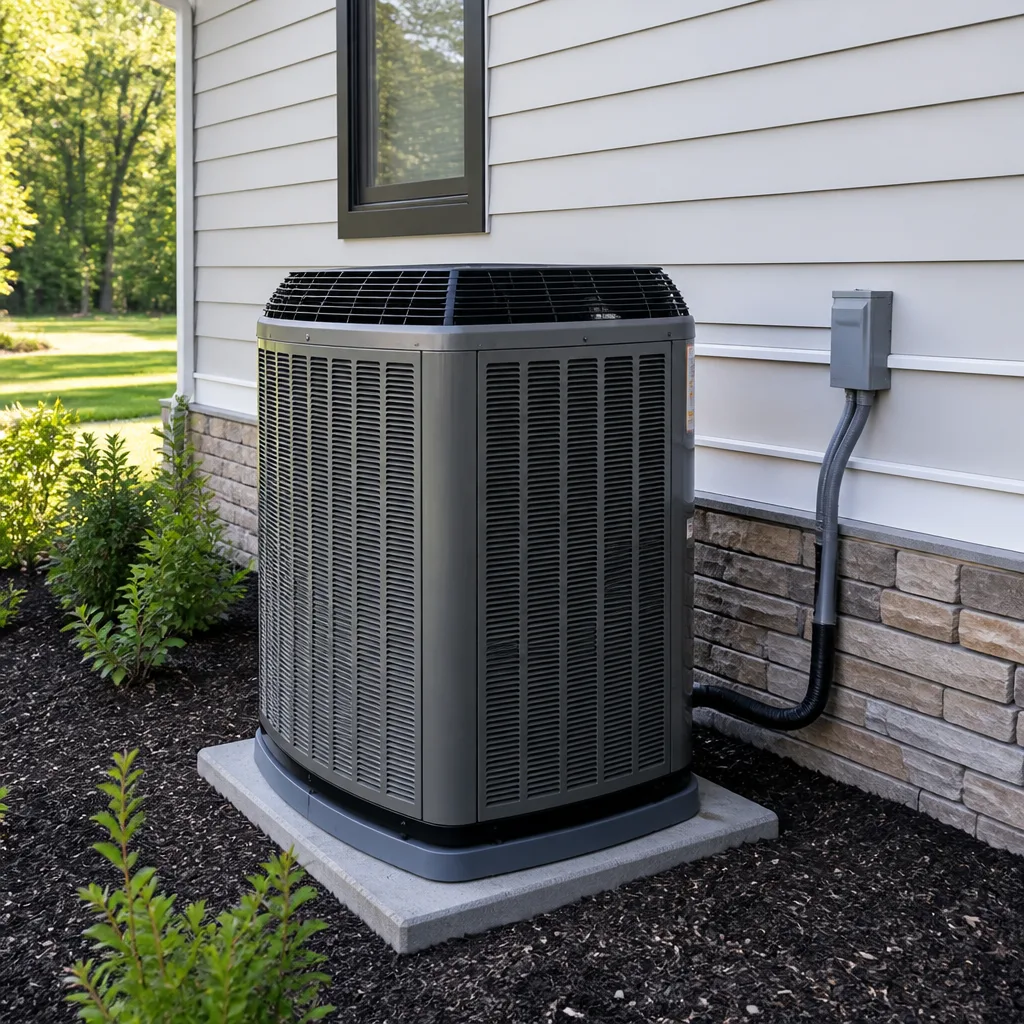 Trane
Trane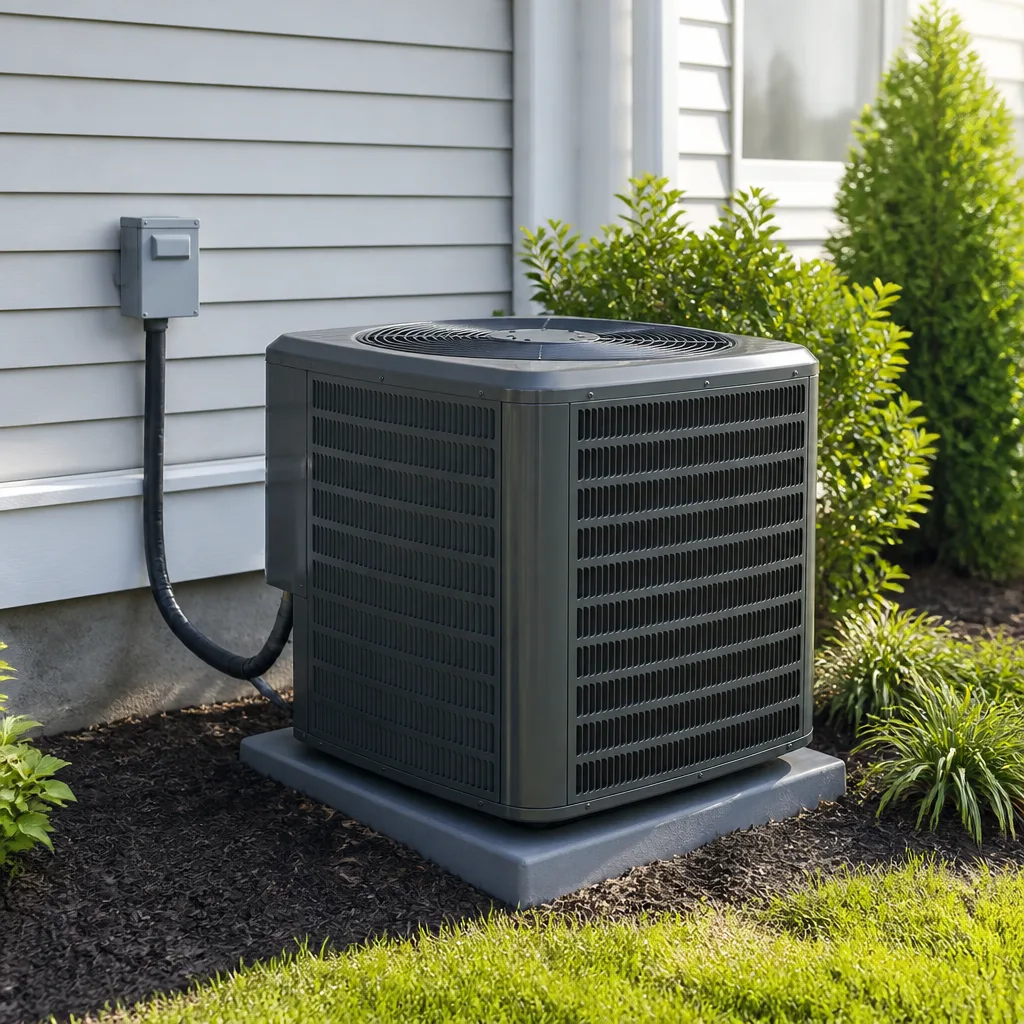 Goodman
Seasonal tune-up and full diagnostic on your Carrier, Trane, or Goodman system - readings shown to you before any repair is proposed
Diagnosis first, numbers second - you approve the repair price before a single part goes in.
Get your free estimateThe Complete Guide to HVAC in San Antonio
San Antonio averages more than 220 days above 80°F each year. That is not a typo. Your air conditioner is not a seasonal appliance here – it is your home’s primary life-support system for eight months straight, and it works harder than equipment in Dallas, Austin, or Houston because our heat lingers longer into the night. Most HVAC guides treat San Antonio like any other Texas city. This one starts from a different place: your equipment is sized for peaks, but it actually has to survive duration. This guide covers how San Antonio’s specific climate changes equipment sizing, refrigerant demands, service timelines, ducts, rebates, and the one thing most guides ignore – who you let through your door.
Quick Answer
The complete HVAC picture in San Antonio comes down to five things: correct Manual J sizing for sustained 100°F-plus heat, equipment that handles our long runtime hours rather than just peak temperature, ducts that survive Bexar County’s shifting caliche soil, stacking CPS Energy rebates with federal 25C tax credits before they expire, and knowing exactly who is entering your home before the service call. A properly sized, well-maintained system in San Antonio should run 12 to 15 years – but undersized equipment, skipped maintenance, and ignored duct leaks routinely cut that lifespan in half. The single highest-value move most San Antonio homeowners can make is getting an honest load calculation before replacing a system, because ours is one of the few climates where oversizing is nearly as damaging as undersizing.
Styles & brands we work with
Table of Contents
- Why Equipment Sizing Matters More in San Antonio Than Almost Anywhere Else
- SEER Ratings, Runtime Hours, and What 105°F Actually Does to Your System
- Caliche Soil, Foundation Movement, and Why Your Ducts Are the Weak Link
- The San Antonio Maintenance Calendar: What to Do and When
- Repair or Replace? A San Antonio-Specific Decision Framework
- Stacking CPS Energy Rebates and the 2026 Federal 25C Tax Credit
- Threshold Verified: Knowing Who Walks Through Your Door
- Common Mistakes to Avoid
- When to Call a Professional
- Frequently Asked Questions
Why Equipment Sizing Matters More in San Antonio Than Almost Anywhere Else
Manual J is the industry-standard load calculation that determines how many tons of cooling (or BTUs of heating) your home actually needs. It accounts for square footage, window orientation, insulation levels, ceiling height, air leakage, and your climate zone. In most cities, contractors can get away with the old “500 square feet per ton” rule of thumb and it mostly works. In San Antonio, that shortcut fails more often than it succeeds. Here is why: our Design Temperature, the number load calculations are built around, is 99°F in Bexar County, but our actual summer afternoons routinely exceed 102°F for weeks on end. When the outside temperature crosses the design point, an undersized system cannot recover – it runs continuously, never reaches setpoint, and turns your living room into a slow oven by 4 PM.
Oversizing creates a different but equal problem. An oversized AC short-cycles – it blasts cold air for eight minutes, satisfies the thermostat, and shuts off before it has run long enough to remove humidity. San Antonio’s summer dew points regularly sit in the mid-70s, which means humidity control is as much a part of comfort as temperature. A short-cycling oversized system leaves your home at 72°F but feeling clammy and damp. Worse, constant starting and stopping is brutal on compressors, and we see premature compressor failures in San Antonio almost every summer – often in oversized systems under seven years old.
The correct approach: before any replacement, the contractor should measure each room, inspect the ductwork, check insulation levels, look at window types and shading, and then produce a written load calculation. In our experience serving San Antonio since 2003, the right size for most 1,800 to 2,200 square-foot 1970s and 1980s homes here is 3.5 to 4 tons, not the 5-ton units that rule-of-thumb sellers push. A 5-ton unit on undersized ducts is a common and expensive mistake: the blower cannot move enough air, the coil ices up, and the homeowner pays for capacity they cannot use. If a contractor will not show you the load calculation, that is not a red flag. It is the red flag.
- Demand a written Manual J load calculation before accepting any replacement quote. It should be based on your home’s actual measurements, not square footage alone.
- Verify the ductwork is sized for the equipment. If ducts cannot handle the airflow of a larger system, the larger system is worthless.
- Ask what happens on a 105°F day. A good contractor will tell you the system is designed to hold roughly 75°F indoors at the 99°F design point – and will be honest that sustained 105°F stretches stress any system.
- Treat “bigger is better” as a warning sign. The right size is a calculation, not a sales pitch.
This is the single biggest gap in most San Antonio HVAC education. You can find dozens of articles about SEER ratings and refrigerants, but almost none explain that the biggest determinant of comfort and lifespan is whether the equipment matches the home. For a deeper walkthrough of how a repair should be diagnosed and priced before any work, our AC Repair in San Antonio guide covers the full process.
SEER Ratings, Runtime Hours, and What 105°F Actually Does to Your System
SEER – Seasonal Energy Efficiency Ratio – is the number most homeowners recognize on an AC label. A higher SEER means the unit uses less electricity to produce the same cooling output, at least under standardized test conditions. Federal minimums changed on January 1, 2023: in the South, new residential ACs must be at least 15 SEER. In 2026, the practical question is not “what is the minimum” but “what is the smartest buy for San Antonio’s runtime profile.”
Here is what most guides do not tell you. SEER is measured at a single outdoor temperature, 82°F. It does not tell you how the unit performs at 104°F, which is where San Antonio equipment actually lives for 40 to 60 afternoons each year. A 16 SEER single-stage unit and a 16 SEER two-stage or variable-speed unit will deliver very different performance at extreme temperatures, even though the sticker number is identical. In a climate like ours, where the AC runs 1,800 to 2,200 hours per year (versus roughly 700 in Chicago or 900 in Minneapolis), runtime is the metric that matters. A system that runs more hours per year needs components that are built for endurance: scroll compressors, thermal expansion valves, and fan motors rated for continuous duty in high ambient heat.
What does this mean in practical terms? For most San Antonio homeowners, a 16 to 17 SEER two-stage system is the value sweet spot. It costs less up front than a 20-plus SEER variable-speed unit, but its two-stage compressor runs at a lower speed on milder days – which means fewer starts, less humidity buildup, and longer cycles that feel more even throughout the house. Single-stage 15 SEER units are cheaper still, and they are perfectly functional, but they work hardest on the days you need them most, and they tend to have shorter lifespans in San Antonio’s heat. In our experience, single-stage units in San Antonio average 10 to 12 years. Two-stage units average 13 to 16. Variable-speed units can go longer, but the premium price does not always pay back in our climate unless the home has significant humidity problems or the homeowner wants very tight temperature control.
Refrigerant also matters now more than it did five years ago. R-410A is being phased down under the AIM Act, and new 2025-and-later systems are increasingly built for R-454B or R-32, which have lower global warming potential. What that means for you: if your current system uses R-22 (common in equipment installed before 2010), a repair that requires refrigerant is expensive – often $150 to $300 per pound, and the supply is only shrinking with each passing year. If a contractor recommends recharging an R-22 system, weigh the cost against replacement. Continuing to pour money into a 15-plus-year-old R-22 system in San Antonio’s climate is usually a losing proposition.
Brands matter less than most people think. We service all major residential lines – including Lennox, Goodman, Rheem, and York – and the single biggest determinant of lifespan is not the logo on the cabinet. It is whether the installation was sized correctly, whether the ductwork can move the air, and whether someone actually maintained the system. A well-installed Goodman will outlast a poorly installed Lennox every single time.
Caliche Soil, Foundation Movement, and Why Your Ducts Are the Weak Link
Every HVAC guide talks about equipment. Almost none talk about what carries the air. In San Antonio, ductwork is the single most common source of hidden comfort and efficiency problems, and the reason is buried under your foundation.
Bexar County sits on a vein of caliche, a hardened calcium carbonate layer that expands and contracts with moisture. During San Antonio’s wet spring months, caliche swells. During the dry summer, it shrinks and cracks. This swelling cycle is a major contributor to the foundation movement that many older San Antonio homes experience – hairline cracks in brick, doors that stick only in certain months, floors that slope an inch over twenty feet. Foundation movement flexes the frame of the house, and the frame flexes the ductwork.
Older San Antonio homes, particularly those built between 1950 and 1990, often have sheet-metal ducts wrapped in fibrous insulation. When the house shifts, connections come loose. We regularly find duct joints separated in attics, entire branch runs disconnected from the main trunk, and torn flex duct where someone routed it through a collapsed ceiling chase. The US Department of Energy estimates that the average home loses 20 to 30 percent of conditioned air through duct leaks. In San Antonio, with our foundation soil, the real number in older homes is often higher. Every cubic foot of cooled air leaking into a 140°F attic is paid-for cooling that never reaches your living room.
How to know if your ducts are failing: rooms that never reach the same temperature as the rest of the house, a cooling bill that climbs even though your usage habits have not changed, and a fine layer of attic dust accumulating on vent covers. You can also check for duct leaks visually in the attic: look for disconnected joints, crushed flex duct, and shiny spots where the foil tape has peeled away.
The fix is called duct sealing – either manual (mastic, the brush-on compound that never dries fully and stays flexible) or aerosol (a fogged sealant blown through the duct system under pressure that seals holes from the inside). For San Antonio homes with significant leaks, duct sealing can recover 10 to 25 percent of cooling energy. That is not marketing language. That is the difference between a July CPS Energy bill of $380 and $290. Before you replace an air conditioner because it “cannot keep up,” have the ducts inspected. In our experience, a meaningful share of San Antonio comfort complaints have nothing wrong with the equipment – the ductwork is simply leaking conditioned air into the attic.
The San Antonio Maintenance Calendar: What to Do and When
San Antonio’s maintenance rhythm is different from most of the country because our cooling season is so long. In Minnesota, you service the AC in May and the furnace in October. Here, the AC runs from March through November, and a spring-only tune-up means the system goes into peak heat with eight months of runtime already on the clock.
Here is a San Antonio-specific maintenance calendar that works:
- February: First AC check of the year, before the first real warm snap. Coil cleaning, refrigerant level check, capacitor test. This is when you catch problems that developed in the off-season at cheaper, calmer scheduling times.
- May: Full pre-summer tune-up. Coil clean, condensate drain flush, thermostat calibration, capacitor and contactor inspection, duct visual check. This is the appointment that carries you through the 100°F months.
- July: Mid-summer check of the condensate drain line. San Antonio’s heat means your AC pulls more humidity than any other Texas city’s systems; the drain line is the most common mid-season failure we see.
- September: Optional second coil cleaning if you have dogs or cats in the home. Pet hair and dust accumulate faster here because the system runs so many runtime hours.
- October or November: Furnace inspection – heat exchanger, burners, flame sensor, gas line check. San Antonio winters are mild compared to the Midwest, but when the temperature drops below 40°F, you want the heat to come on without a surprise.
What a proper maintenance visit should include: checking refrigerant charge, testing temperature drop across the coil, inspecting wiring and connections, measuring capacitor performance, flushing or clearing the condensate drain, cleaning or replacing the air filter, checking thermostat calibration, and a visual inspection of the ductwork. What it should not include: anything involving the technician “finding” problems that require immediate replacement. Reputable maintenance visits produce a written report of what was found and an honest list of what can wait versus what cannot. Our AC Maintenance in San Antonio guide covers exactly what each visit should include and how to avoid getting sold a repair you do not need.
Repair or Replace? A San Antonio-Specific Decision Framework
Every homeowner eventually faces the math: pay for a repair, or replace the system. The answer depends on three things – the system’s age, the cost and nature of the repair, and the equipment’s refrigerant type. Here is how to think about it for San Antonio specifically.
The age rule. An AC that is 8 to 12 years old, and has had no major failures, is nearly always worth repairing. A $400 capacitor or contactor replacement on an 8-year-old system is a good investment. A $2,800 compressor replacement on a 13-year-old system is not. Once a system crosses roughly 12 years, the likelihood of a second major failure within two years climbs sharply, especially in San Antonio’s heat. The standard industry guideline – if the repair cost multiplied by the system’s age exceeds $5,000, replacement makes more financial sense – is a useful starting point, not a hard rule.
The refrigerant rule. If your system uses R-22 (installed before 2010), any repair that involves refrigerant is the trigger to replace. R-22 is phased out, the supply is dwindling, and the cost of a full recharge – often $600 to $1,200 depending on how much is needed – is money that delivers no long-term benefit in a system that is already obsolescent.
The San Antonio runtime rule. This is the one most guides miss. In our climate, a system runs more hours per year than it would almost anywhere else in the country. That means a cooling system ages faster here than the same unit would in Denver or Seattle. A 12-year-old San Antonio AC has effectively run the same hours as a 16-year-old unit in a cooler city. When you are weighing repair versus replace, adjust for this. A 12-year-old system here that is “still working” is closer to the end of its useful life than the calendar year suggests.
The warranty and guarantee question. Any repair, however small, should carry a written guarantee that states exactly what it covers and for how long. At Brandt HVAC Co San Antonio, every repair includes a written guarantee, and if that repair fails within the guaranteed period, the return visit is free under the 365-Day Done Right Promise. If a contractor will not put the guarantee in writing, do not accept the work. A verbal guarantee is not a guarantee.
Stacking CPS Energy Rebates and the 2026 Federal 25C Tax Credit
San Antonio is part of CPS Energy’s service territory, and CPS runs one of the most aggressive residential energy rebate programs in Texas. The federal 25C tax credit, extended under the Inflation Reduction Act, remains active for 2026. Stacked together, these two programs can cut the net cost of an efficient AC or heat pump replacement by thousands. Most San Antonio homeowners leave money on the table because they do not know both exist or assume they cannot stack.
Here is how the stacking works. CPS Energy pays a rebate per qualifying system based on SEER efficiency – the higher the efficiency, the larger the rebate. The rebate typically lands in the $300 to $800 range for high-efficiency ACs, and can go higher for heat pumps that replace gas heat. The federal 25C credit works separately: it returns 30% of the installed cost of qualifying high-efficiency equipment, up to a $600 annual limit for efficient central ACs, but importantly, up to $2,000 for qualifying heat pumps. These are not either/or. You can take the CPS Energy rebate on the same purchase that generates the federal 25C credit. The utility rebate comes off the installed cost at purchase (or arrives as a check afterward, depending on contract terms), and the federal credit comes back when you file your taxes the following year.
Some important realities to keep in mind:
- The 25C credit is a non-refundable tax credit – if your tax liability is less than the credit amount, you cannot carry the remainder into the next year for most filers. Check with your tax preparer before counting on the full $2,000.
- CPS Energy rebates are first-come, first-served within each program year. Funds do run out. If you are planning a replacement, earlier in the year is better than December.
- Not every contractor is approved to issue CPS Energy rebates. Ask before you sign.
- Only qualifying equipment counts. A 14 SEER unit that meets federal minimums will not earn a CPS rebate. The rebate is designed to incentivize above-minimum efficiency.
The smartest approach for San Antonio homeowners: if your system is headed toward replacement, have a contractor quote both a high-efficiency AC and a heat pump. In our climate, heat pumps are increasingly viable – their heating mode handles mild San Antonio winters well, and their cooling efficiency, especially in variable-speed configurations, now rivals dedicated ACs. The $2,000 federal credit on heat pumps often makes them cheaper in net cost than a comparable SEER-rated central AC. We can walk you through the exact numbers for your home, and Furnace Repair in San Antonio has more detail on whether heat pumps or furnaces make more sense for your specific house.
Threshold Verified: Knowing Who Walks Through Your Door
Here is a question most HVAC guides never ask, because they are written by people who never have to stand at the door: who is the person coming to your home? You are about to invite a stranger into your house, often into a garage, attic, or crawlspace where no one can see them. You are home alone, or your kids are home, or you are an older homeowner who has heard too many stories. The name on the white van is not an identity. It is a paint job.
The Threshold Verified standard exists because that question matters as much as the repair itself. Every technician who arrives from Brandt HVAC Co San Antonio is background-checked and identity-verified before they are ever sent to a home. Before the visit, you receive the technician’s name and photo by text or email. When they arrive, they show you a photo ID badge at the door. If someone arrives who you were not told to expect – anyone, for any reason – that visit is on us, and we make it right. No exceptions.
Brandt comes from an old word for a firebrand. A piece of burning wood carried to light the way, to warm a home, to signal the start of something. It is a fitting name for the work of keeping a home warm in winter and cool in the San Antonio summer. The name is not a gimmick. The standard behind it is not marketing. It is a simple promise: you will never be surprised by who is at your door.
Devin Marlowe has led Brandt HVAC Co San Antonio since 2003, as part of the Threshold Group family of home-service companies. We are not a franchise selling uniformity. We are a San Antonio business, building a reputation one door at a time, one homeowner who knows exactly who they are letting in.
Common Mistakes to Avoid
- Replacing equipment without a load calculation. If a contractor quotes a replacement based on your old unit’s size or square footage alone, walk away. San Antonio’s heat makes incorrect sizing more punishing here than in any other Texas metro.
- Skipping the duct inspection. Most San Antonio comfort complaints originate in the ductwork, not the equipment. Replacing a perfectly good AC while skipping the duct test is like buying new tires while ignoring a bent rim.
- Waiting until July to call for maintenance. By July, the best operators in San Antonio are booked two weeks out. February through April is when diagnostic and fix work is cheapest and fastest.
- Paying for R-22 refrigerant without considering replacement. If a contractor offers to recharge an R-22 system for $900, ask yourself what that $900 is buying. In most cases, it is buying a few more months on an obsolete system.
- Oversizing because “it gets hot here.” Your home’s cooling load does not care how hot it is outside – the Manual J calculation already builds in the San Antonio design temperature. Adding a ton “just in case” makes humidity worse and shortens compressor life.
- Not asking who is coming. A licensed, insured company is a baseline. Knowing the name, face, and background of the actual person at your door is the Threshold Verified standard. If a company cannot tell you who is arriving, that is a different kind of risk.
- Ignoring the CPS Energy rebate window. Utility program funds run out. Every year, San Antonio homeowners miss out on $400 to $800 because they replace in December and the program year is exhausted. Plan replacements for earlier in the year.
When to Call a Professional
Some HVAC work is mechanical and replaceable. Some is conditioned-air design, load calculation, high-voltage wiring, and refrigerant handling – work that carries genuine risk to your equipment and yourself. If your system is blowing warm air during a San Antonio summer afternoon, that is not a troubleshooting exercise; it is a health issue. Indoor temperatures above 90°F are dangerous for children, older adults, and anyone with respiratory conditions. If your system fails on a 103°F day, call someone who can be there the same day. If your furnace smells like gas or you hear a hissing sound near the indoor unit, leave the house immediately and call your utility, then an HVAC professional. If your electrical panel is tripping breakers when the AC cycles on, do not keep resetting it – the next trip could be the one that damages the compressor. Brandt HVAC Co San Antonio offers free estimates in San Antonio – call (361) 470-8872 and a live person answers, 24 hours a day, 7 days a week.
Frequently Asked Questions
In San Antonio, a diagnostic service call typically runs $79 to $129, and most repairs land between $150 and $800 depending on the part. A capacitor replacement is usually $150 to $300. A condenser fan motor runs $350 to $550. A full system replacement in San Antonio ranges from $7,000 to $14,000 installed depending on size, efficiency, and duct modifications. These are honest ranges for our market, and every job at Brandt HVAC Co San Antonio starts with a written price before any work begins. Call (361) 470-8872 for an exact quote – estimates are free.
Twice a year is a genuine minimum in San Antonio, once in spring before the heat builds and once in fall before winter. Because our cooling season runs nine months, a single spring tune-up leaves the system running most of the year without anyone checking refrigerant, electrical connections, or the condensate drain. The spring visit handles cooling. The fall visit handles heating and catches anything the summer’s runtime already revealed.
For most San Antonio homeowners, a 16 to 17 SEER two-stage system is the value sweet spot, combining higher efficiency with the long runtime hours our climate demands. A single-stage 15 SEER unit is cheaper up front but typically lasts 10 to 12 years in San Antonio heat. A variable-speed 20-plus SEER unit delivers the best humidity control and comfort, but the premium price does not always pay back unless you have a large home or specific comfort needs. The right SEER is the one matched to a correct Manual J calculation.
If your system is under 10 years old and the repair is under $1,000, repair it. If it is over 12 years old, uses R-22 refrigerant, or the repair is a compressor or coil replacement, replacement is usually the better financial decision – especially given how quickly equipment ages in San Antonio’s heat. Every repair at Brandt HVAC Co San Antonio includes a written guarantee, and if it fails within the guaranteed period, the return visit is free under our 365-Day Done Right Promise. Call (361) 470-8872 to get an honest recommendation, not a sales pitch.
Yes, CPS Energy offers rebates on qualifying high-efficiency ACs and heat pumps, typically $300 to $800 depending on efficiency level, and those rebates stack with the federal 25C tax credit of up to $2,000 for heat pumps. The best time to claim a CPS Energy rebate is early in the program year, because funding is first-come and runs out. Ask your contractor if they are CPS-approved to issue the rebate before you sign.
With Brandt HVAC Co San Antonio, you receive the technician’s name and photo before every visit, and the technician shows a photo ID badge at the door. Every technician is background-checked and identity-verified under the Threshold Verified standard. If anyone arrives who you were not told to expect, that visit is on us and we make it right. Call (361) 470-8872 – a live person answers 24/7, and you will always know who is coming.
The Bottom Line
San Antonio is not a city where HVAC is a convenience. It is the difference between a livable home and an unlivable one for eight months of the year. The right system starts with a real Manual J load calculation, runs efficiently through SEER ratings chosen for duration as much as temperature, and moves air through ductwork that survives Bexar County’s shifting caliche soil. Maintenance happens twice a year, not once. Repairs are tied to written guarantees. Rebates from CPS Energy and the federal 25C credit should be claimed, not forgotten. And the person at your door should be someone you expected, with a name and a face you already know. At Brandt HVAC Co San Antonio, that is the standard we work to every day since 2003.
Written by Devin Marlowe, Owner at Brandt HVAC Co San Antonio, serving San Antonio since 2003. Browse our more guides & resources.
See the difference
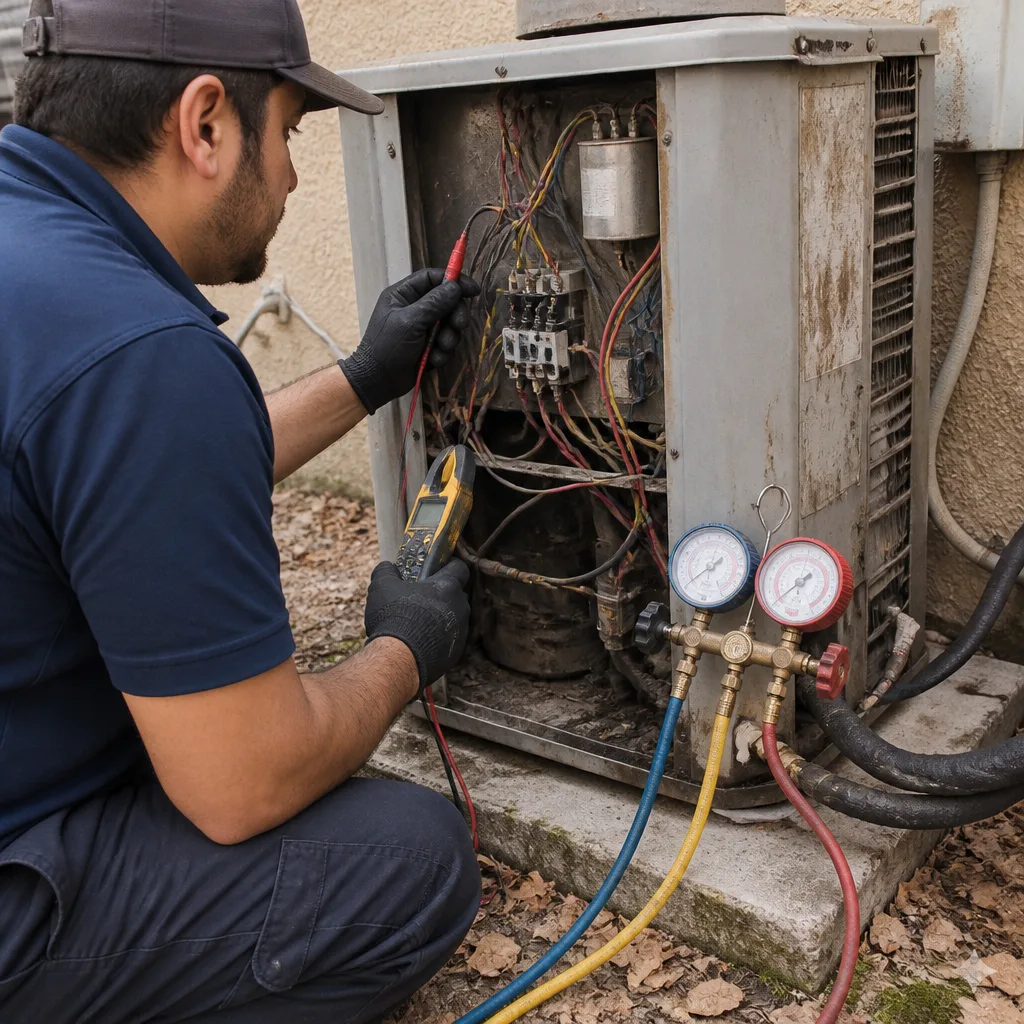 Before
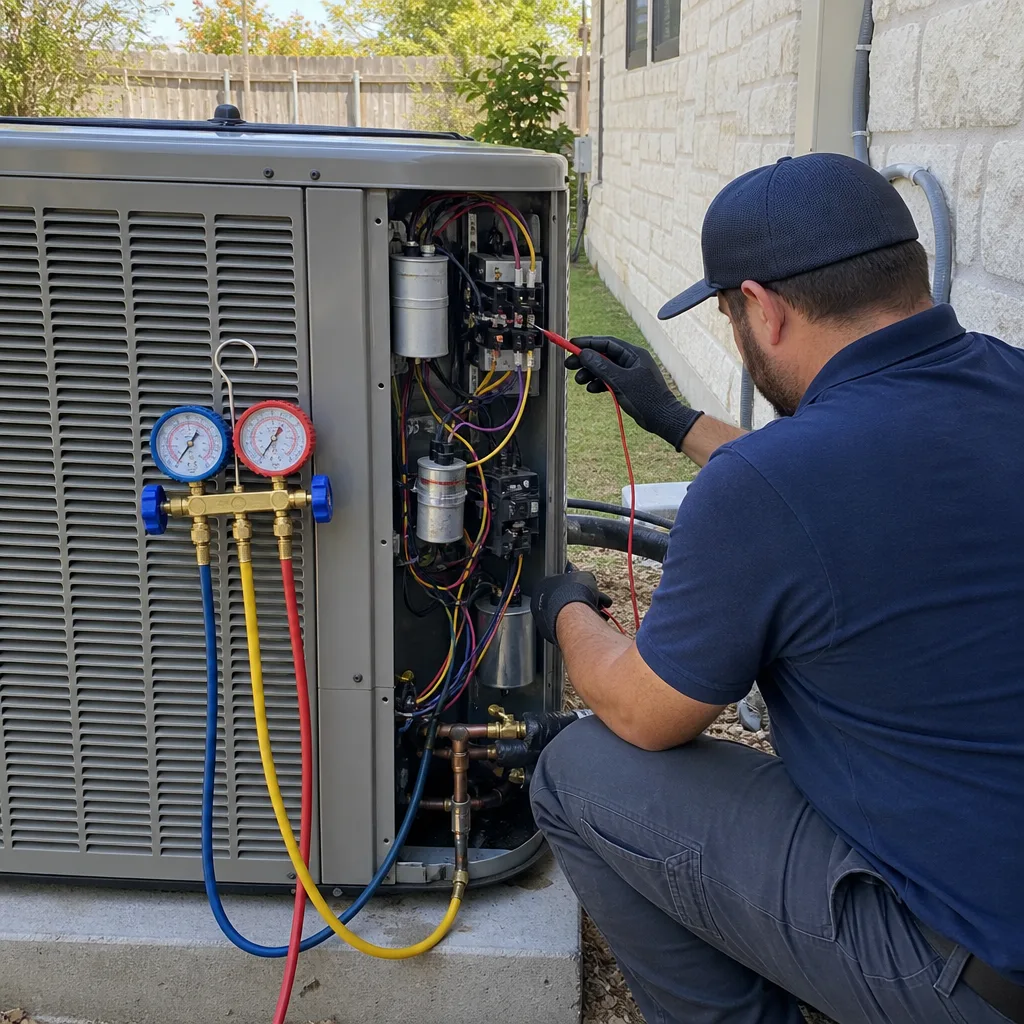 After
After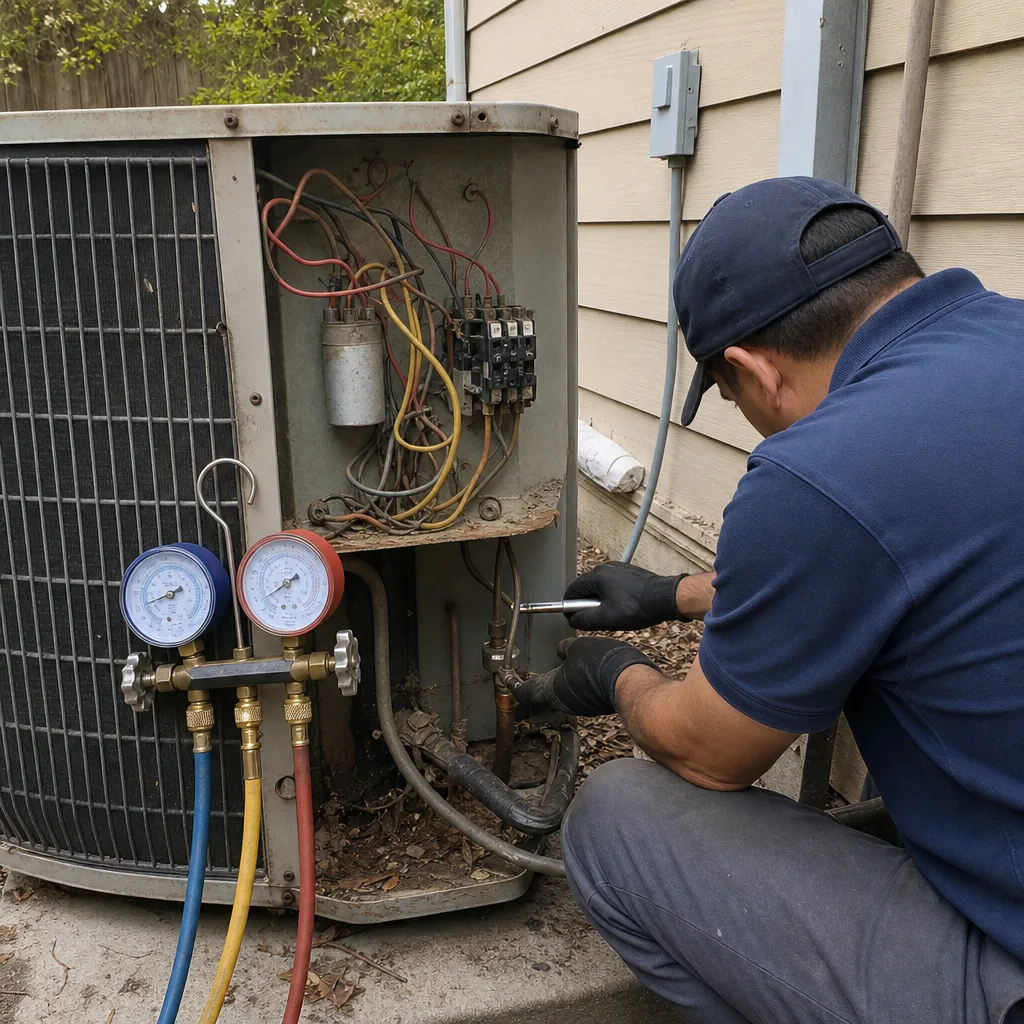 Before
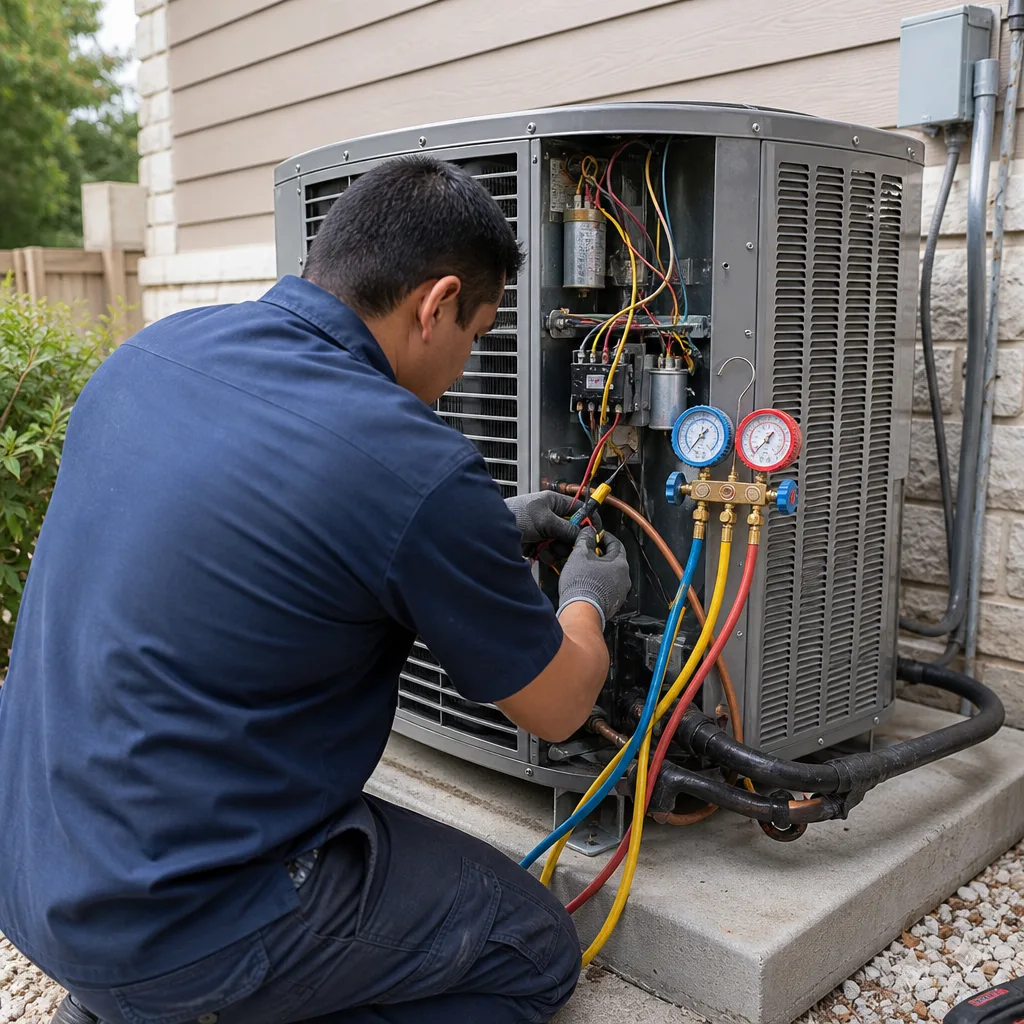 After
After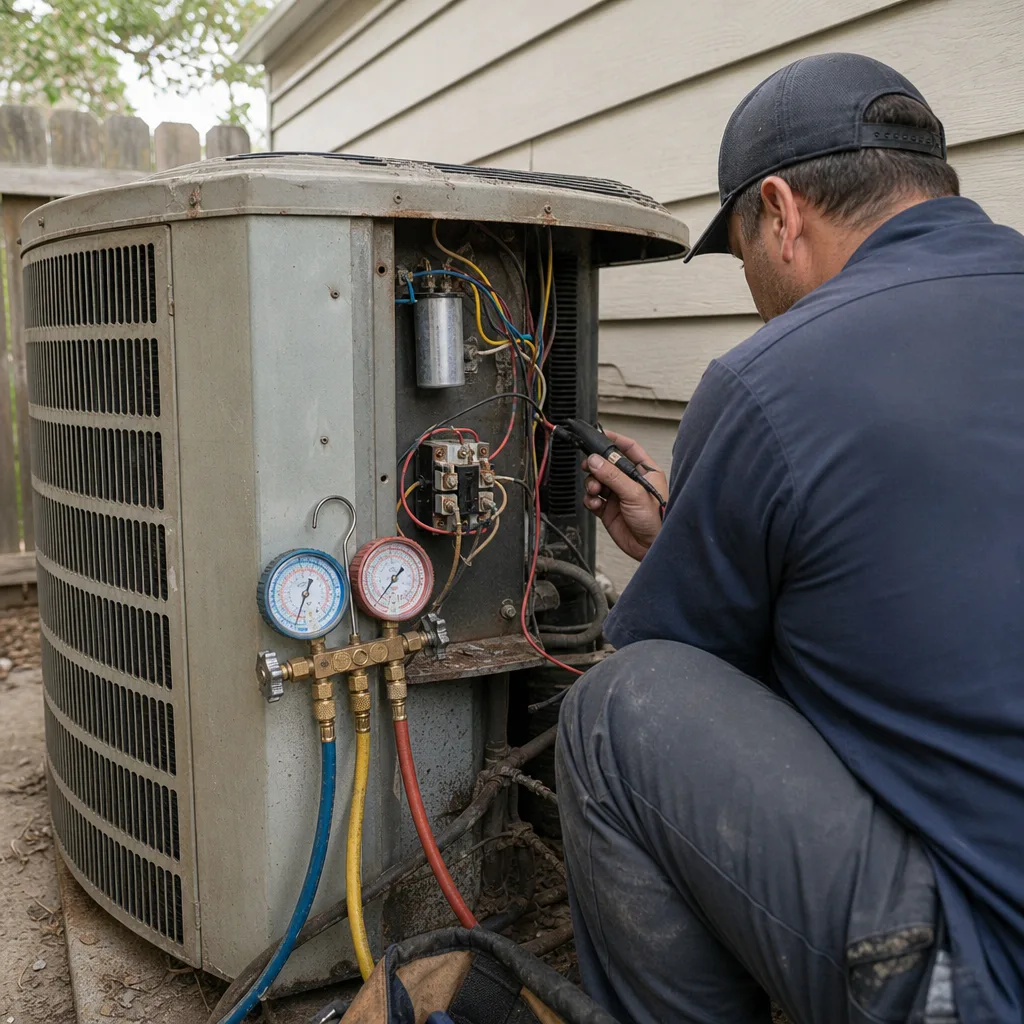 Before
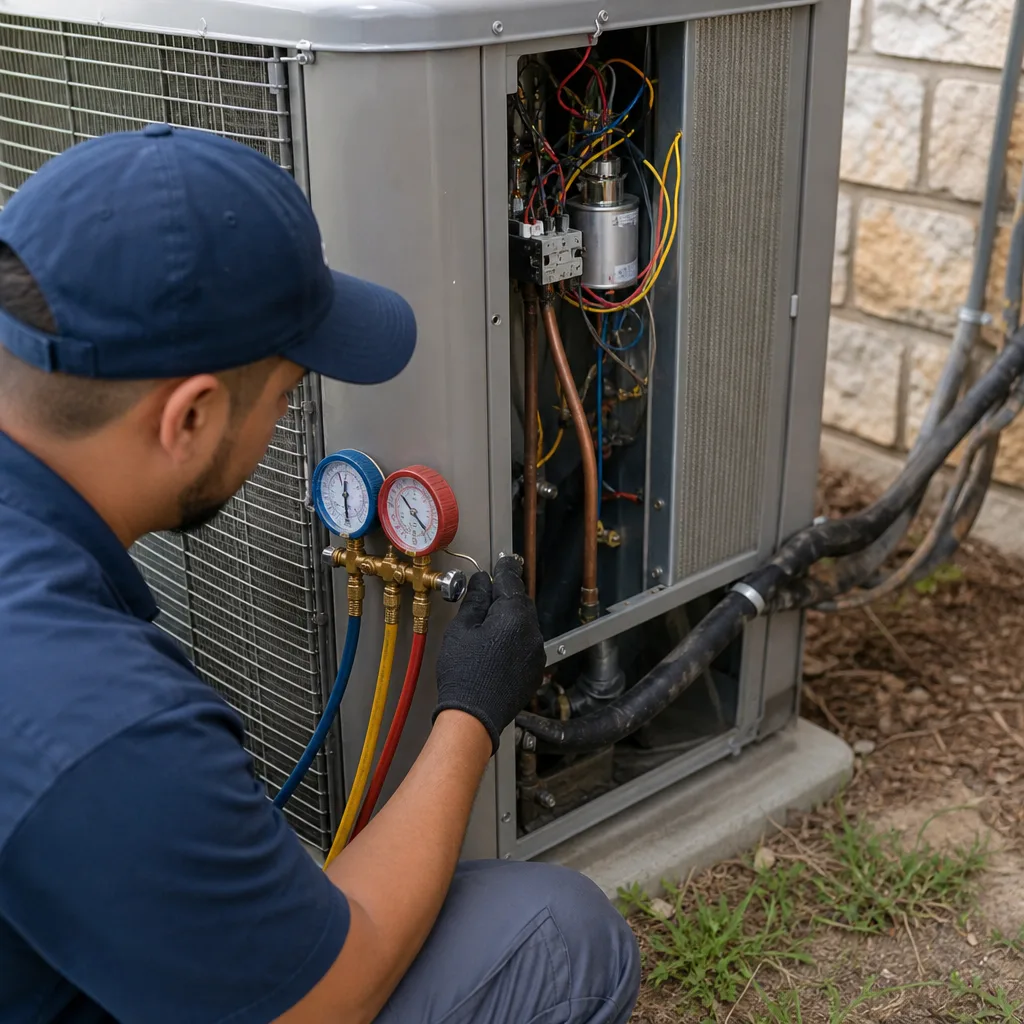 After
After