
Last updated October 16, 2026
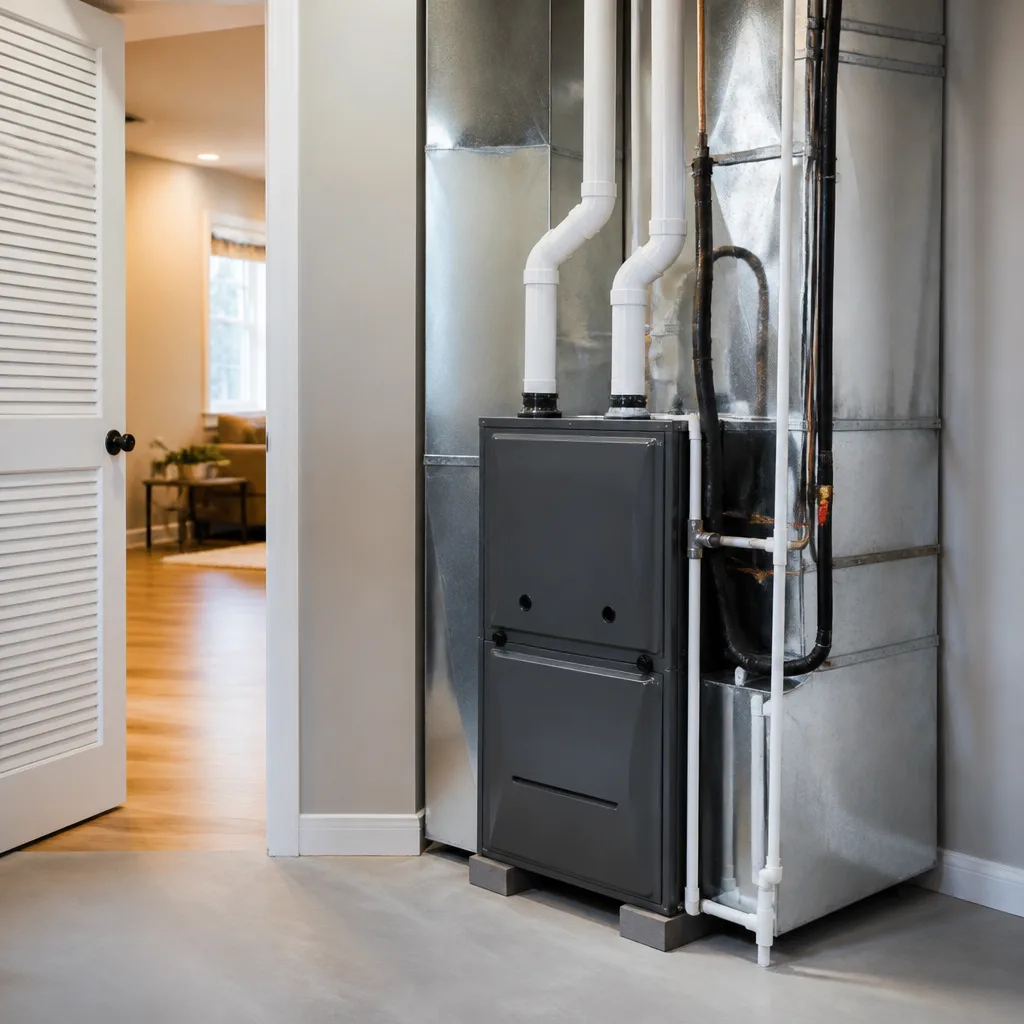 Furnace & heating
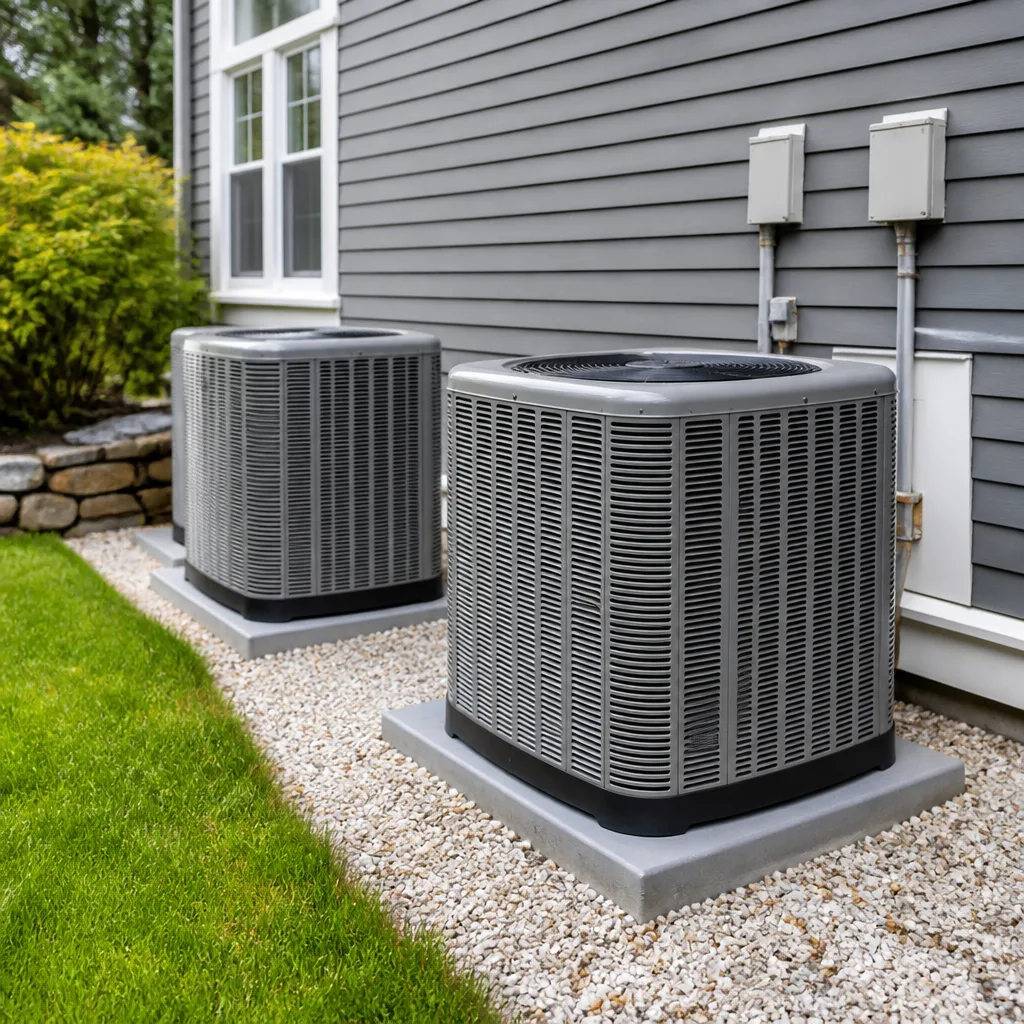 Heat pumps
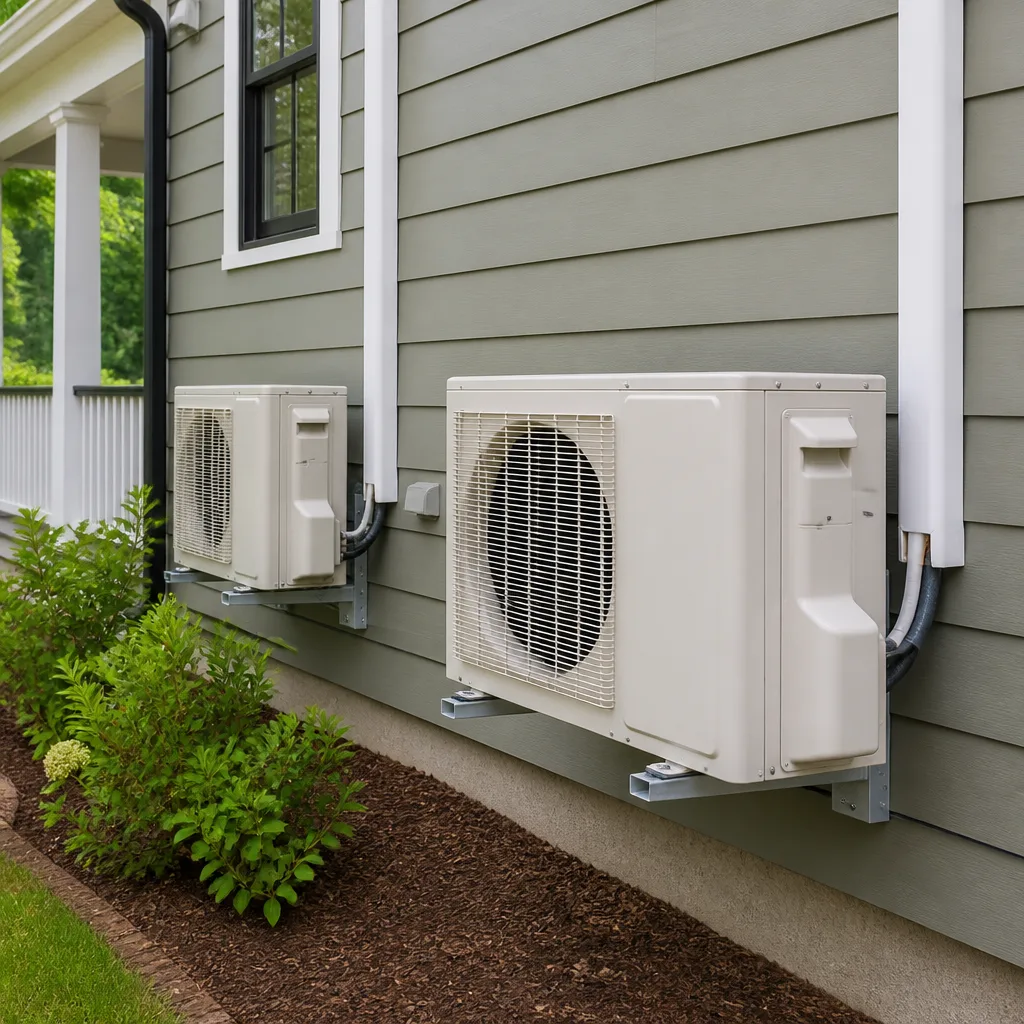 Ductless mini splits
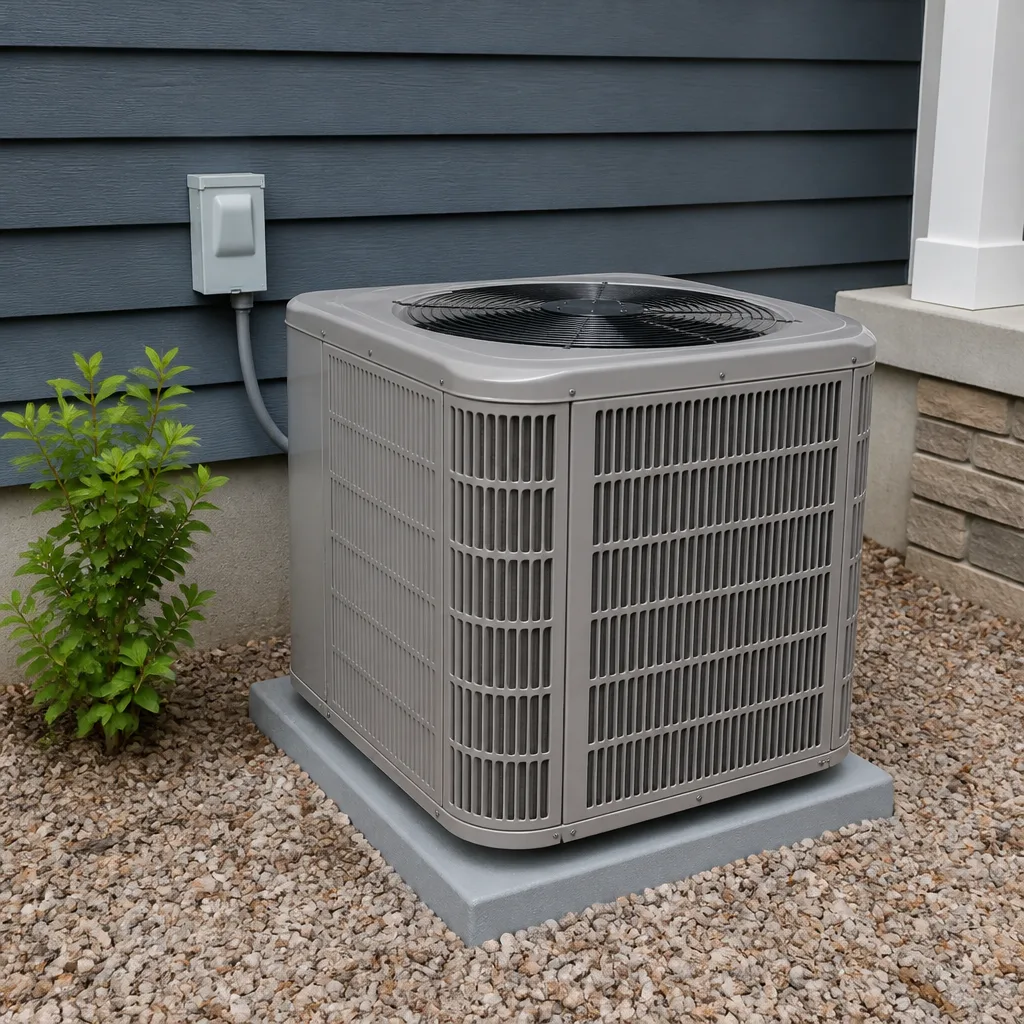 Carrier
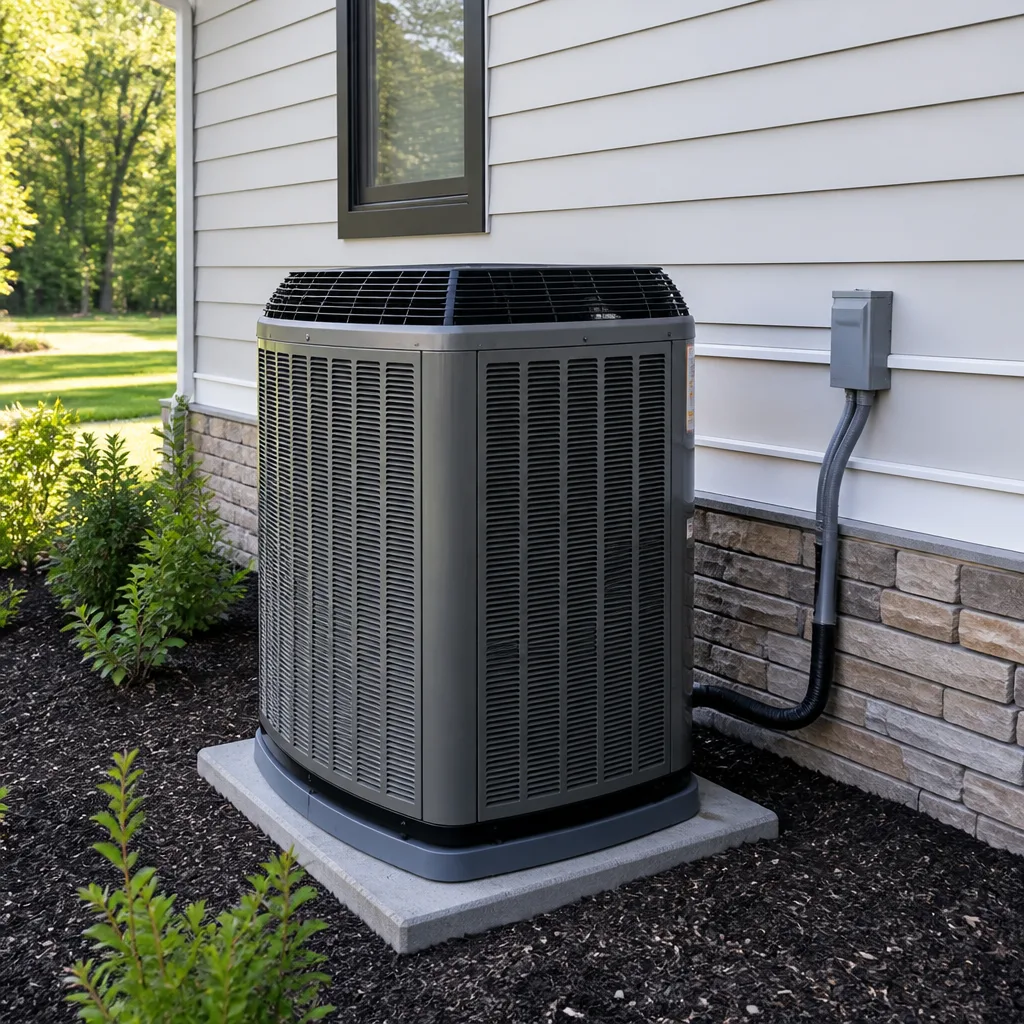 Trane
Trane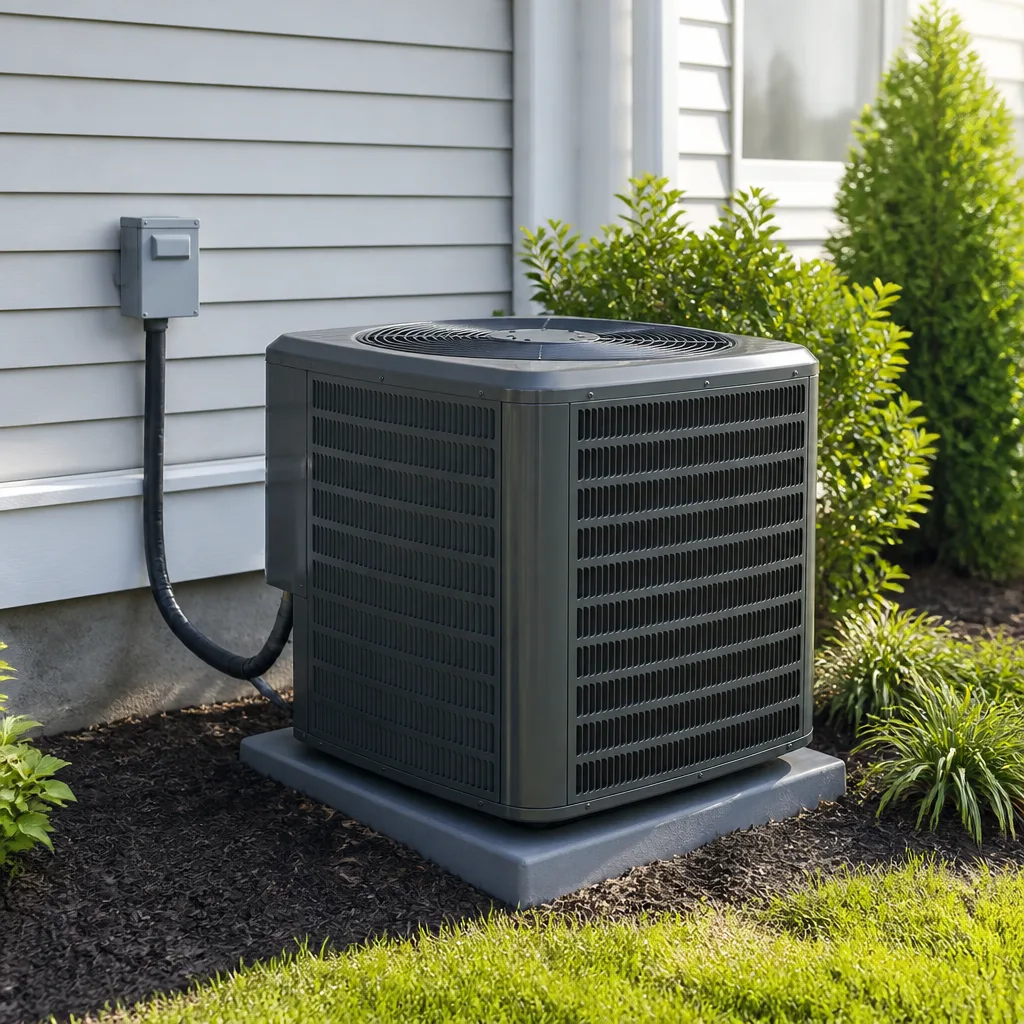 Goodman
Seasonal tune-up and full diagnostic on your Carrier, Trane, or Goodman system - readings shown to you before any repair is proposed
Diagnosis first, numbers second - you approve the repair price before a single part goes in.
Get your free estimateDIY vs Professional HVAC: The San Antonio Homeowner’s Decision Guide
In Texas, buying or handling refrigerant without an EPA 608 certification is a federal violation. That single fact guts the premise of most “DIY AC repair” content on the internet, and it’s almost never mentioned in the videos. Yet every summer in San Antonio, homeowners who would never touch a breaker panel will happily try to recharge their own AC because a YouTube video made it look easy. This guide draws the line not on what’s possible, but on what’s legal, what’s safe, and what actually saves you money when your system has to survive eight months of triple-digit demand. You’ll learn exactly which HVAC tasks belong in your hands, which ones belong in a professional’s, and how to spot the difference before a $50 attempt becomes a $1,500 repair. For more guides & resources, explore our blog.
Styles & brands we work with
Quick Answer
San Antonio homeowners can safely and legally handle air filter replacement, thermostat battery and basic wiring swaps (low-voltage only), condensate drain line flushing, and clearing debris from around the outdoor unit. Anything involving refrigerant, high-voltage electrical work, gas line connections, or compressor internals should be left to a licensed professional – in Texas, refrigerant handling without EPA 608 certification is a federal violation, and gas line or electrical mistakes can be fatal. When in doubt, the cheapest first step is a professional diagnosis, not a parts-store guess.
Table of Contents
- What You Can Legally and Safely Do Yourself
- Tasks That Seem DIY but Carry Hidden Consequences
- Texas Legal Boundaries: Where DIY Ends
- How to Evaluate YouTube Tutorials for San Antonio Accuracy
- When “I’ll Try It Myself First” Costs More
- The Warranty Reality Most Homeowners Discover Too Late
- Real Cost Comparison: DIY vs Professional in San Antonio
- Common Mistakes to Avoid
- When to Call a Professional
- Frequently Asked Questions
- The Bottom Line
What You Can Legally and Safely Do Yourself
Let’s start with the good news: there are several HVAC maintenance tasks that are not only legal for a San Antonio homeowner to perform, they’re genuinely helpful. Doing these consistently will extend the life of your system and reduce the number of professional service calls you need each year. None of them involve opening refrigerant lines, touching high-voltage wiring, or working on gas connections.
1. Replace Your Air Filter
This is the single most impactful DIY task in HVAC. A dirty filter restricts airflow, forces the blower motor to work harder, and can cause the evaporator coil to freeze in the middle of a San Antonio July. In our climate, with air conditioning running six to eight months a year and dust and pollen counts running high, most homes need a filter change every 30 to 60 days, not the 90 days manufacturers print on the package for national audiences.
How to do it correctly:
- Turn the system off at the thermostat.
- Locate the filter slot – it’s either in the return grille on a wall or ceiling, or in a slot near the indoor air handler unit.
- Note the arrow printed on the filter frame. The arrow must point toward the blower motor, which means toward the air handler or furnace, not toward the return grille.
- Slide the old filter out and the new one in. Close the cover or slot door.
- Turn the system back on and confirm airflow feels normal at the vents.
Expect to pay $8 to $25 per filter for standard 1-inch pleated filters at any San Antonio hardware store. If you have a 4-inch media filter cabinet, those run $25 to $50 and last 6 to 12 months. A clean filter can improve system efficiency by 5% to 15%, which on a typical San Antonio summer electric bill means real money.
2. Flush the Condensate Drain Line
San Antonio’s humidity makes drain line clogs a year-round problem, but especially from June through September when your AC runs continuously. Algae and biofilm build up inside the PVC drain line, eventually blocking it. When that happens, water backs up and spills into your home or onto your ceiling, or a float switch shuts the system down entirely. This is preventable with a five-minute task.
Steps:
- Locate the drain line near your indoor air handler. It’s a white PVC pipe, usually ¾ inch, often running to a floor drain or outside.
- Find the access point – many San Antonio homes have a vertical pipe with a cap near the air handler, or a clean-out tee.
- Pour 1 to 2 cups of plain white vinegar down the opening. Vinegar kills the algae without the corrosive damage bleach can do to PVC over time.
- Repeat monthly during peak cooling season. Some homeowners set a calendar reminder for the first of the month.
If the line is already clogged, a wet/dry vacuum can sometimes pull the blockage free from the outside termination point. If vinegar and vacuum don’t clear it, the clog may have hardened – that’s the time to call for a professional drain line clearing rather than pushing compressed air into the line, which can blow a weak PVC joint apart inside your wall.
3. Clear Debris Around the Outdoor Unit
Your condenser unit needs at least 18 to 24 inches of clear space on all sides to breathe. In San Antonio, the enemies are live oak leaves, grass clippings, cottonwood seeds, and the dust that settles on the coil fins. A quick visual check every couple of weeks during mowing season can prevent a costly service call.
Safe steps:
- Turn off the disconnect switch near the outdoor unit.
- Remove leaves, grass, and debris by hand from around the base and from between the coil fins, working gently so you don’t bend the fins.
- Trim back any vegetation within two feet of the unit.
- Use a garden hose on gentle spray to wash the coil fins from the inside out – never use a pressure washer, which will flatten the fins and reduce efficiency.
- Turn the disconnect back on.
Those three tasks cover about 90% of what a San Antonio homeowner can do safely. Everything else on your system falls into a trickier category.
Tasks That Seem DIY but Carry Hidden Consequences
This is the gray zone where a lot of expensive mistakes happen. These tasks are technically within a capable homeowner’s reach, and plenty of tutorials will show you exactly how to do them. But each one carries a consequence that isn’t obvious on camera – a voided warranty, a failed inspection, a safety risk, or a repair that works for a week and then fails at the worst possible time.
Thermostat Replacement and Calibration
Replacing a thermostat is usually a low-voltage job – the wires to the thermostat carry 24 volts, which will not shock you. If you’re replacing a basic thermostat with another basic thermostat and you label the wires before disconnecting them, this is a reasonable DIY project. Most thermostats use the same wire color conventions: red for power, white for heat, yellow for cooling, green for fan.
The hidden consequence shows up with smart thermostats and older San Antonio homes. Many homes built before the late 1990s have four-wire thermostat bundles, but modern smart thermostats often need a fifth wire (the C-wire, or common wire) to stay powered. If you don’t have one, and you don’t know how to use the included adapter, you can damage the control board when the thermostat draws power through circuits not designed for it. A new control board is a $400 to $700 repair. If you’re at all unsure, this is a task our AC repair team in San Antonio handles during a standard service visit.
Capacitor Replacement
The capacitor is the part most likely to fail on a San Antonio AC system because the heat shortens its life. It’s a cylindrical component inside the outdoor unit that gives the compressor and fan motors the starting jolt they need. A capacitor costs $15 to $40 at a parts store. Online tutorials make replacing one look like a five-minute swap.
Here’s what those tutorials leave out: first, a capacitor stores electrical charge even after the power is off. Touching the terminals without discharging it properly can give you a shock strong enough to stop your heart. Second, some San Antonio homes have dual capacitors serving both the fan and compressor – if you wire it wrong, you can damage the compressor, and that’s a $2,000 to $4,000 replacement. Third, the capacitor that fails is sometimes not the root cause. A compressor drawing excessive amperage will burn through new capacitors in weeks. When we encounter a failed capacitor during a diagnostic visit, we check the compressor’s amp draw to make sure you’re not about to buy a second capacitor in six weeks. That diagnostic step is worth the service call.
Condensate Pump Replacement
Homes with air handlers in the attic, which is common in San Antonio subdivisions, often use a small condensate pump to move water from the drain pan up and out through the soffit. These pumps fail every few years, and replacing one is a moderately simple job: unplug the old pump, cut the PVC drain line, install the new pump, reconnect the line, and test the float switch.
The hidden consequence is the float switch wiring. Most condensate pumps have a safety switch that shuts off the AC if the pump fails, and that switch is wired in series with the thermostat cable. If you wire it wrong, the system won’t run at all, or worse, the safety shutoff won’t work and a failed pump will dump water through your ceiling. The repair for a sagging, water-damaged ceiling is far more expensive than the cost of having a professional install the pump correctly in the first place. This falls into the category of “possible, but the error cost is asymmetric.”
Texas Legal Boundaries: Where DIY Ends
Texas draws a hard line on three HVAC-related activities, and neither YouTube nor personal confidence overrides them. These are legal requirements with federal or state backing, and they exist because the substances and energies involved can kill people or destroy property when mishandled.
Refrigerant Handling
Since 1994, the EPA has required anyone purchasing or handling refrigerant for HVAC systems to hold a Section 608 Technician Certification. That’s a federal requirement under the Clean Air Act. If your AC is low on refrigerant, you cannot legally buy R-410A or any other refrigerant to add to it. You cannot legally connect a manifold gauge set to the service valves. You cannot legally “top off” your system using a can from an auto parts store, even if the can says it’s for home use. Each violation carries fines up to $37,500 per day.
Beyond the federal penalty, refrigerant work requires training for a reason. An undercharged or overcharged system will run inefficiently or not at all. Adding refrigerant to a system with a leak means the refrigerant will escape again, which is both an environmental problem and money out of your pocket. And working with refrigerant under pressure without proper equipment can cause severe frostbite injuries or, in the case of combustible refrigerants now entering the market, fire.
If your system is short on refrigerant, it has a leak. The correct fix is not “add more” – it’s find the leak, repair it, pressure-test the system, and then recharge to the manufacturer’s exact specification. That work belongs to a certified technician, full stop. In San Antonio, where cooling demand is relentless, a system that leaks will fail again within weeks or months, not years.
Electrical Work Above 24 Volts
The thermostat wiring is low-voltage and safe to touch. The moment you open the air handler cabinet or the outdoor unit’s electrical compartment, you’re dealing with 240-volt single-phase power, and sometimes 208-volt three-phase in larger homes or commercial conversions. This voltage can kill you. Texas requires a licensed electrician for most 240-volt work in a residence, and HVAC technicians working on these circuits carry electrical training specific to HVAC equipment.
Disconnect switches, contactors, circuit boards, blower motors, and heat strips all operate at line voltage. The symptoms that lead homeowners into these compartments are usually straightforward – “the AC won’t turn on” – but the diagnosis requires a multimeter, an understanding of the wiring schematic, and experience with the safety procedures around live circuits. A miswired heat strip can create a fire that starts inside your air handler and spreads through the ductwork before you smell smoke. This is not a weekend project.
Gas Line Connections
In San Antonio, a significant percentage of homes use natural gas for heating. Furnace installations and repairs can involve gas line modifications, and in Texas, gas fitting work requires proper licensing and permits in most municipalities, including San Antonio. See our overview of HVAC Permits, Codes & Inspections in TX: What You Need to Know for details. The consequence of an improper gas connection is not a voided warranty – it’s a gas leak, and gas leaks kill. Carbon monoxide is colorless, odorless, and heavier than air when concentrated. A slow leak from a poorly threaded fitting can accumulate in a crawl space or utility closet for weeks before it reaches a dangerous level.
If your furnace work involves any connection between the gas supply line and the furnace itself – including flex-line connections, unions, shutoff valves, or manifold work – that’s professional territory. A professional will also test the connection with a combustible gas detector before leaving, which is the verification step no YouTube tutorial provides. For furnace issues of any kind, our furnace repair service in San Antonio includes full gas connection verification on every call.
How to Evaluate YouTube Tutorials for San Antonio Accuracy
Let’s be honest about what’s out there. YouTube is full of HVAC repair tutorials, and some of them are genuinely excellent – filmed by experienced technicians who explain procedures clearly and include the safety steps. The problem is that most of them are filmed for a national audience, and national audiences don’t live in Bexar County.
Here’s how to tell whether a tutorial applies to your situation in San Antonio:
Check the Climate Context
Most HVAC troubleshooting advice assumes a moderate climate where the system runs a few hours a day for four or five months a year. San Antonio is different. Our systems run 1,800 to 2,500 hours per year, which is two to three times the national average. A part that lasts ten years in Ohio lasts six or seven years here. A “minor” issue that a national video says you can watch and wait on becomes an emergency when it’s 105 degrees and the system fails at 3 p.m. on a Saturday. San Antonio-specific advice accounts for the relentless duty cycle. National advice often doesn’t.
Look for the Missing Safety Steps
Watch how the tutorial handles power. A responsible technician will show you the disconnect switch, and will say something like “I’ve confirmed voltage is zero at the contactor before touching anything.” If a video skips from “here’s the problem” to “open the panel and swap the part” without showing the disconnect and voltage check, stop watching. The person filming it has gotten lucky, and you might not.
Check the Part Numbers Against Your Actual System
San Antonio homes have equipment from every major brand – Carrier, Trane, Lennox, American Standard, Goodman, Rheem, and York are all common in local neighborhoods from Alamo Heights to Stone Oak. A video filmed for a Goodman unit may not translate to a Trane or Lennox system. Wiring colors, capacitor specifications, and board layouts differ by brand and model. Before you order a part based on a video, verify the part number on your actual unit’s nameplate. If you can’t read the nameplate or don’t know how to cross-reference it, that’s your signal that the task is beyond DIY.
Watch for Overconfidence
The technicians we trust are the ones who say “if you see this, stop and call someone.” The ones we don’t trust are the ones who make every repair look simple and every outcome look certain. HVAC diagnosis is layered: the symptom you see – no cooling, weak airflow, strange noise – is often two or three layers removed from the actual fault. A tutorial that doesn’t mention alternative causes, or that doesn’t tell you what to check if the first fix doesn’t work, is giving you false confidence. In our experience as a San Antonio HVAC company, more than a third of the service calls that follow a failed DIY attempt involve either a misdiagnosed root cause or a part that was “replaced” but wasn’t actually the problem.
When “I’ll Try It Myself First” Costs More
There’s a pattern we’ve seen hundreds of times in San Antonio: a homeowner notices a problem, watches a video or two, visits a parts store, spends $30 to $100 on a part, swaps it, and the problem persists. Then a different part gets swapped. Then another. At some point, frustration sets in and a professional gets called, and the actual fix turns out to be a $25 relay on a control board the homeowner never touched. The total cost of the DIY path: three weekends, $150 in wrong parts, and a professional diagnostic on top. The cost of calling first: one diagnostic fee and the right part installed the same day.
Scenario One: The Frozen Coil That Wasn’t Low Refrigerant
A homeowner in the Leon Valley area noticed the indoor coil covered in ice. The YouTube diagnosis: low refrigerant. The DIY instinct: buy a refrigerant top-off can (illegal, but available online from questionable sources) and add it. The actual problem: a dirty filter had reduced airflow enough to freeze the coil. The fix was a $12 filter. The lesson: symptoms have multiple causes, and the cheapest one is often the real one. A professional diagnostic call would have cost $75 to $125 and solved the problem in an hour.
Scenario Two: The Contactor That Wasn’t Bad
A homeowner’s outdoor unit wouldn’t turn on. The fix, per a video: replace the contactor. New contactor installed, unit ran for two days, then failed again. The actual cause: a failing run capacitor that was dragging voltage down and holding the contactor closed until it burned the contacts. The part replaced was a symptom, not the cause. Total DIY cost: $35 for the contactor, two days without AC, plus a service call for the real fix. Professional cost from the start: one diagnostic that would have identified the capacitor, which is something our AC maintenance visits in San Antonio check proactively before failure.
Scenario Three: The Drain Line That Kept Clogging
A homeowner’s drain kept clogging every few weeks. Each time, it was cleared with a shop vac. The underlying issue: the drain line had sagged, creating a low spot where algae collected. No amount of vacuuming fixes a sagged pipe. The eventual repair involved cutting out the sagged section and repitching the line – a straightforward job for a professional that a DIYer would never have identified because the videos only show clearing, not diagnosing why the clog recurred.
The thread running through all three: diagnostic skill is the expensive missing piece. Parts are cheap. Knowing which part is the right one is what costs money, and it’s what professional training provides.
The Warranty Reality Most Homeowners Discover Too Late
Here’s a fact that doesn’t appear in many DIY discussions: your HVAC equipment probably came with a warranty, and that warranty probably contains language requiring professional installation and service by qualified technicians. Read the fine print on your Carrier, Trane, Lennox, or American Standard warranty and you’ll typically find that parts coverage is conditional on professional installation and, in many cases, on maintaining service records.
What voids a warranty:
- Unauthorized modification of the equipment. Replacing a control board with a generic aftermarket board, rewiring components, or modifying the refrigerant circuit all count.
- Damage caused by improper installation or repair. If a manufacturer determines that a part was damaged by a DIY repair attempt, the warranty claim can be denied – and manufacturers have forensic-level capability to determine whether an original part was touched by someone unfamiliar with the equipment.
- Failure to maintain the system per manufacturer specifications. This is less about DIY repairs and more about skipped maintenance. A compressor that fails due to a clogged filter may have warranty coverage denied when the service records show no evidence of regular filter changes.
Compressor replacements are the big-ticket item here. A scroll compressor for a typical San Antonio split system – the outdoor unit styles common in neighborhoods from the Medical Center to Schertz – costs $1,800 to $4,000 installed. A compressor failure where the manufacturer denies the warranty claim because of evidence of DIY service turns that into a fully out-of-pocket expense. The money saved by doing a few small repairs yourself evaporates instantly if one of those repairs gives the manufacturer a reason to deny a five-figure claim.
Our policy at Brandt HVAC Co San Antonio: every repair includes a written guarantee covering exactly what we fixed and for how long. If the same problem recurs within the guarantee period, we return at no charge under the 365-Day Done Right Promise. That’s the standard a professional repair should provide. A DIY repair comes with no such guarantee – the only warranty is your own confidence, which as the scenarios above show, is often misplaced.
Real Cost Comparison: DIY vs Professional in San Antonio
Here’s what these tasks actually cost, side by side, based on what we see across San Antonio service markets. For detailed pricing context, see our HVAC Cost Breakdown: The San Antonio Homeowner’s Reference for 2026.
| Task | DIY Cost | Professional Cost | Risk of DIY Failure |
|---|---|---|---|
| Air filter replacement | $8 – $25 | $10 – $40 (if done during maintenance visit) | Low, if installed correctly |
| Drain line flush (vinegar) | $2 – $5 | $75 – $150 (if fully clogged) | Low |
| Thermostat replacement (basic) | $25 – $150 | $175 – $350 installed | Moderate for smart thermostats |
| Capacitor replacement | $15 – $40 (part only) | $150 – $300 installed | High (shock hazard, misdiagnosis) |
| Condensate pump replacement | $50 – $100 (part only) | $200 – $400 installed | Moderate (flood risk if wired wrong) |
| Contacted replacement | $20 – $50 (part only) | $200 – $350 installed | High (root cause often missed) |
| Refrigerant recharge | Illegal without EPA 608 | $300 – $800 with leak repair | Not applicable – do not attempt |
| Gas line connection work | Illegal without proper licensing | $200 – $600 depending on scope | Not applicable – do not attempt |
The pattern is visible: DIY saves meaningful money on the cheap, low-risk tasks, and it saves almost nothing on the expensive, high-risk ones once you account for misdiagnosis, repeated part purchases, and the cost of the professional visit that eventually follows. The homeowner who filters the DIY column aggressively – doing the three or four safe tasks and calling a professional for everything else – gets most of the DIY savings with none of the DIY downside.
Common Mistakes to Avoid
- Using black-market refrigerant. Some auto parts stores and online sellers market refrigerant cans to homeowners despite federal law prohibiting purchase without certification. Buying it is a violation, and using it on a residential system is a second violation. San Antonio’s summer heat makes it tempting. The law doesn’t make exceptions for heat waves.
- Pushing compressed air through a clogged drain line. This can blow weak PVC joints apart inside your walls or ceilings, turning a $150 drain clearing into a $2,000 drywall and pipe repair. Vinegar and a shop vac are the safe DIY options; anything beyond that is professional territory.
- Replacing parts without checking the actual voltage. A technician never assumes the power is off – they verify with a multimeter at the component level. Homeowners sometimes flip the wrong breaker or miss a second disconnect, then reach into a live electrical compartment. The cost of a multimeter is $30. The cost of an arc flash burn can be a hospital stay.
- Trusting a tutorial filmed in a different climate. Advice from Ohio or Michigan doesn’t account for the hours a San Antonio system runs annually. A contactor that’s “fine for another year” in a northern climate is on borrowed time after 2,000 hours of Texas sun and heat.
- Adding refrigerant to “fix” a leak. Refrigerant doesn’t get used up. If it’s low, it leaked. Adding more without finding the leak is like putting air in a punctured tire daily instead of patching the hole. In San Antonio, that leak will empty the system again within a season, and you’ll have paid for the refrigerant twice while the real problem gets worse.
- Ignoring the float switch wiring during condensate pump replacement. The pump moves water; the float switch shuts the system down when the pump fails. Wire it wrong and the safety net is gone. The first time you’ll know is when water is coming through the ceiling below the air handler.
- Voiding a warranty over a $50 part. Manufacturers deny coverage when they can demonstrate improper service. On a compressor claim worth $3,000, the $50 you saved on a DIY capacitor or contactor is the worst trade you’ll make all year.
When to Call a Professional
Call a professional when any of these apply: the system uses refrigerant and it’s not cooling properly; there’s any electrical issue above the thermostat level; the furnace involves a gas line connection; the system has failed repeatedly after DIY attempts; there’s water leaking into the home from the air handler or drain line; a part in the outdoor unit has failed; or you’re not certain what the actual root cause is. These are not optional calls. Delaying professional service on a San Antonio system in summer means days without cooling in a climate where indoor temperatures routinely exceed 90 degrees within hours of a system failure – a genuine health risk for elderly residents, young children, and people with medical conditions. Brandt HVAC Co San Antonio offers free estimates by phone – call (361) 470-8872, and a live person answers 24/7.
Frequently Asked Questions
Yes. The EPA requires Section 608 Technician Certification to purchase or handle refrigerant for residential HVAC systems, and this is federal law that applies in San Antonio and everywhere else in the country. Penalties run up to $37,500 per violation per day. Any company selling refrigerant to an uncertified homeowner is also in violation.
Filter replacements cost $8 to $25, drain line flushing costs about $2 to $5 for vinegar, and thermostat batteries cost a few dollars. Beyond those basic tasks, DIY repairs typically cost $30 to $100 in parts per attempt, and they often require multiple attempts because the root cause wasn’t correctly identified. The average DIY path that ends in a professional service call totals $150 to $300 in wasted parts and time, not including the professional repair itself.
Air filter replacement, condensate drain line flushing with vinegar, clearing debris around the outdoor condenser unit, and installing a basic thermostat (non-smart, low-voltage) are the safest and most useful DIY tasks for San Antonio homeowners. Anything involving refrigerant, line voltage, gas connections, or compressor internals should be left to a certified technician.
Yes. Most manufacturers including Carrier, Trane, Lennox, and American Standard condition their parts warranties on professional installation and service. Unauthorized repairs, modifications, or damage caused by improper service can give the manufacturer a valid reason to deny a warranty claim. On major components like compressors, that denial can cost thousands of dollars.
Diagnostic service calls in San Antonio typically run $75 to $125, and most common repairs – capacitors, contactors, relays, drain clearing – cost $150 to $400 with parts and labor included. Compressor and control board replacements run significantly higher. Our AC repair service in San Antonio provides a written price before any work starts, on every job, with no exceptions.
Check the filter first and replace it if dirty, then check that the outdoor unit has power and no tripped breaker. If the filter is clean and the breaker is fine, the system needs professional diagnosis. Continuing to run a system that’s blowing warm air can turn a repairable fault into a compressor failure, and in San Antonio’s summer heat, indoor temperatures become unsafe quickly. Call (361) 470-8872 – we answer with a live person, day or night, and we provide a written, upfront price before any repair begins.
The Bottom Line
The smart San Antonio homeowner doesn’t choose between DIY and professional service – they use both, in the right proportions. The few safe DIY tasks – filters, drain line maintenance, debris clearing – are worth doing yourself and save real money over time. Everything beyond that belongs to a trained technician, and in Texas, some of it legally cannot be done by anyone else. The frame isn’t pride or self-reliance. It’s consequence: the cost of being wrong, the cost of a denied warranty, and the cost of a furnace or AC failure in a climate that punishes hesitation. When the stakes exceed your training, the cheapest available move is still the phone call.
Written by Devin Marlowe, Owner at Brandt HVAC Co San Antonio, serving San Antonio since 2003.
See the difference
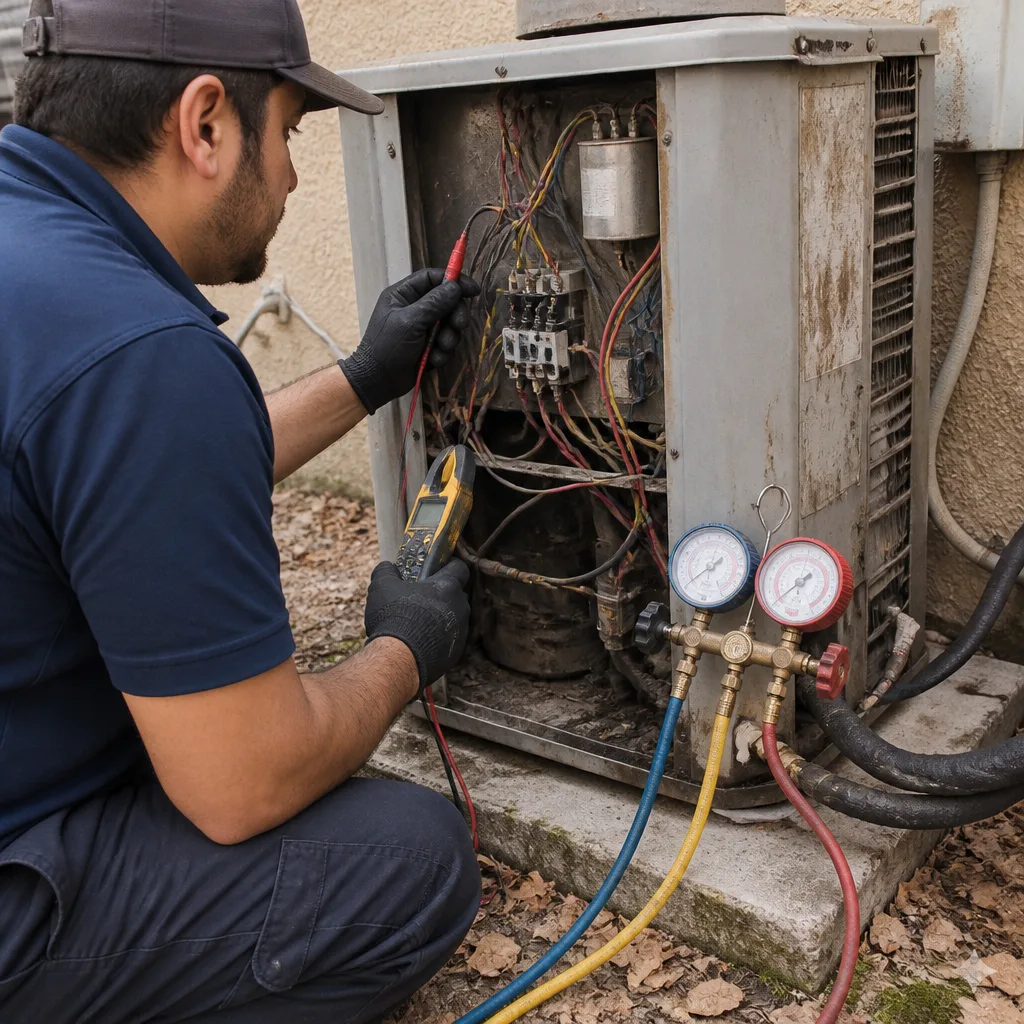 Before
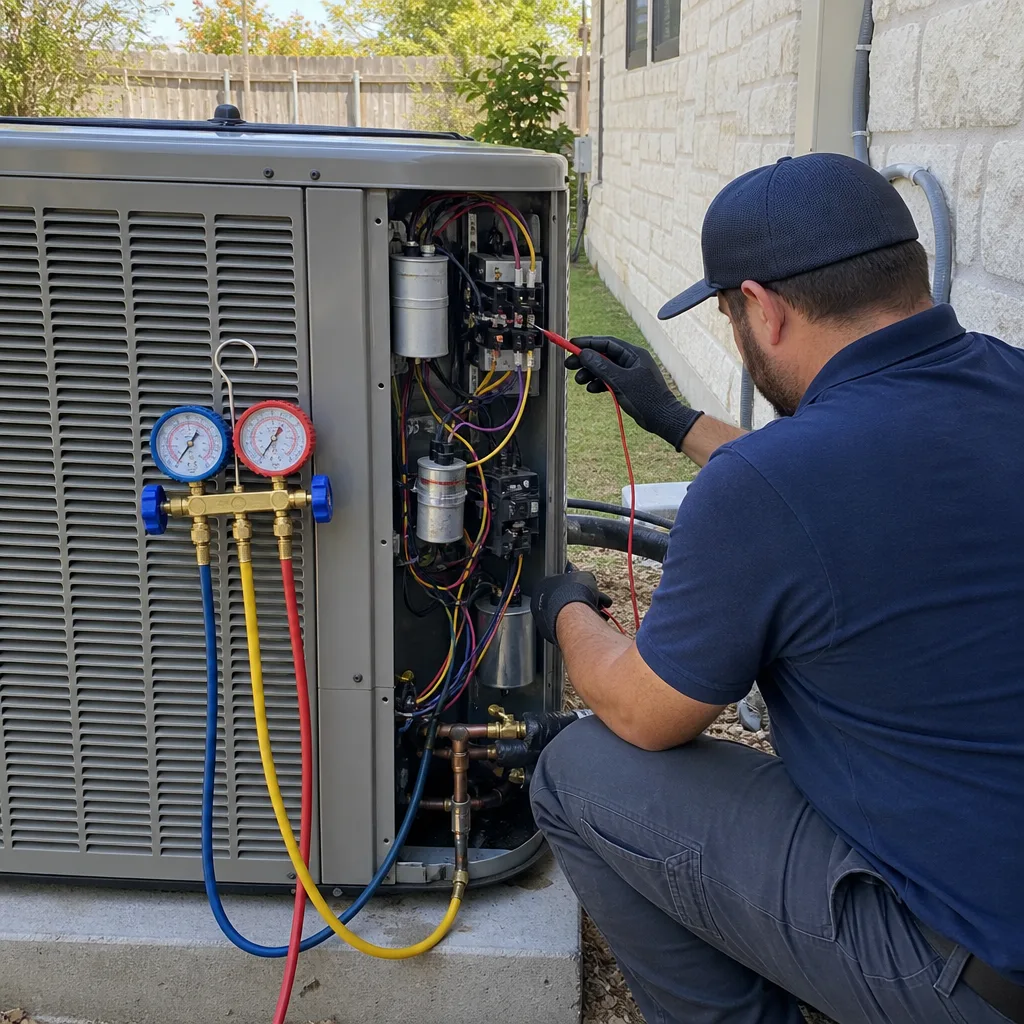 After
After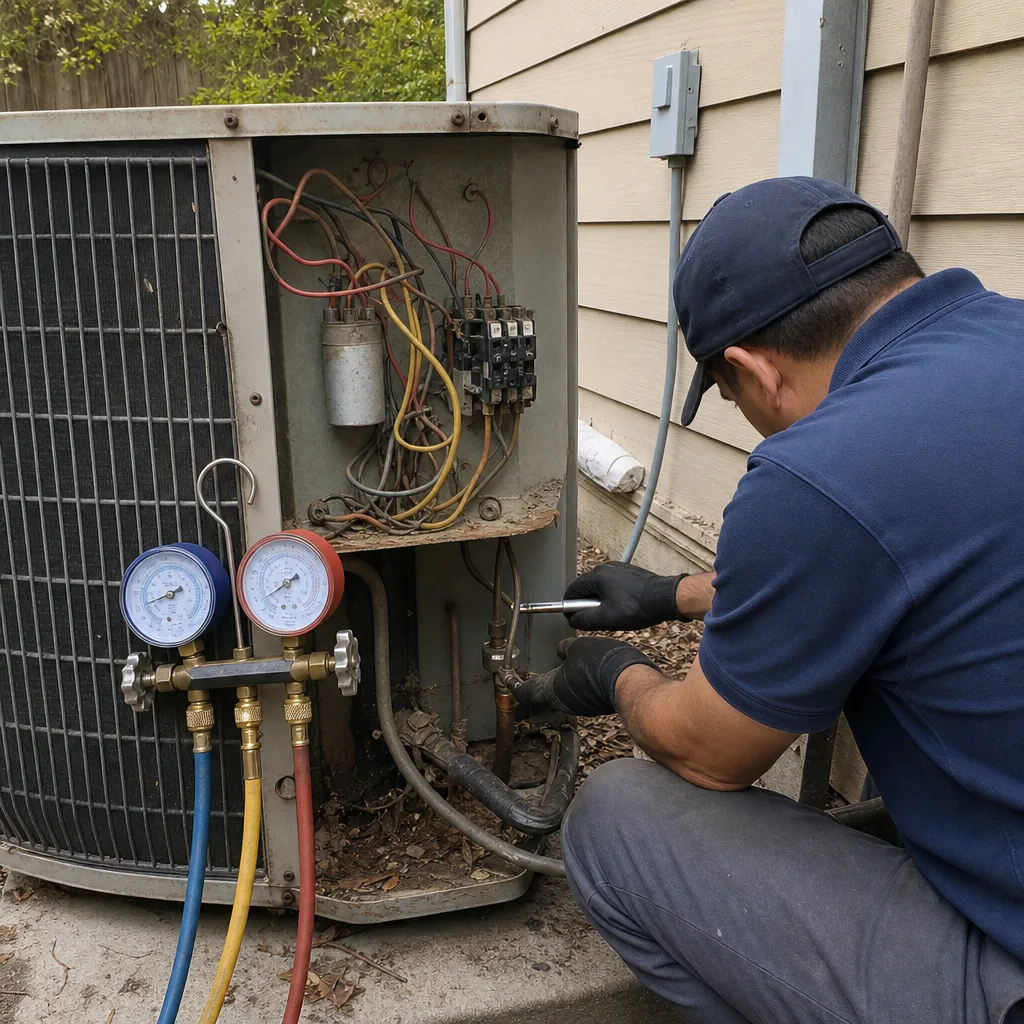 Before
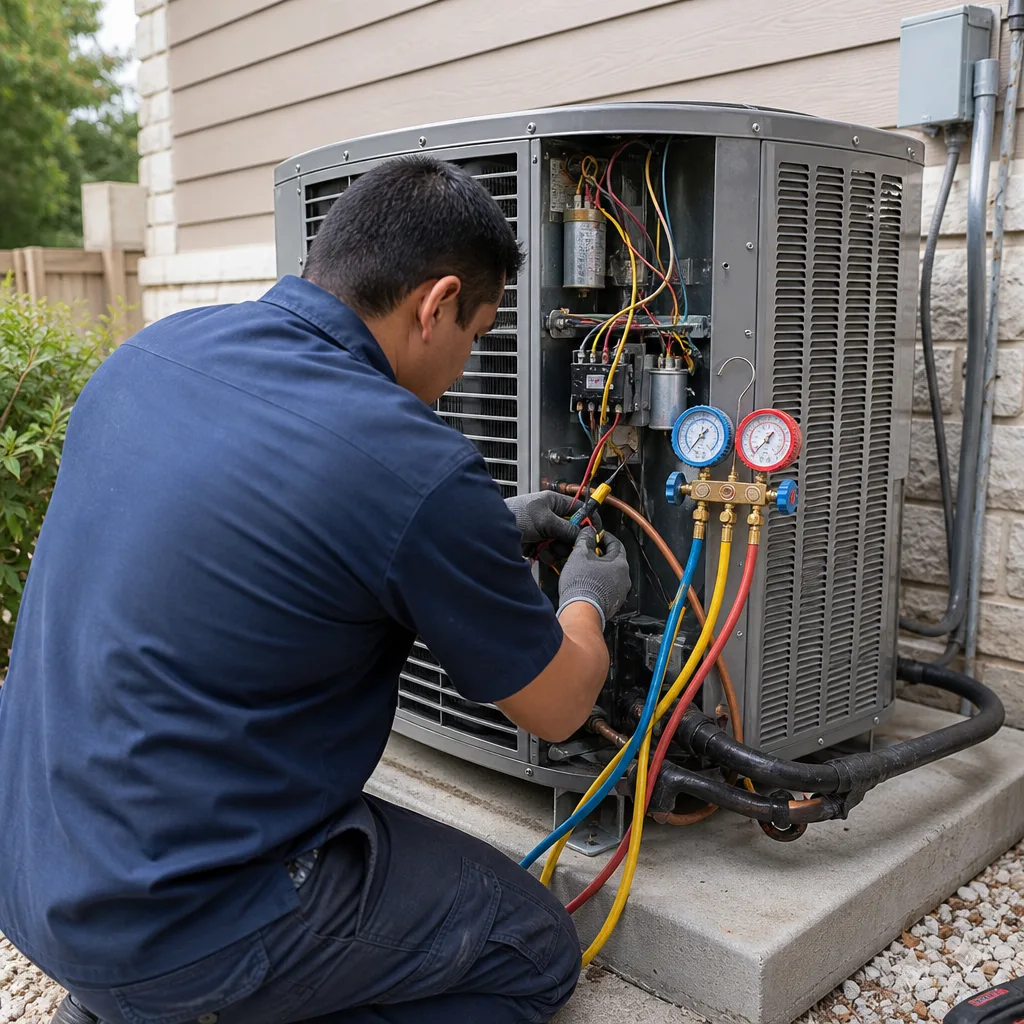 After
After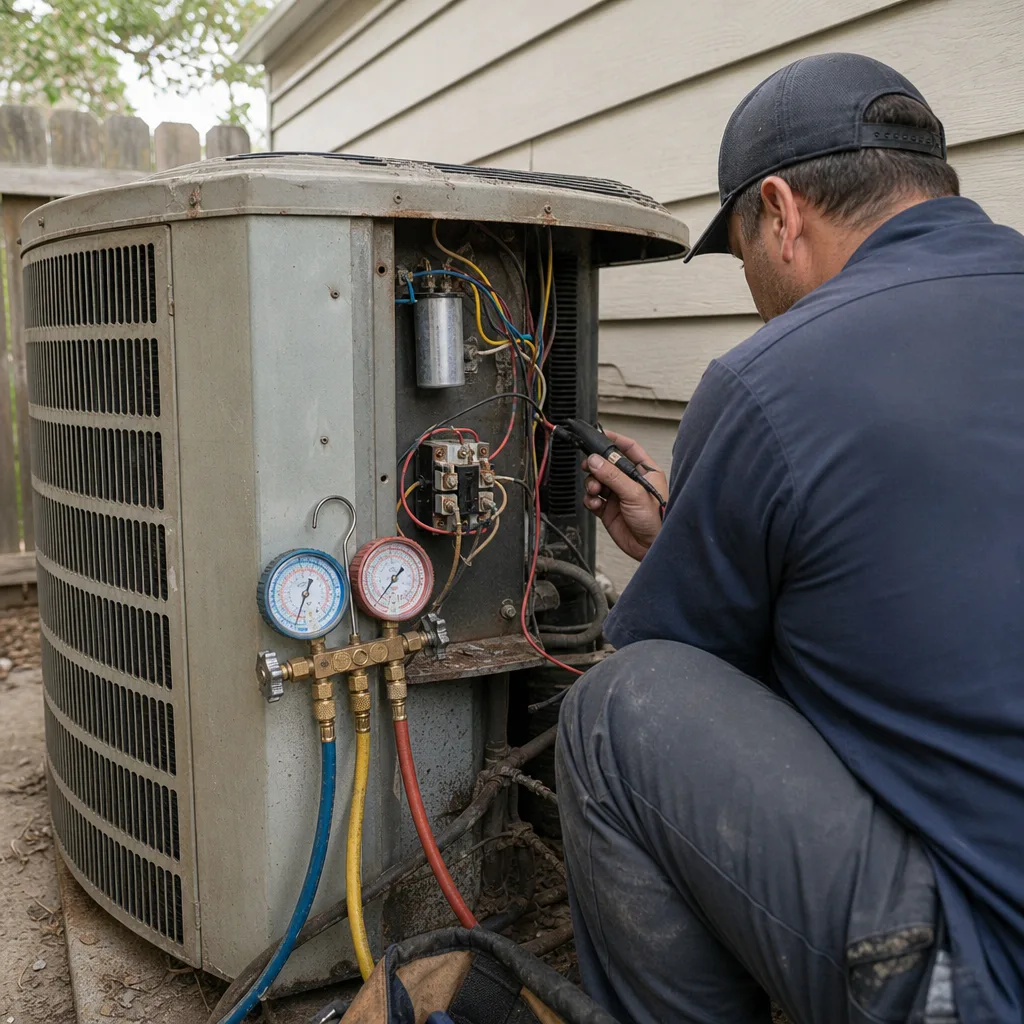 Before
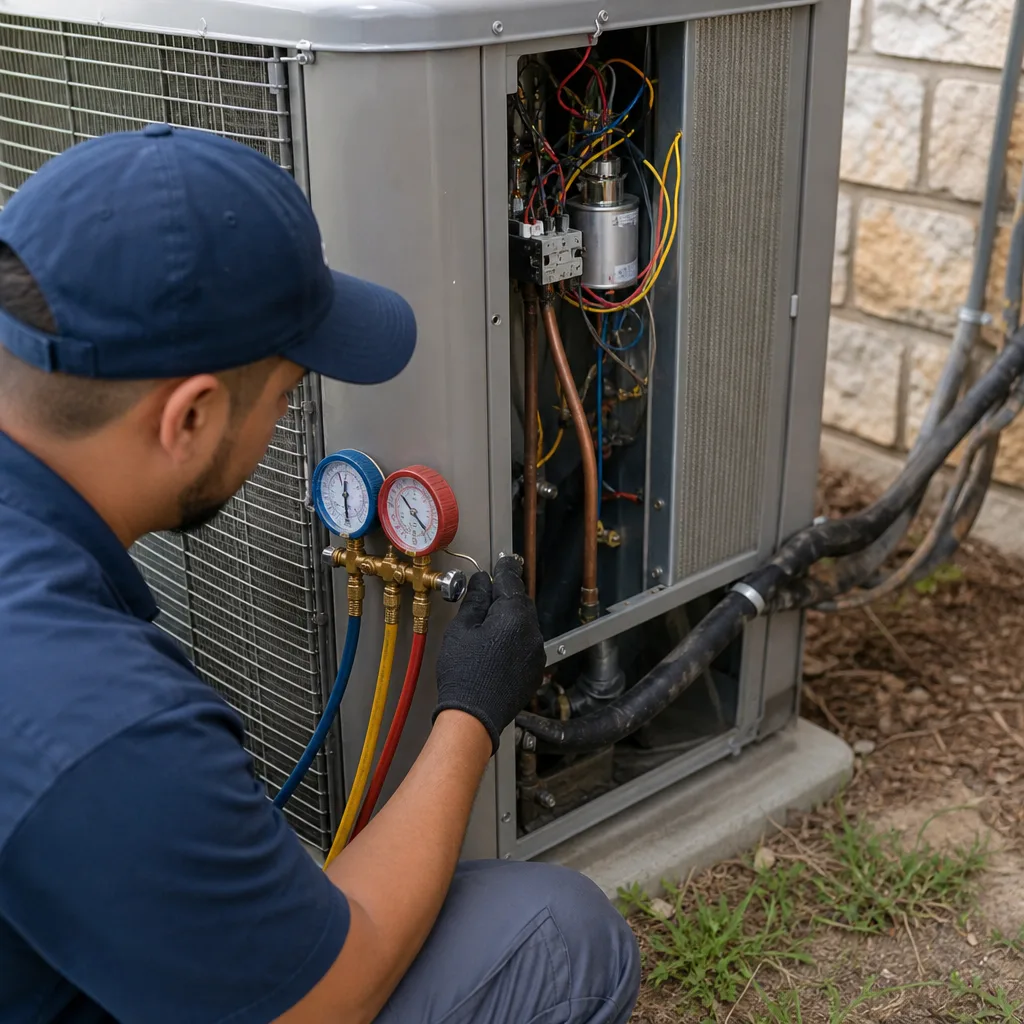 After
After